Beginner’s Guide to Google Ads Keyword Research
Unlock Your Google Ads Potential: A Beginner's Guide to Keyword Research
Hey there, future Google Ads gurus! Ever feel like your ads are shouting into the void, unheard and unseen? You’re meticulously crafted ad copy, your stunning visuals…all for naught. The problem? You're probably not speaking the language your audience understands. It’s like trying to order a cappuccino in Klingon – impressive, but ultimately ineffective. Imagine spending your hard-earned marketing budget only to attract the wrong people – or worse, no one at all! We've all been there, staring at analytics that resemble a flatlining heart monitor.
Think of keywords as the breadcrumbs that lead potential customers directly to your digital doorstep. Choose the right ones, and you'll be welcoming a steady stream of qualified leads, ready to convert. Choose poorly, and you'll be left wondering where all your money went. It’s the difference between opening a gourmet burger joint right next to a vegetarian convention versus setting up shop in a bustling downtown lunch spot. The location (keywords) dictates everything!
But fear not! This isn’t some dry, technical manual filled with jargon and confusing charts. This is your friendly guide, designed to demystify the world of Google Ads keyword research. We’ll break down the process into manageable, bite-sized pieces, equipping you with the knowledge and tools you need to target the right audience, drive relevant traffic, and ultimately, boost your bottom line. Are you ready to stop throwing money into the digital abyss and start attracting the customers you deserve? Let's dive in and unlock the secrets to Google Ads keyword mastery!
Why Keyword Research Matters: The Foundation of Your Google Ads Success
Friends, before we jump into the "how," let's solidify the why.Why is keyword research so crucial? Because without it, your Google Ads campaigns are essentially a shot in the dark. You're guessing what your ideal customers are searching for, which is a risky (and expensive!) game to play. Let's break down the core reasons why keyword research is the bedrock of any successful Google Ads strategy:
Connecting with the Right Audience
Imagine you're selling handcrafted leather wallets. Without keyword research, you might target broad terms like wallets.Sounds logical, right? But that could bring in anyone looking for cheap plastic wallets, mass-produced wallets, or even digital wallets. Keyword research helps you refine your targeting to reach people specifically searching for "handcrafted leather wallets," "artisan wallets," or "personalized leather wallets." This ensures your ads are seen by those most likely to be interested in your product, increasing your chances of a conversion.
Improving Ad Relevance and Quality Score
Google rewards relevance. The more relevant your ads are to a user's search query, the higher your Quality Score will be. A high Quality Score leads to lower ad costs and better ad positions. How does keyword research help? By using the right keywords in your ad copy and landing pages, you signal to Google that your ad is highly relevant to the user's search. This boosts your Quality Score and gives you a competitive edge.
Driving Targeted Traffic to Your Website
Traffic is great, but targeted traffic is gold. Keyword research helps you attract visitors who are actively searching for what you offer. This means they're more likely to be interested in your products or services, spend time on your website, and ultimately, convert into paying customers. Think of it like this: would you rather have 1,000 visitors who are just browsing, or 100 visitors who are ready to buy? The latter, of course!
Uncovering Hidden Opportunities
Keyword research isn't just about finding the obvious keywords. It's about digging deeper to uncover hidden opportunities that your competitors might be missing. By exploring related terms, long-tail keywords (more on those later!), and niche topics, you can tap into untapped markets and gain a competitive advantage. It's like discovering a secret ingredient that makes your product stand out from the crowd.
Optimizing Your Budget and ROI
Ultimately, keyword research helps you make the most of your Google Ads budget. By targeting the right keywords, you can reduce wasted ad spend, increase your click-through rates (CTR), and improve your conversion rates. This leads to a higher return on investment (ROI) and allows you to scale your campaigns more effectively. It's like investing in a high-yield stock versus throwing your money into a risky venture. Keyword research is the smart investment that pays off in the long run.
Your Keyword Research Toolkit: Essential Tools for Success
Alright, let's get practical! To effectively conduct keyword research, you'll need the right tools in your arsenal. Fortunately, there are plenty of options available, ranging from free to paid. Here are some of the essential tools we'll be using throughout this guide:
Google Keyword Planner
This is your free, built-in keyword research tool within Google Ads. It allows you to discover new keywords, analyze keyword trends, and estimate traffic volumes. It's a great starting point for any beginner and provides valuable insights into keyword competition and search volume. Think of it as your trusty Swiss Army knife for keyword research.
Google Trends
Google Trends allows you to explore the popularity of search terms over time. This can help you identify seasonal trends, emerging keywords, and declining keywords. It's a fantastic way to stay ahead of the curve and adapt your campaigns to changing user behavior.
Google Search Console
This tool provides valuable data about your website's performance in Google Search. You can see which keywords are driving traffic to your site, your average ranking for those keywords, and your click-through rate. This information can help you identify opportunities to optimize your existing content and target new keywords.
SEMrush and Ahrefs
These are powerful, paid SEO tools that offer a wide range of keyword research features. They allow you to analyze competitor keywords, track keyword rankings, conduct site audits, and much more. While they come with a price tag, they offer advanced insights that can significantly improve your keyword research efforts. Think of them as your professional-grade tools for serious keyword strategists.
Ubersuggest
Ubersuggest is a freemium tool that offers a blend of free and paid features. It provides keyword suggestions, competitor analysis, and content ideas. It's a user-friendly tool that's perfect for beginners who want to dip their toes into more advanced keyword research techniques.
The Keyword Research Process: A Step-by-Step Guide
Okay, friends, let's roll up our sleeves and get into the nitty-gritty of the keyword research process. We'll break it down into manageable steps, making it easy to follow along and implement in your own Google Ads campaigns:
Brainstorming Initial Keyword Ideas
Start by brainstorming a list of keywords related to your products or services. Think about what your ideal customers would type into Google when searching for what you offer. Don't be afraid to be broad at this stage – the goal is to generate as many ideas as possible. For example, if you sell organic coffee beans, your initial list might include:
• Coffee beans
• Organic coffee
• Fair trade coffee
• Gourmet coffee
• Coffee beans online
Using the Google Keyword Planner
Once you have your initial list, head over to the Google Keyword Planner. Enter your keywords into the tool and let it work its magic. The Keyword Planner will generate a list of related keywords, along with their average monthly search volume, competition level, and suggested bid. Pay close attention to these metrics, as they'll help you prioritize your keywords.
Analyzing Keyword Competition
Competition is a key factor to consider when choosing your keywords. High-competition keywords are often more expensive to bid on and harder to rank for. Look for keywords with a lower competition level, as they may offer a better opportunity to reach your target audience without breaking the bank. The Keyword Planner provides a "Competition" score (Low, Medium, High) to help you assess keyword difficulty.
Identifying Long-Tail Keywords
Long-tail keywords are longer, more specific phrases that people use when searching for something very specific. For example, instead of "coffee beans," a long-tail keyword might be "best organic fair trade coffee beans for French press." Long-tail keywords typically have lower search volume but also lower competition. They can be a great way to attract highly qualified traffic to your website.
Understanding Keyword Match Types
Keyword match types control how closely a user's search query needs to match your keyword for your ad to appear. There are four main match types in Google Ads:
• Broad Match: This is the widest match type. Your ad can appear for searches that are related to your keyword, even if they don't contain the exact words.
• Broad Match Modifier: This allows you to specify certain words in your keyword phrase that must be present in the search query.
• Phrase Match: Your ad can appear for searches that include your keyword phrase, with additional words before or after.
• Exact Match: This is the most restrictive match type. Your ad will only appear for searches that exactly match your keyword phrase.
Organizing Your Keywords into Ad Groups
Once you've compiled your list of keywords, it's time to organize them into ad groups. Ad groups are collections of keywords that are closely related to each other. This allows you to create more targeted ads and landing pages, which can improve your Quality Score and conversion rates. For example, you might create one ad group for "organic coffee beans" and another for "fair trade coffee beans."
Refining and Expanding Your Keyword List
Keyword research is an ongoing process. As you run your Google Ads campaigns, you'll gather data that can help you refine and expand your keyword list. Monitor your search terms report to see what keywords are actually triggering your ads. Add new keywords that are performing well and remove keywords that are not.
Advanced Keyword Research Techniques: Taking Your Campaigns to the Next Level
Once you've mastered the basics of keyword research, it's time to explore some more advanced techniques that can help you take your Google Ads campaigns to the next level:
Competitor Keyword Analysis
Find out what keywords your competitors are targeting. Tools like SEMrush and Ahrefs allow you to analyze your competitor's websites and see which keywords they're ranking for. This can give you valuable insights into keywords that you might be missing.
Using Negative Keywords
Negative keywords prevent your ads from appearing for irrelevant searches. For example, if you sell premium coffee beans, you might add "free" and "cheap" as negative keywords to avoid showing your ads to people looking for budget options. Using negative keywords can help you save money and improve your ad relevance.
Exploring Intent-Based Keywords
Intent-based keywords focus on the user's intent behind their search query. Are they looking to buy something, find information, or compare products? By understanding the user's intent, you can tailor your ads and landing pages to better meet their needs.
Leveraging Location-Based Keywords
If you're targeting a specific geographic area, use location-based keywords to reach customers in that area. For example, if you own a coffee shop in Seattle, you might target keywords like "coffee shop Seattle," "best coffee Seattle," or "Seattle coffee."
Common Mistakes to Avoid in Keyword Research
Even with the best tools and strategies, it's easy to make mistakes during keyword research. Here are some common pitfalls to avoid:
Ignoring Negative Keywords
We mentioned this earlier, but it's worth repeating! Neglecting negative keywords is a surefire way to waste your ad budget on irrelevant clicks.
Focusing Solely on High-Volume Keywords
While high-volume keywords might seem attractive, they're often highly competitive and expensive. Don't overlook the power of long-tail keywords, which can drive highly qualified traffic to your website.
Not Monitoring Your Search Terms Report
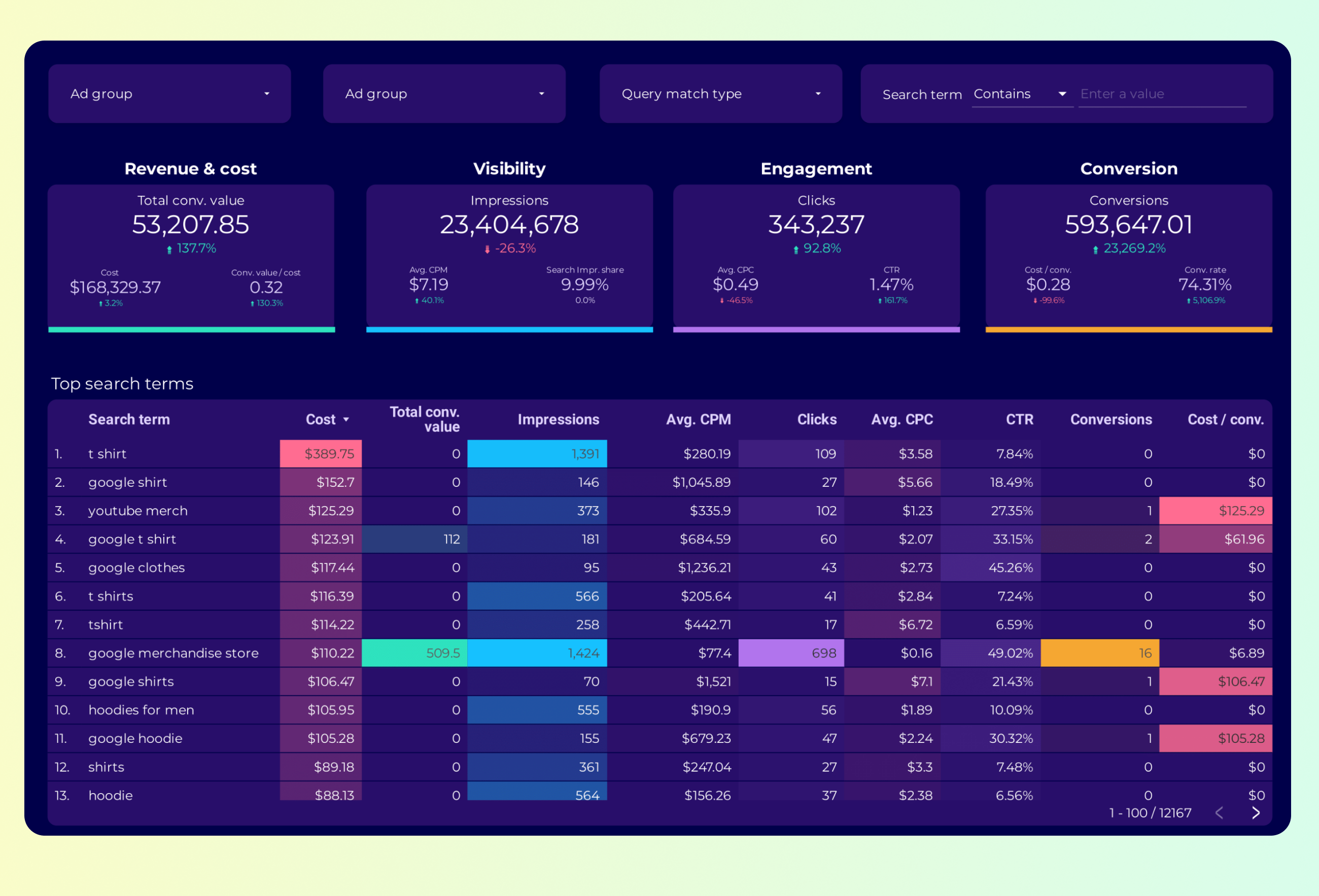
Your search terms report is a goldmine of information about what keywords are actually triggering your ads. Failing to monitor this report means you're missing out on valuable insights that can help you refine your keyword list.
Setting It and Forgetting It
Keyword research is not a one-time task. It's an ongoing process that requires constant monitoring and refinement. Don't just set up your campaigns and forget about them. Regularly review your performance and make adjustments as needed.
Frequently Asked Questions (FAQ)
Let's tackle some common questions that often arise during keyword research:
What is the ideal keyword density for my landing pages?
Keyword density, or the number of times a keyword appears on a page, used to be a major ranking factor. Today, it's more important to focus on creating high-quality, relevant content that naturally incorporates your target keywords. Aim for a natural flow and avoid keyword stuffing, which can actually hurt your rankings.
How often should I update my keyword list?
Ideally, you should review and update your keyword list at least once a month. This allows you to identify new opportunities, remove underperforming keywords, and adapt to changing search trends.
What's the best way to find long-tail keywords?
There are several ways to find long-tail keywords. You can use the Google Keyword Planner, explore related search queries in Google Search, or analyze your competitor's content. Pay attention to questions that people are asking online, as these often make great long-tail keywords.
Should I bid on my own brand name?
Yes, absolutely! Bidding on your own brand name ensures that you control the message that people see when they search for your brand. It also prevents competitors from bidding on your brand name and potentially stealing your customers.
So there you have it, friends! A comprehensive beginner's guide to Google Ads keyword research. We've covered the importance of keyword research, the essential tools you'll need, the step-by-step process, advanced techniques, and common mistakes to avoid. Now it's time to put this knowledge into practice and start building your own winning Google Ads campaigns.
Remember, keyword research is an ongoing process. Don't be afraid to experiment, analyze your results, and make adjustments as needed. The more you practice, the better you'll become at identifying the right keywords to reach your target audience and drive conversions.
Now, take action! Head over to the Google Keyword Planner and start brainstorming your initial keyword list. Experiment with different match types, explore long-tail keywords, and don't forget to add those negative keywords! The possibilities are endless.
Ready to unlock your Google Ads potential? Go forth and conquer the world of keyword research! And hey, what are some ofyourbiggest keyword research challenges? Let me know in the comments below!

Post a Comment for "Beginner’s Guide to Google Ads Keyword Research"
Post a Comment