Trump's $400M White House Ballroom Reveals Surprising Size
The Controversial Ballroom Project
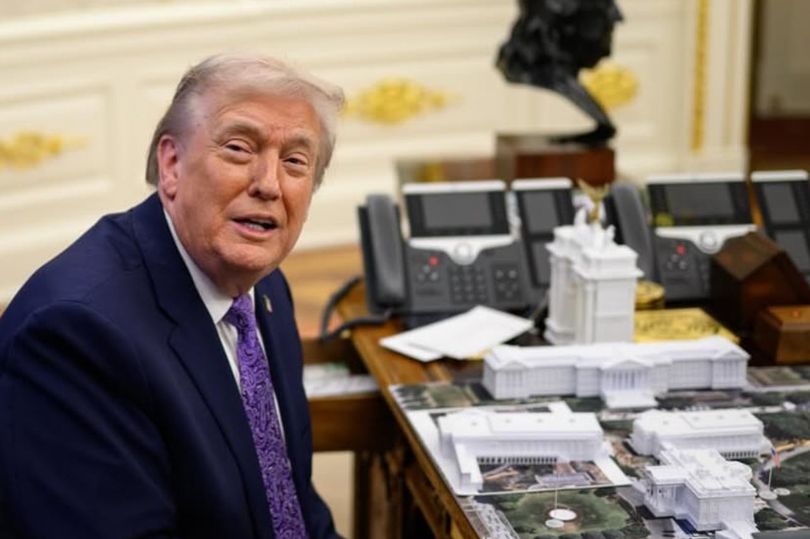
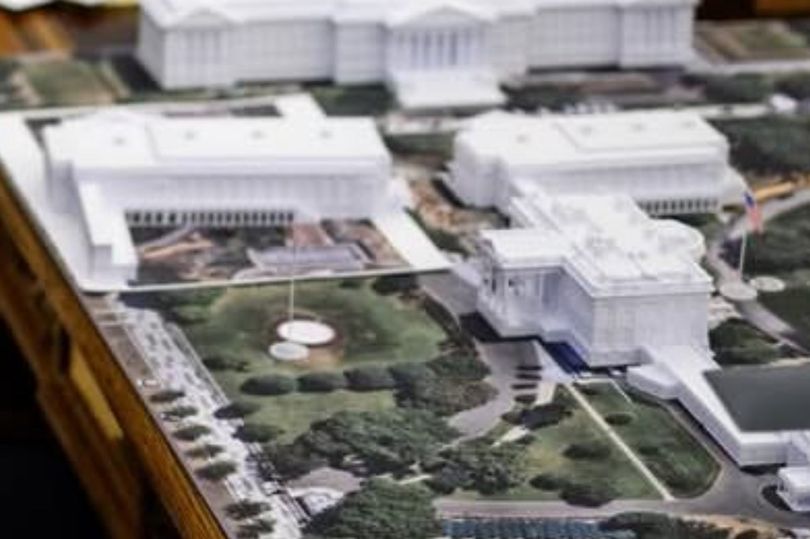
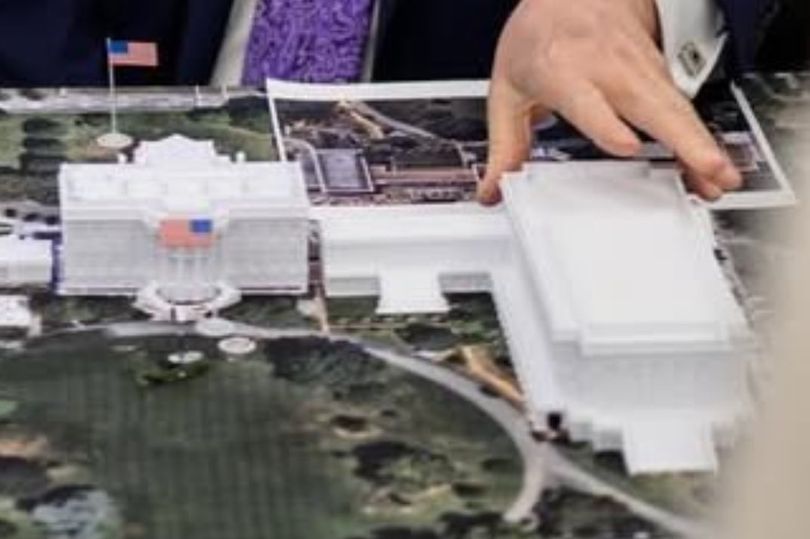
New photographs taken in the Oval Office and shared on social media have sparked significant debate, showing President Donald Trump examining two models of a $400 million ballroom. These models are notably larger than the White House itself, suggesting the scale of the project that has drawn both support and criticism.
In the images, Trump is seen placing the two model buildings on a three-dimensional rendering of the entire White House property. This visual representation highlights the ambitious nature of the ballroom, which Trump has argued is essential for the presidential residence. Despite the current economic challenges faced by many Americans, including high prices, healthcare costs, and reduced funding for various programs, the focus has shifted to the president's efforts to redecorate parts of the White House.
Trump has invested heavily in the White House, adding gold filigree, transforming the Rose Garden into an outdoor patio, and even proposing a triumphal arch across the Potomac River. These projects have raised questions about the allocation of resources during a time of national need.
The Cost and Funding of the Ballroom
At a Hanukkah reception at the White House, Trump announced that the ballroom will now cost up to $400 million, doubling the initial estimate of $200 million. He claimed that he and his donors would be providing the building "free of charge for nothing," emphasizing that it would be a gift to the country.
"It will be the most beautiful ballroom, and it will handle inaugurations," Trump stated. He also mentioned that the ballroom would feature 5-inch-thick glass windows, claiming they are "impenetrable by anything but a howitzer." The president questioned why anyone would sue to stop such a significant project.
The White House released an incomplete list of 37 private donors who contributed to the ballroom project. Initially, Trump had said the ballroom would be funded entirely by himself and some friends. However, the list includes a variety of contributors, from crypto billionaires to tech giants, as well as political figures and longtime supporters.
Donors and Their Motivations
Among the tech companies that donated to the ballroom are Amazon, Apple, Google, Meta, HP, Microsoft, Micron Technology, and Palantir. Several of these companies have also supported Trump's inauguration, and their leaders have maintained regular communication with the president. Other notable donors include Trump-appointed officials such as Commerce Secretary Howard Lutnick, Small Business Administrator Kelly Loeffler, and Benjamin Leon Jr., who was nominated as the ambassador to Spain.
These donations raise questions about the motivations behind the contributions, as several donors may seek to gain favor with the president. Trump has been known to respond positively to public flattery and material gifts, which could influence his decisions.
Legal Challenges and Judicial Response
A preservationist group, the National Trust for Historic Preservation, has sought to temporarily halt the ballroom project. A federal judge, Richard Leon, indicated he is leaning toward denying the request, citing the lack of evidence showing "irreparable harm" if the project continues. However, Leon plans to hold another hearing in January to review the organization's request for a pause until the project undergoes multiple independent reviews and gains congressional approval.
Leon warned the administration not to make decisions on underground work that could dictate the scope of future construction above ground. He emphasized that the court would address any such actions if they occur.
Regulatory Oversight and Legal Arguments
Trump proceeded with the ballroom construction without seeking input from federal review panels, including the National Capital Planning Commission and the Commission of Fine Arts. The planning commission has been stocked with Trump's allies, including chairman Will Scharf, who expects to receive the ballroom plans this month.
During the hearing, Adam Gustafson, the principal deputy assistant attorney general, argued that the Trust has no standing to sue and that underground construction must continue for national security reasons. He also claimed that Trump is exempt from certain federal laws the Trust alleges he has violated.
Tad Heuer, the attorney representing the Trust, emphasized that the issue is not about the need for a ballroom but about following the law. He noted that allowing construction to proceed without independent reviews enables the government to "wait and find out" what the ballroom will look like.

Post a Comment for "Trump's $400M White House Ballroom Reveals Surprising Size"
Post a Comment