Trump's $400M Ballroom Project Moves Forward Amid Legal Battle
Legal Challenges and Construction Progress
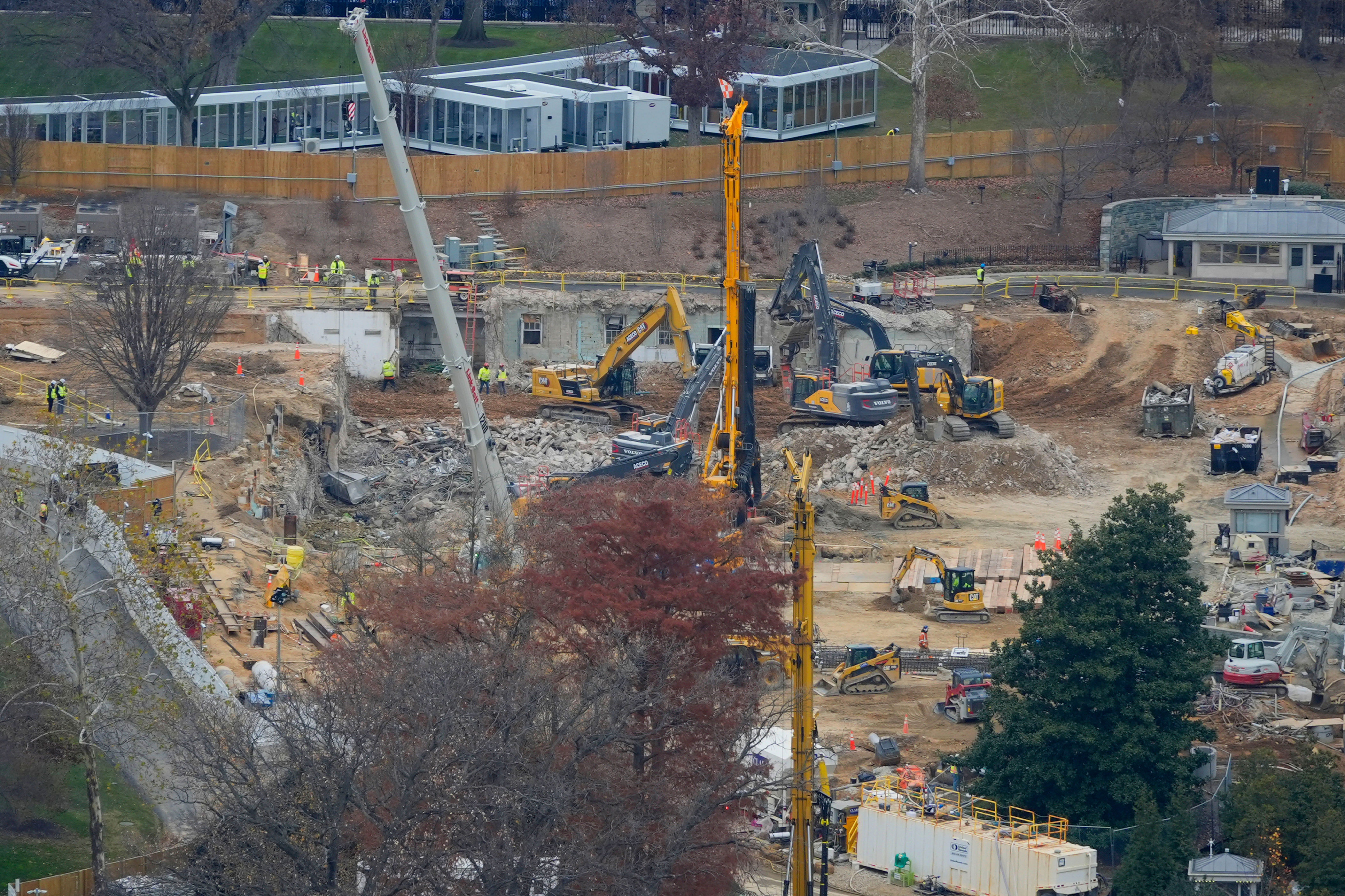
Construction on President Donald Trump’s $400 million ballroom is expected to continue after a federal judge indicated a leaning toward denying a preservationist group's request to temporarily halt the project. The National Trust for Historic Preservation, a privately funded organization, had previously asked the U.S. District Court to block the gold-plated ballroom project until it underwent multiple independent reviews and received approval from Congress.
The president has already bypassed the usual federal building practices and historical reviews with the demolition of the East Wing. The lawsuit argued that no president is legally allowed to tear down parts of the White House without any review, regardless of who is in office.
At a recent hearing, Judge Richard J. Leon stated that the organization failed to demonstrate that "irreparable harm" would occur if the project continued. He gave the White House two weeks to submit the plans to the National Capital Planning Commission and the Commission of Fine Arts.
Trump praised the judge during a White House Hanukkah event, thanking him for having the "courage in making the proper decision." The president also increased the project's estimated cost to $400 million from $300 million, though he mentioned that he could do it for less.
"We got sued. We're donating a $400 million ballroom, and we got sued not to build it," Trump said. "We're donating a building that's approximately $400 million. I think I'll do it for less, but it's 400… I should do it for less. I will do it for less, but just in case, I say 400 otherwise, if I go $3 over, the press will say it costs more."
Carol Quillen, President and CEO of the National Trust, emphasized the organization's commitment to upholding the interests of the American people and advocating for compliance with the law, including review by the National Capital Planning Commission and an opportunity for public input.

Legal Arguments and Concerns
Adam Gustafson, the principal deputy assistant attorney general, argued at the hearing that the Trust has no standing to sue and that underground construction must continue for national security reasons, which were not disclosed in open court. However, Judge Leon warned the administration against making decisions on underground work, such as the routing of plumbing and gas lines, that could dictate the scope of future ballroom construction above ground.
"If that were to happen, Leon warned, 'the court will address it, I assure you of that.'"
Tad Heuer, the attorney representing the Trust, stated that with each day construction proceeds without independent reviews, the government gets to say "wait and find out" what the ballroom will look like. "It's not about the need for a ballroom. It's about the need to follow the law," Heuer said.
Project Details and Political Response
Demolition of the historic East Wing of the White House began in October to make way for the 90,000 square-foot ballroom. Trump claimed the project would be funded by private donors, including tech giants Amazon, Apple, Google, and Microsoft, crypto companies Coinbase and Ripple, the Winklevoss twins, and the family of Commerce Secretary Howard Lutnick, according to a list provided by the White House.
Democrats have introduced legislation to put guardrails on the plans. In November, Massachusetts Senator Elizabeth Warren and California Rep. Robert Garcia introduced the Stop Ballroom Bribery Act, which would require increased transparency around contributions, such as banning donations from individuals with conflicts of interest. The legislation would also prohibit the president and vice president from donating.
The Associated Press contributed reporting.

Post a Comment for "Trump's $400M Ballroom Project Moves Forward Amid Legal Battle"
Post a Comment