Solar breakthrough pushes efficiency past theoretical limits
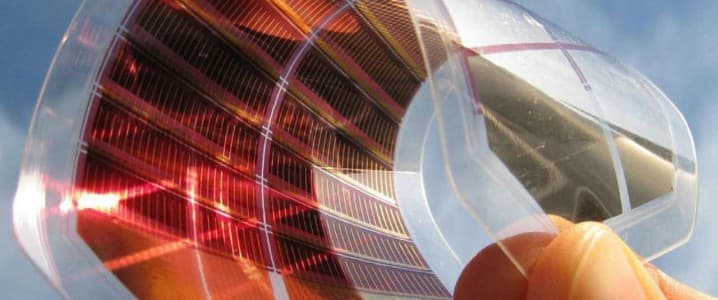
The Promise and Challenges of Perovskite Solar Cells
For years, perovskites have been hailed as the "holy grail" of solar energy due to their potential for highly efficient and cost-effective solar cells. These materials, known for their crystalline structures, exhibit high superconductivity, magnetoresistance, and ferroelectricity. This makes them a promising alternative to silicon in solar technology. Perovskite thin-film photovoltaic (PV) panels can absorb light across a broader range of wavelengths, enabling them to achieve efficiencies of around 40%, surpassing the theoretical limits of silicon at about 30%. However, perovskites are notoriously unstable and prone to degradation when exposed to environmental factors.
But now, researchers at the University of Cambridge have made a breakthrough with a new halide perovskite that is significantly more stable than conventional ones. By fine-tuning the material at the atomic level, they have opened the door for more powerful, durable, and efficient devices.
Advancements in Perovskite Technology
The Cambridge team employed a vapor-based technique to create two- and three-dimensional perovskites one layer at a time. This method allows precise control over the thickness of the perovskite films, down to fractions of an atom. They were able to create perovskite layers on the Angstrom level—approximately a tenth of a nanometer. These layers were then meticulously stacked so that their atoms align perfectly, enabling electrons and holes to move freely in a process similar to commercial semiconductor manufacturing.
In effect, these layers act like one-way streets that guide charges and prevent them from losing energy as heat. The researchers achieved an energy difference between the layers exceeding half an electron volt and extended the lifetime of electrons and holes to more than 10 microseconds, which is much longer than usual.
Expert Insights and Future Potential
Professor Sam Stranks, who co-led the research, emphasized the significance of this achievement. “Changing the composition and performance of perovskites at will – and probing these changes – is a real achievement and reflects the amount of time and investment we’ve made here at Cambridge,” he said. “But more importantly, it shows how we can make working semiconductors from perovskites, which could one day revolutionize how we make cheap electronics and solar cells.”
Perovskite technology has been advancing rapidly. In 2012, scientists succeeded in manufacturing thin-film perovskite solar cells, achieving efficiencies over 10%. Since then, efficiencies in new perovskite cell designs have skyrocketed, with recent models reaching 30% or higher. This is particularly significant because thin-film cells are theoretically easier and cheaper to manufacture than thick-film silicon panels.
Record-Breaking Efficiency in Solar Cells
Last year, Longi, a major Chinese solar panel manufacturer, announced a power conversion efficiency of 34.6% for a perovskite-silicon tandem solar cell, setting a new world record. This surpassed the company’s previous record of 33.9% set in November 2023. The European Solar Test Installation (ESTI) certified the results. Longi is among the world's largest and leading solar manufacturers.
“We achieved this result by optimizing the thin film deposition process of the electron transport layer, developing and using high-efficiency defect passivation materials, and designing and developing high-quality interfacial passivation structures,” the company stated, without providing further details.
Longi has broken the world record for solar cell efficiency more than a dozen times over the past four years. Their latest achievements have even surpassed the Shockley-Queisser (S-Q) theoretical efficiency limit of 33.7% for single junction solar cells.
Innovations in Large-Area Solar Cells
Meanwhile, Qcells, a subsidiary of South Korea’s Hanwha Corp, set a world record for the efficiency of a large-area silicon solar cell with a top layer of perovskite. This development could dramatically reduce the size of solar projects and slash costs. Qcells achieved a cell efficiency of 28.6% on a large commercial-sized cell known as an M10, significantly higher than 27% for crystalline silicon cells and around 21% for traditional commercial silicon solar panels.
Qcells' discovery comes at a time when extensive land use by large solar projects is becoming increasingly challenging. For example, California's Solar Star Project, one of the largest solar facilities in the world, spans 3,000 acres with 1.7 million panels. In comparison, a natural gas power plant located 100 miles south of Solar Star produces the same amount of energy on just 122 acres.

Post a Comment for "Solar breakthrough pushes efficiency past theoretical limits"
Post a Comment