Senators Prepare for Possible January Shutdown
Political Tensions and the Threat of Another Government Shutdown
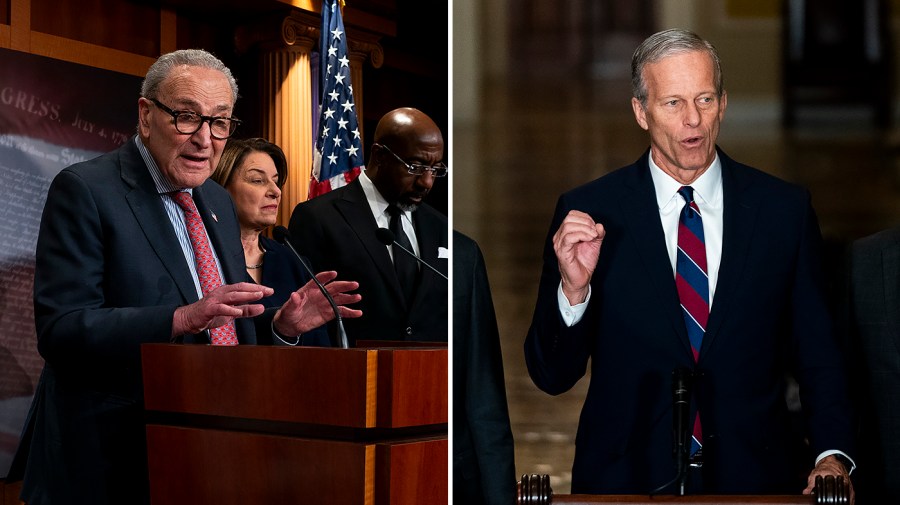
As the new year approaches, political tensions in the U.S. Senate are reaching a boiling point, with both parties bracing for another potential government shutdown. The latest development involves Republicans blocking a proposal to extend expiring health insurance subsidies, an issue that previously led to a 43-day government closure.
Liberal Democrats are particularly frustrated with the Republican stance on extending these subsidies, which are set to expire in January. These subsidies play a critical role in keeping health insurance premiums affordable for millions of Americans who purchase coverage through the ObamaCare marketplace. A group of eight Democratic senators, mostly centrists, had attempted to reopen the government last month in hopes of sparking bipartisan negotiations. However, those talks have failed, leading to fears of a significant increase in healthcare costs for many Americans.
The failure to extend the subsidies has reignited discussions among liberal Democrats about using the upcoming Jan. 30 government funding deadline as leverage. This strategy was previously used in September and October to force Republicans into making concessions on federal healthcare spending.
Sen. Elizabeth Warren (D-Mass.) emphasized that the fight is not over, stating that the next government funding deadline could be a key leverage point. Meanwhile, Sen. Bernie Sanders (I-Vt.) called the Republican vote against extending the enhanced subsidies “an outrage.” Although he did not directly support threatening another shutdown, he warned that the expiration of tax credits would cause significant hardship for many Americans.
Impact on Health Care Costs and Coverage
Congress’s failure to extend the enhanced subsidies means that an estimated 4.8 million Americans will lose their health care coverage in 2026. Additionally, more than 20 million Americans will face a dramatic rise in health care costs. Insurance companies are projected to charge people who buy their insurance through the Affordable Care Act marketplace 26 percent more if the enhanced subsidies expire in January.
A third member of the Senate Democratic Caucus, speaking anonymously, highlighted the possibility of another government shutdown if Republicans do not agree to pass a package of regular spending bills known as the minibus by the end of next month. The minibus includes appropriations for several key departments, including Defense, Health and Human Services, Labor, Commerce, Justice, and Interior.
If the Senate appropriations package passes next month, it would result in approximately 85 percent of the federal government being funded through September of 2026. This would significantly reduce the leverage Democrats have to threaten a shutdown to get Republicans to agree to extend the enhanced Affordable Care Act tax credits.
However, if the bills stall, the likelihood of a shutdown increases dramatically. The senator warned that the issue could become a flashpoint if President Trump initiates a large-scale bombing campaign against Venezuela, potentially prompting Democrats to oppose any government funding bill to pressure the White House to back down.
Senate Leadership and Legislative Challenges
Senate Majority Leader John Thune (R-S.D.) is pushing hard to get the package of five appropriations bills passed next month. His goal is to remove leverage from Senate Democratic progressives who want to threaten another government shutdown to pressure Republicans to back an extension of the expiring health care subsidies.
Sen. John Cornyn (R-Texas) warned that if most of the annual appropriations bills are left in limbo by the end of January, Democrats could repeat the strategy that led to the longest shutdown in American history earlier this year. He predicted that Senate Democratic Leader Chuck Schumer (N.Y.) would face heavy pressure from liberals to force another government shutdown.
Senate Appropriations Committee Chair Susan Collins (R-Maine) expressed concern that another shutdown could occur if the five-bill spending package fails to move soon after New Year’s Day. She noted that the package is being delayed by conservative senators who are objecting to the number of earmarks in the appropriations bill and other provisions.
Another major obstacle is that House GOP leaders have not yet agreed to the top-line spending numbers for 2026. Collins said she is waiting to finalize the top-line spending levels for several bills with the House. She mentioned that there are no top-line agreements on some bills, including those funding the departments of Labor, Health and Human Services, Defense, Commerce, and State.
Despite these challenges, appropriators are making progress on resolving disagreements with conservatives, which have stalled progress on the spending package for weeks. Sen. Mike Lee (R-Utah) is negotiating over the authorizing language that falls within his jurisdiction as chair of the Senate Energy and Natural Resources Committee. He said he has received “commitments” on scheduling votes to strip some of the earmarks out of the package.

Post a Comment for "Senators Prepare for Possible January Shutdown"
Post a Comment