Judge says he won't stop White House ballroom project
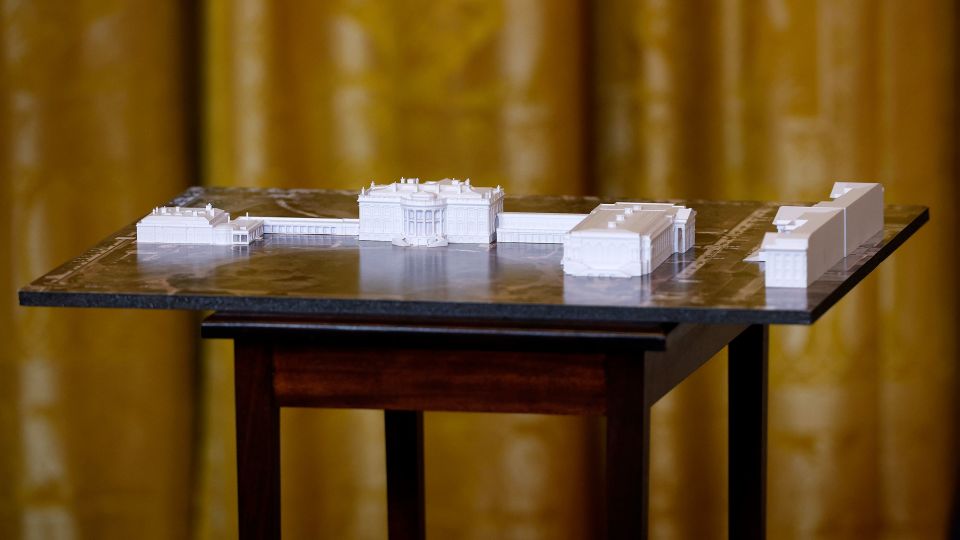
Federal Judge Temporarily Allows White House Ballroom Construction to Continue
A federal judge has decided not to halt the construction of a new White House ballroom, but he has left the door open for future legal intervention. US District Judge Richard Leon indicated that while the project is moving forward, there may be circumstances in which he could step in if the ongoing work causes irreversible harm.
Leon, an appointee of former President George W. Bush, emphasized that the National Trust for Historic Preservation, the group that filed the lawsuit, has not yet demonstrated how the current construction is causing irreparable damage that would require immediate court action. However, he warned that underground work being carried out in the coming months must not determine the final size or shape of the ballroom during the early stages of the legal dispute.
"If it does, it would have to be taken down," Leon said. The Justice Department lawyer, Adam Gustafson, admitted he was not an engineer and could not confirm whether pouring concrete below ground would fix the ballroom's dimensions. He stated that the design is still "in progress" and that nothing suggests it would be impossible to change.
The National Trust for Historic Preservation sued over the project, claiming that the White House has been carrying out construction without the necessary approvals from Congress or the National Capital Planning Commission. The group requested an emergency court order to stop further work on the ballroom until Congress authorizes it and the commissions review the plans.
Leon confirmed that the Trump administration will hold a meeting with the National Capital Planning Commission by the end of December. “Let me assure you of something, the court will hold them to that,” he said.
Disputes Over the Ballroom’s Design
There have already been conflicts over the ballroom’s scope and size. Earlier this month, Trump hired a new architect amid disagreements with the original one. According to a memorandum from the Justice Department, Trump has been "intimately engaged in the implementation phase."
At a White House event, Trump praised the ruling, saying, “We just won the case. We get sued. We’re donating a $400 million ballroom, and we got sued.” The initial cost estimate for the project was around $200 million, but Trump later mentioned a figure of about $300 million, with $350 million raised through private donations. DISCOVERTREND has reached out to the White House for confirmation on the current estimate.
Legal and Practical Concerns
The lawsuit has forced officials to reveal more details about the project. A National Park Service official stated that above-ground work on the ballroom would not begin until at least April, and efforts are underway to coordinate with the relevant commissions.
A sworn statement from a US Secret Service official suggested that halting work could interfere with the agency’s ability to meet its protective mission, as a contractor is still working on temporary security measures.
Ted Heuer, an attorney for the preservation group, expressed concern that the ongoing underground work might lock in the ballroom’s size and shape before the public can provide input. “It’s not about the need for a ballroom, it’s about the need to follow the law,” he said.
Leon set another hearing for mid-January and said he would issue a written decision soon. Attorney General Pam Bondi responded to the judge’s statements, stating her department would continue defending the project in court.
Timeline and Details of the Project
Documents filed by the Trump administration revealed that the project is expected to be completed by "summer 2028." The iconic East Colonnade, which was demolished, will be rebuilt with an "enclosed second story." The new ballroom will be 55 feet tall, according to the National Park Service.
Efforts have also been made to preserve historic elements from the East Wing, including wood paneling, light fixtures, and exterior columns. Many of these items will be reinstalled later. The NPS also documented the East Wing and East Colonnade before demolition and relocated two Southern Magnolia trees planted during the FDR era.
An environmental assessment detailed other options considered before demolishing the East Wing, including preserving the entire structure and placing the ballroom south of the existing complex. However, the final decision was to build the ballroom adjacent to the Executive Mansion with enclosed access.
This story has been updated with additional details. For more DISCOVERTREND news and newsletters, create an account at DISCOVERTREND.

Post a Comment for "Judge says he won't stop White House ballroom project"
Post a Comment