House Democrats Ban Stock Trading Including Trump
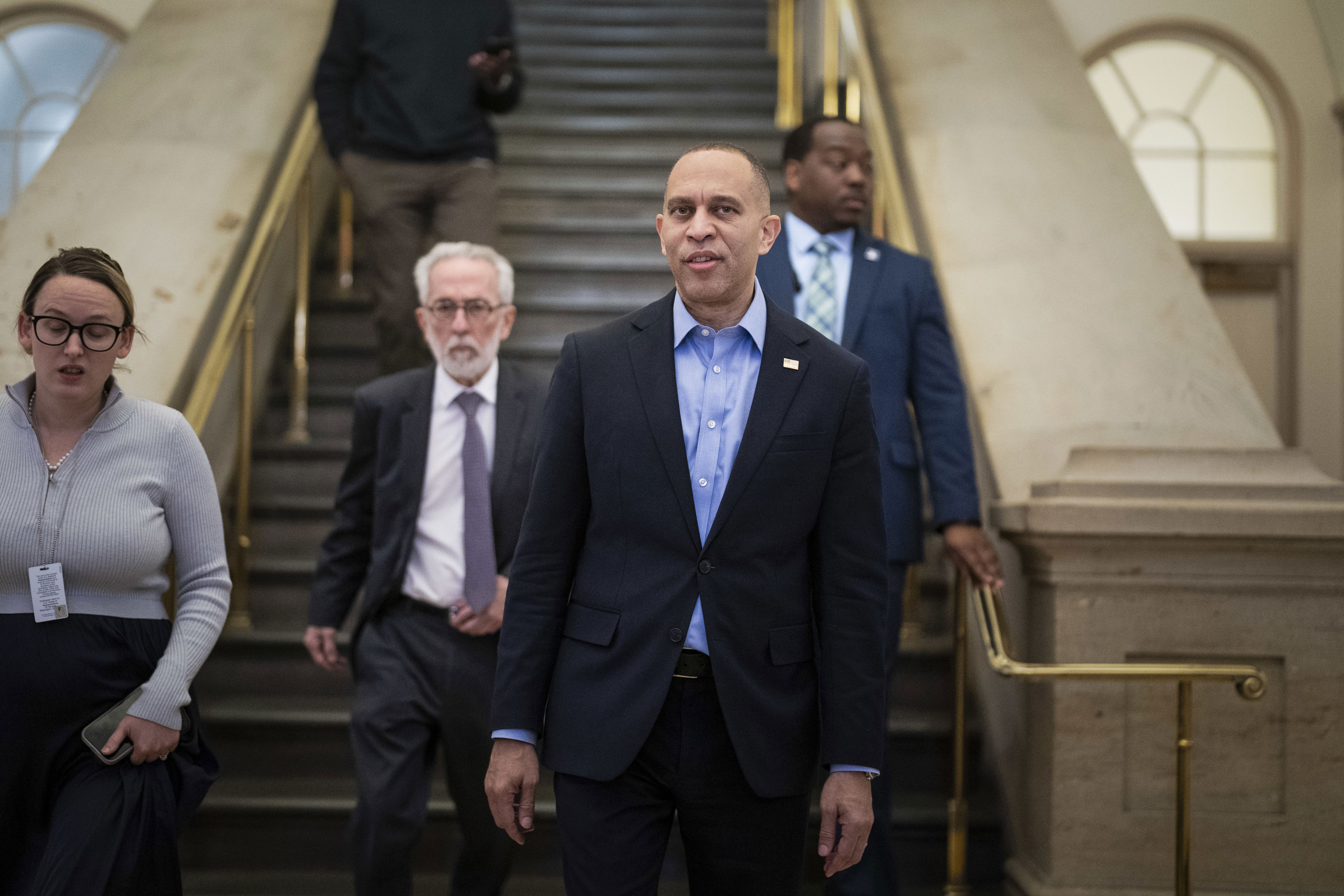
House Democrats Introduce Stock Trading Ban for Lawmakers, Including the President
House Democrats have introduced a new proposal to ban lawmakers from trading stocks, which would also apply to the president and vice president. This move is seen as a direct challenge to a bipartisan effort that has been under discussion for weeks.
The bill, sponsored by Rep. Seth Magaziner (D-Rhode Island) and supported by House Minority Leader Hakeem Jeffries (D-New York), aims to prevent members of Congress, their spouses, and dependents from owning or trading stocks. However, it goes further than previous proposals by extending the same restrictions to the president and vice president and their families.
This provision is a key point of contention for Democrats, but it may make the bill less appealing to most Republicans. As a result, the proposal might not gain enough support to pass before next year’s elections.
“We need bold action to end corruption throughout our government,” Magaziner said in a statement. He added that he introduced the legislation at the request of House Democratic leadership and plans to file a discharge petition on the bill in January. This petition would force a vote if 218 House members sign.
A separate petition led by Rep. Anna Paulina Luna (R-Florida) aims to bring another bipartisan stock trading ban to the floor. This proposal, backed by Magaziner and Rep. Chip Roy (R-Texas), does not extend to the executive branch. As of Wednesday, this petition has 72 signatures.
Magaziner expressed support for Luna’s petition, stating that he urges colleagues to support bringing these bills to the floor for a vote and taking decisive action to clean up corruption in Washington.
However, the dueling petitions could delay action on either proposal. Democrats are likely to support the plan backed by their leadership, while most Republicans are unlikely to back legislation that restricts Trump.
The White House previously criticized Sen. Josh Hawley (R-Missouri) over concerns that his proposal to ban lawmaker stock trading would apply to the executive branch. The proposal was later modified to apply to officials after their term ends, exempting Trump.
If passed by the House, either proposal would need at least 60 votes to overcome a filibuster in the Senate, which is controlled by Republicans with a 53-47 majority.
Magaziner mentioned that he has had conversations with Republican members who are open to signing the petition. He believes there is a possibility that some Republicans will support both proposals.
Focus on Government Corruption
House Democrats are eager to address the issue of government corruption on their own terms. A main part of their agenda going into the midterms focuses on this issue, arguing that if they regain the majority, they will ban stock trades by public officials.
“We need to clean up corruption in the institution of the Congress, the Supreme Court, as well as within the executive branch, starting with Donald Trump and JD Vance,” Jeffries said.
Rep. Joe Morelle (New York), the top Democrat on the House Administration Committee, raised concerns about Trump’s business interests and whether he is improperly profiting from his office.
“I don’t see how we could do it without the president and the vice president. And frankly, if this isn’t successful, when we take the majority, I’m going to work to get the Supreme Court in there as well,” Morelle said.
He added that he hopes Republicans see the precedent set now applies to all future presidents.
Ongoing Efforts to Improve Stock Trading Rules
House Administration Committee Chairman Rep. Bryan Steil (R-Wisconsin) has been working on another proposal to ensure members are not profiting off insider information.
“I am of the belief that we can make improvements” on the Stock Act, Steil said. “I’m focused on not only introducing text, but actually getting it passed. I believe that we have a real opportunity to do that.”
Lawmakers have tried to strengthen restrictions on congressional stock trading since at least 2018. There have been 23 new measures introduced since January to restrict lawmakers’ ability to trade stocks. Many of these proposals allow members to trade bundled assets like mutual funds or ETFs, just not shares in individual companies, and require storing assets in qualified blind trusts.
However, Republican leaders have been slow to advance any of these measures, including Roy and Magaziner’s bill, which has 115 bipartisan co-sponsors, or Hawley’s bill that passed a Senate committee in July.
Support for Luna’s petition has grown slowly over the last two weeks, as lawmakers on both sides held back to see how their leadership might proceed.
Speaker Mike Johnson (R-Louisiana) has consistently said he personally supports limiting stock trading by members to avoid the appearance of conflicts, but he understands concerns that a ban could dissuade qualified people from running for office.
“No one wants insider trading, and we want to make sure no one is violating the law,” Johnson told reporters earlier this month. “It has to be worded correctly and we need consensus on it … so we’re working through that process.”
Public Support for Stock Trading Bans
Democrats argue that any ban on lawmakers’ stock trading should also extend to the president, citing concerns about the Trump family’s appearances of conflicts of interest in the cryptocurrency industry, among others.
Jeffries has criticized Luna’s petition, arguing that Republicans “parachuted in” to the issue.
“It’s Democrats who are actually serious about enacting a congressional stock ban, and we’re committed to using every tool available to make sure that this happens,” he said.
Insider trading is already illegal, by members of Congress or anyone else. Yet good-government advocates have long raised concerns that lawmakers have access to information the general public does not, creating potential conflicts of interest and the appearance of impropriety when trust in Congress is near historic lows.
Congress passed a law in 2012 that requires lawmakers to file a public disclosure of financial transactions, including purchases or sales of stock, that exceed $1,000 within 45 days.
Proponents of banning stock trading by members of Congress argue that the 2012 law, the Stock Act, fails to dissuade lawmakers from taking advantage of the privileged information they can access. They argue it does not require members to report the specific amount of their trades, allows too long for reporting, does not include stringent enough consequences for violating the law, and still allows for the appearance of conflicts.
A 2023 poll from the University of Maryland found that an overwhelming majority of Americans across the political spectrum — 87 percent of Republicans, 88 percent of Democrats and 81 percent of independents — support banning stock trading in individual companies for members of Congress.
A group of 90 former members of Congress wrote to Johnson and Jeffries earlier this month, urging them to advance Roy and Magaziner’s bill, and 10 ethics groups urged House members to sign on to the legislation in November.

Post a Comment for "House Democrats Ban Stock Trading Including Trump"
Post a Comment