Electric Vehicles in Michigan: Consumer Realities Amid Market Changes
The Evolution of Electric Vehicles
Electric vehicles (EVs) have become increasingly visible in recent years, with new models being introduced, government tax incentives being offered, and major investments from automakers. However, as policies shift and manufacturers adjust their strategies, the once-hailed future of transportation is now facing an uncertain path.
Ford recently announced that its plant in Glendale, Kentucky will now focus on production for Battery Energy Storage Systems (BESS) instead of batteries for electric cars. This decision highlights a significant shift in the automotive industry's approach to EVs.
Financial Challenges and Strategic Shifts
Ford has reportedly lost $13 billion on electric vehicles over the past two years, leading to the discontinuation of its electric pickup truck, the F-150 Lightning. This move adds an estimated $20 billion in lost investment. Vince Pavone, owner of Lakeview Ford in Battle Creek, has observed the electric vehicle market's transformation over the years.
"The Biden administration and California mandates were the two main drivers of EVs," Pavone said. "What happened was most of the bigger manufacturers, General Motors, Stellantis, and Ford saw those regulations and incentives as an opportunity to build productive capacity in those markets and in EVs."
However, with the Trump administration, these incentives are no longer in place. According to Pavone, the EV market is currently experiencing a correction rather than a collapse.
"It's coming back more to the middle to some of these other technologies," he said. "I still believe, based on my customers that come into the dealership and are looking for cost affordable transportation, that the EV will have a spot. The electric vehicle will have a spot. It's just not going to be 30 percent of the market. It'll be closer to 10 to 15 percent of the market, once all the infrastructure is put together."
Consumer Perspectives and Real-World Experiences
Pavone noted that earlier policies and incentives accelerated EV development and production, but today's buyers are approaching the decision more practically. "The American consumer wants to go home, charge the car, wake up in the morning and not worry about it," he said.
He explained that electric vehicles still make sense for some drivers, particularly those with shorter commutes and access to home charging. However, for long-distance drivers, rural residents, or those without reliable charging options, hybrids and extended-range vehicles may offer a better balance.
Michela, an electric vehicle driver from Kalamazoo, shared her reasoning for going electric and her experience with News Channel 3. "I wanted to do something that was more environmentally friendly, you know, with like emissions and everything, and I was also under the impression that, like it got fairly good gas mileage, or electric mileage," she said.
In reality, Michela found that her Chevrolet Volt does not work well for her long commute between Kalamazoo and Augusta. "On paper it looks great. In reality, especially up here in Michigan and stuff, it really sucks," she said.
Challenges in Cold Weather
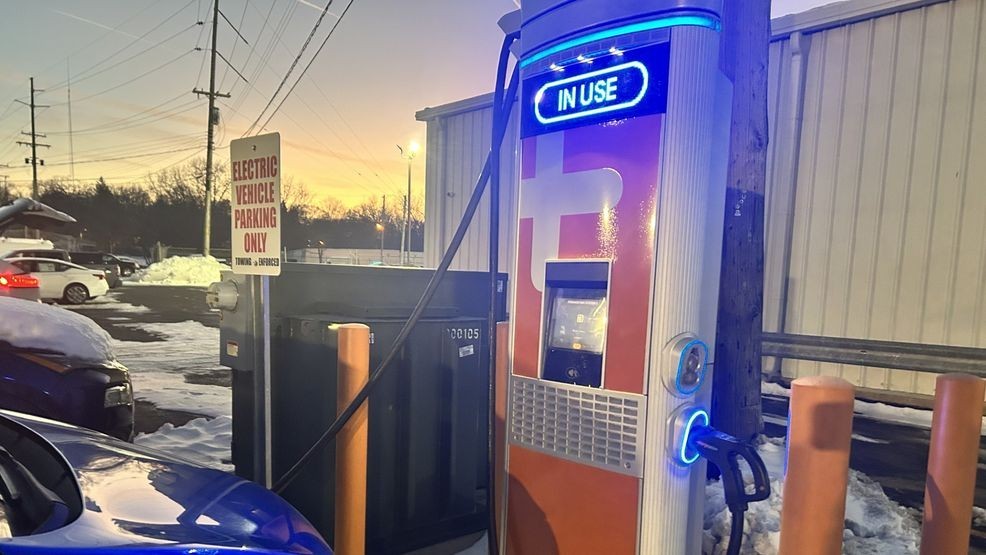
Michela explained that she must charge her vehicle every day, often for an hour or longer, because of her commute distance. During colder months, she said, the distance she is able to drive on a fully-charged battery goes down notably, especially when using temperature control, and charging takes even more time as the battery needs to warm up before reaching optimal charging speeds.
Pavone confirmed that in cold weather, electric vehicles can lose about 20% of their battery lifespan. For these reasons, Pavone emphasized the importance of understanding individual needs when considering an electric vehicle, suggesting that buyers should prioritize key questions about their annual mileage, commute, and driving expectations.
"I will never go full electric. Hybrid, I think is where they need to focus," Michela said.

Post a Comment for "Electric Vehicles in Michigan: Consumer Realities Amid Market Changes"
Post a Comment