Do Golf Carts Require Wheel Alignments?

Golf carts are often seen as recreational vehicles, but they require the same attention to mechanical details as traditional cars. Proper wheel alignment is a critical aspect of maintaining these vehicles, ensuring they operate safely and efficiently. When the alignment is off, it can lead to issues like the cart not tracking straight, which poses a risk to the driver and others around them. No one wants a golf cart accident or a dangerous rollover, so understanding and maintaining proper alignment is essential.
Wheel alignment for a golf cart involves ensuring that the wheels are parallel to each other and perpendicular to the ground. Two key factors in this process are camber and toe. Camber refers to the tilt of the wheels when viewed from the front, while toe is the inward or outward angle of the wheels when viewed from above. These adjustments are crucial for the performance and longevity of the golf cart, regardless of whether it runs on gas or electricity. The alignment specifications will vary depending on the make and model of the cart, its suspension design, and whether any aftermarket parts have been installed. For example, a lifted golf cart will likely have different alignment settings compared to a stock model.
It's important to recognize the signs of misalignment, which can include uneven tire wear, drifting to one side while driving, or an uncomfortable ride that feels like you're navigating an off-road track. In some cases, the wheels may rub against the frame during tight turns, indicating a need for adjustment. If you've installed a lift kit for more rugged terrain, it’s even more crucial to check the alignment regularly, as modifications can affect the cart's handling and stability.
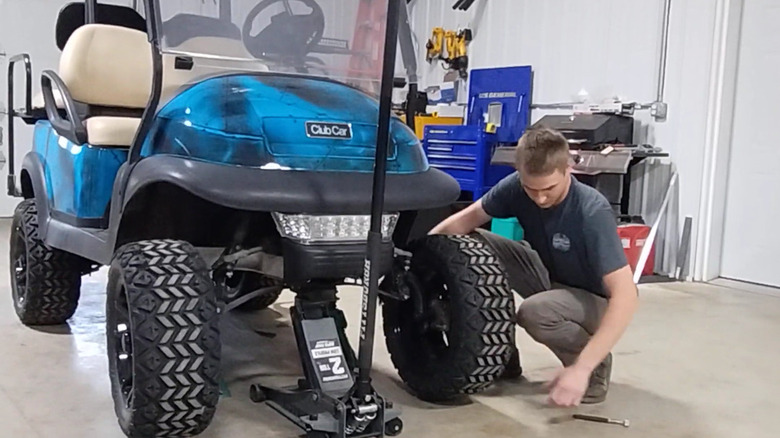
When it comes to aligning your golf cart, you have two main options: doing it yourself or seeking professional assistance. Professional shops have trained technicians who can ensure your golf cart receives the best care possible. A basic wheel alignment typically costs between $50 and $100, though additional costs may arise if parts need to be replaced. If you prefer not to get involved in the process, visiting a professional is a reliable choice.
On the other hand, a DIY alignment is entirely feasible. Golf cart suspension and tire systems are simpler than those found in cars, but precision is still necessary. With a flat surface and the right tools—such as jacks, accurate tape measures, and wrenches—you can perform basic camber and toe adjustments. We'll go into more detail about this process shortly.
In addition to alignment, there are several general maintenance practices that contribute to the overall health of your golf cart. Tire pressure plays a significant role in extending the life of your tires, so it's important to keep it between 15 and 25 psi, depending on the model. Rotating your wheels periodically, similar to how you would with a car, helps distribute wear evenly. Avoid aggressive driving, as this can put unnecessary strain on the vehicle. Instead, drive smoothly and enjoy the surroundings. Keeping your cart clean and using tire protectant can also help prevent tire dryness and cracking.
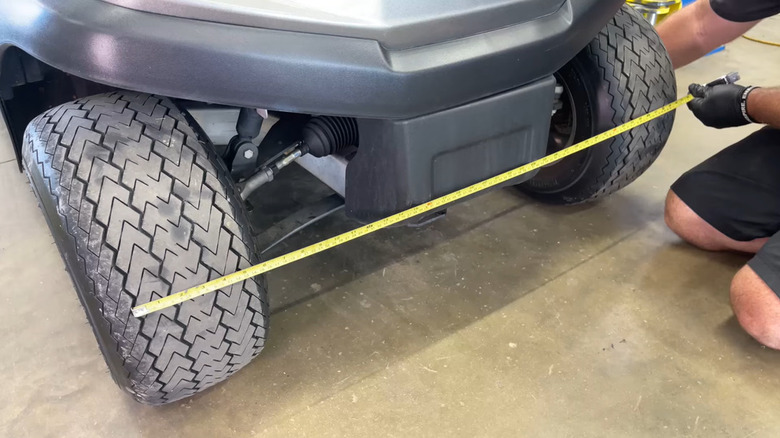
To adjust the camber on your golf cart, start by finding a flat surface and ensuring the tires are properly inflated. Use a straight object, such as a carpenter's square or a level, to check the alignment of the wheels. If there is a gap at the top or bottom, loosen the lower control-arm nut (the bottom Heim joint) and adjust the tire position until it is straight up and down. Tighten the nut and repeat the process on the other side.
Next, focus on adjusting the toe-in measurement. Use a marker or chalk to mark the centerline on the front tread of both front tires, as well as the back sides. Measure the distance between the front-side marks and the back-side marks. The front of the tires should be approximately 1/8-inch closer to each other than the back. To make this adjustment, loosen the jam nuts and rotate the tie rods evenly on each side. Keep in mind that golf cart tie rods are reverse-threaded on both ends, so turn them in the intended direction by the same number of turns until the measurement falls within the correct range.
After making these adjustments, roll the cart forward a few feet to allow the suspension to settle, then re-measure the alignment. While the process may not be glamorous, it can significantly improve the cart's steering and overall performance.
For more tips and insights on golf cart maintenance and other automotive topics, consider joining the Jalopnik newsletter to stay updated on the latest news and information.

Post a Comment for "Do Golf Carts Require Wheel Alignments?"
Post a Comment