Attack jets vs. fighter jets: Key differences explained
Understanding the Difference Between Fighter Jets and Attack Aircraft
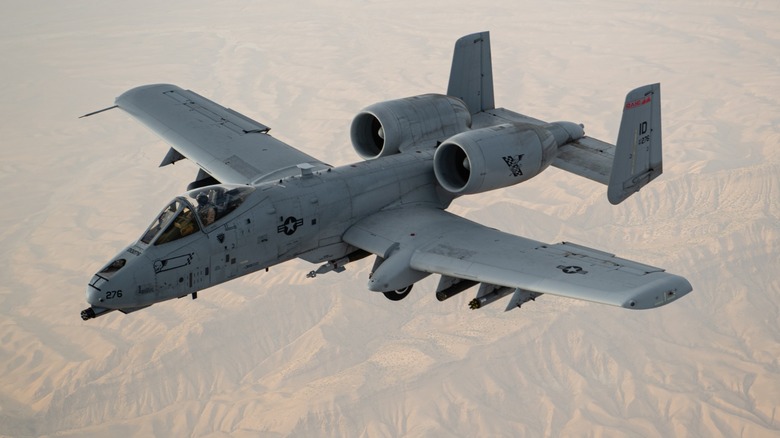
While it might be tempting for the general public to refer to any military aircraft that flies fast as a fighter jet, there are a few that don't exactly fit that designation. The legendary A-10 Warthog, for example, doesn't fit into the definition of a fighter jet. The "A" in A-10 stands for attack, and any aircraft with that sole designation is built specifically for ground attack missions. Something like the A-10 can easily handle clearing out adversarial troops on the ground, main battle tanks, and bunkers, helping allies safely execute their missions.
Fighter jets have the unique advantage of being designed for speed and maneuverability. Where the A-10 doesn't even reach 500 mph, fighter jets like the F-15 Strike Eagle, an absolute legend in the skies, can get over 1,800 mph. That's because they're lighter, which means less armor. An A-10 can take a couple of hits and remain airborne thanks to some titanium armor.
When it comes to weaponry, besides the beast that is the A-10's 30mm GAU-8/A seven-barrel Gatling gun, attack aircraft will be outfitted with an assortment of bombs and air-to-ground missiles. Fighter jets, on the other hand, will carry a variety of weapons, but are primarily loaded out to combat other aircraft, so they'll carry air-to-air missiles.
The U.S. Military's Most Notable Attack Aircraft
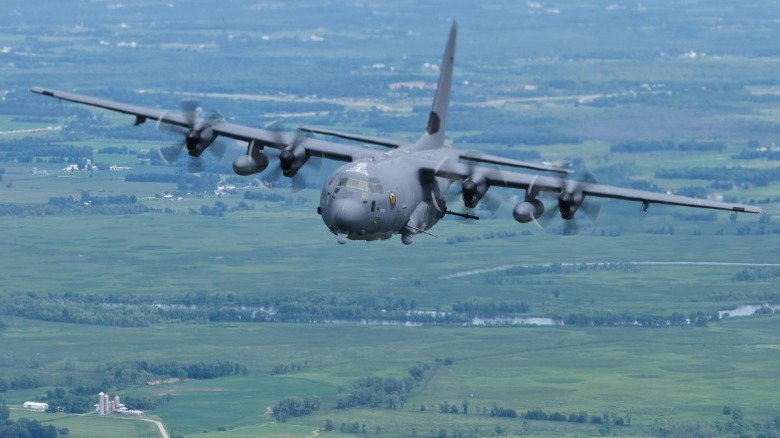
Besides the A-10, the United States Air Force employs a heavily modified C-130 cargo plane as an attack aircraft. Yes, you read that right: a cargo plane is an attack plane. The AC-130J Ghostrider, often referred to as the Angel of Death, was built to handle close air support for ground troops, utilizing its Precision Strike Package. This modification arms the former cargo plane with 30 mm and 105 mm cannons, as well as a selection of bombs and air-to-ground missiles.
There's also the likes of the F/A-18 Super Hornet, which takes on attack missions from time to time, hence the "A" in its designation. While the AC-130J and A-10 typically provide close air support, F/A-18 Super Hornets are also capable of providing deep air support, meaning they're farther away from the combat but still very much involved. Super Hornet pilots will often find a few air-to-air missiles equipped to their wings alongside a laser-guided bomb or two, some general-purpose bombs, rockets, and mines, too.
However, there is plenty of crossover between modern-day fighter jets and attack missions because every fighter jet has the ability to carry bombs and embark on an attack mission. Some aircraft are simply better suited for the attack role, though. An A-10 and AC-130J can hover around a combat area to provide close air support and remain effective thanks to their armor. An F-22 can't accomplish that as effectively.
Key Features of Attack Aircraft
- Specialized Design: Attack aircraft are built for ground attack missions, focusing on delivering heavy payloads and providing direct support to ground forces.
- Heavy Armament: These planes are typically equipped with a variety of bombs, missiles, and cannons, allowing them to engage targets on the ground effectively.
- Armor Protection: Unlike fighter jets, attack aircraft often have more armor to withstand enemy fire, making them more durable in combat situations.
- Close Air Support: Many attack aircraft are designed to operate at low altitudes and provide immediate support to troops engaged in combat.
Modern Capabilities and Versatility
In today’s military landscape, the distinction between fighter jets and attack aircraft is becoming increasingly blurred. While traditional roles remain, many modern aircraft are designed with dual capabilities. For instance, the F/A-18 Super Hornet can switch between air superiority and ground attack missions depending on the situation. This versatility allows military forces to adapt quickly to changing battlefield conditions.
Moreover, advancements in technology have enabled fighter jets to perform attack missions with greater precision and efficiency. However, when it comes to prolonged engagement in close combat scenarios, attack aircraft like the A-10 and AC-130J still hold a significant advantage due to their specialized design and durability.
As the military continues to evolve, the roles of these aircraft will likely expand further, ensuring that both fighter jets and attack aircraft play critical roles in maintaining air superiority and supporting ground operations.

Post a Comment for "Attack jets vs. fighter jets: Key differences explained"
Post a Comment