Young Office Workers Ditch Korea's Corporate Drinking Culture: Survey Reveals Shift
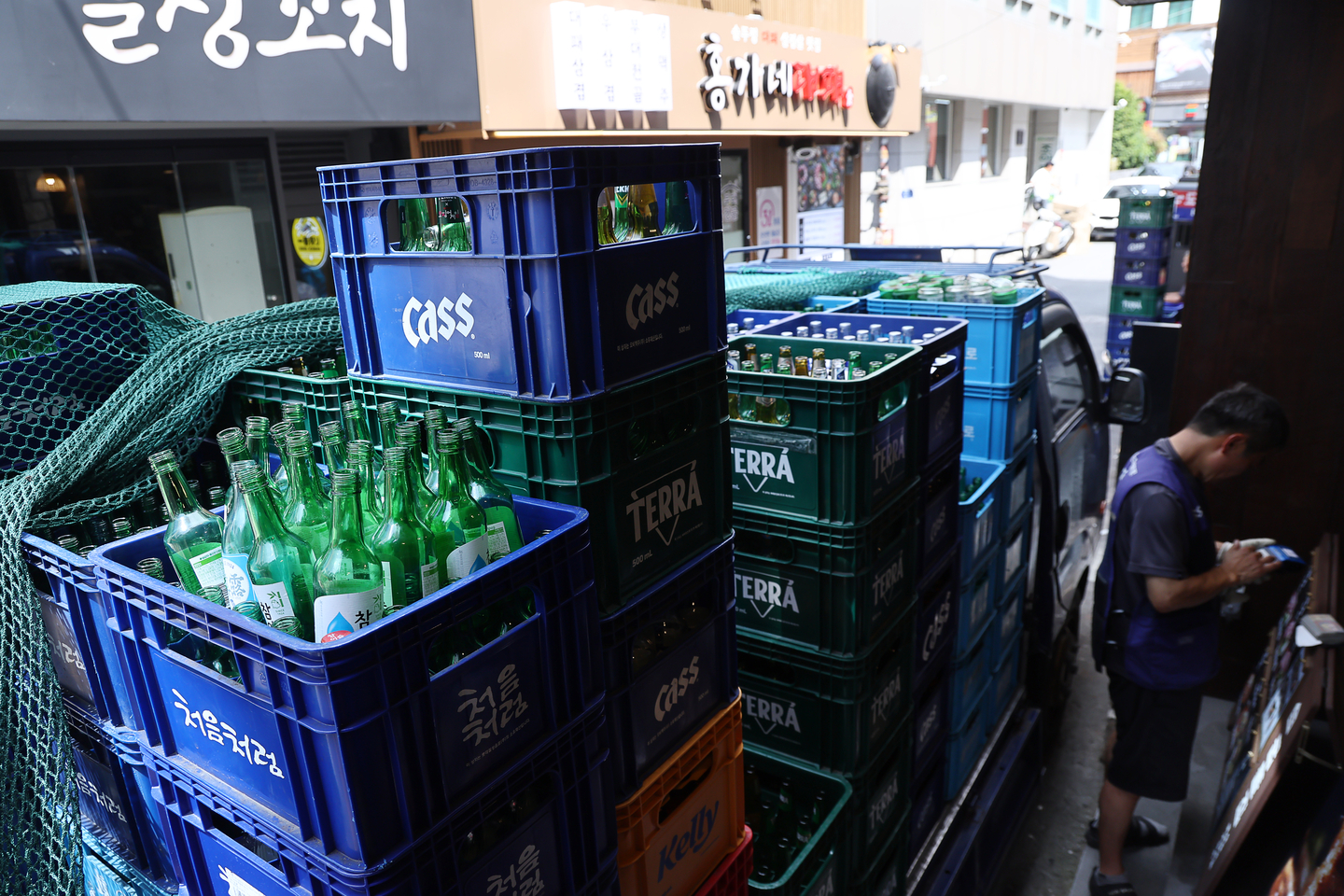
Crates of alcoholic drinks are stacked near a restaurant in Jung District, central Seoul, on Aug. 18. [YONHAP]
A recent survey has revealed that younger office workers in South Korea are shifting away from the traditional practice of late-night drinking sessions and instead favoring shorter team meals during work hours. This change reflects a broader movement among younger generations to move away from the country’s long-standing corporate drinking culture.
The survey, conducted by job portal Incruit, involved 888 office workers and aimed to gather their opinions on year-end gatherings, which have been a longstanding tradition in Korean workplaces. The findings highlight a generational divide in preferences regarding these events.
Preferences Vary by Age Group
According to the survey, 36 percent of respondents in their 20s and 37.7 percent in their 30s preferred holding year-end gatherings during work hours. Younger workers also favored simpler formats, with about 38.8 percent of respondents in their 20s and 35.8 percent in their 30s stating they preferred events that involve only a meal.
In contrast, older generations held different views. A significant number of workers in their 40s (44.3 percent) and those aged 50 or older (60.2 percent) favored evening gatherings. Additionally, a substantial portion of these age groups preferred events that go beyond just a meal, with 35.7 percent of workers in their 40s and 47.2 percent aged 50 or older supporting the inclusion of alcohol in such gatherings.
Perceived Importance of Year-End Gatherings
The poll found that 58.8 percent of all respondents believed year-end gatherings were “necessary,” though this perception increased with age. While 47.5 percent of workers in their 20s and 51 percent in their 30s agreed that such events were important, the figure rose to 66.5 percent for those in their 40s and 68.9 percent for those aged 50 and older.
When asked why these gatherings matter, the most common answer was that “time is needed to build bonds,” cited by 46.6 percent of respondents. Another 36.8 percent pointed to “the need for a meaningful way to wrap up the year.” Other reasons included “relieving work-related stress” (9 percent) and “boosting morale” (7.3 percent).
Mixed Views on Necessity
Despite the perceived importance, 41.2 percent of respondents said year-end gatherings are “not necessary.” More than half of this group — or 52.2 percent — felt that their personal time was being taken away. Other reasons included the belief that these gatherings “do not provide real help in terms of work or relationships” (21.3 percent), “centering on senior staff, which lowers morale” (17.5 percent), and “the risk of incidents or accidents from excessive drinking” (7.9 percent).
Attendance Trends
Despite the mixed views, 69.7 percent of respondents said their workplace plans to host a year-end gathering this year. Among them, 69.8 percent indicated that attendance is optional.
By company size, employees at large firms reported the highest rate of having year-end gatherings at 75.7 percent, as well as the most freedom to choose whether to attend at 83.3 percent. Attendance flexibility was lower at small- and medium-sized enterprises, where 62.8 percent of workers said participation was voluntary.
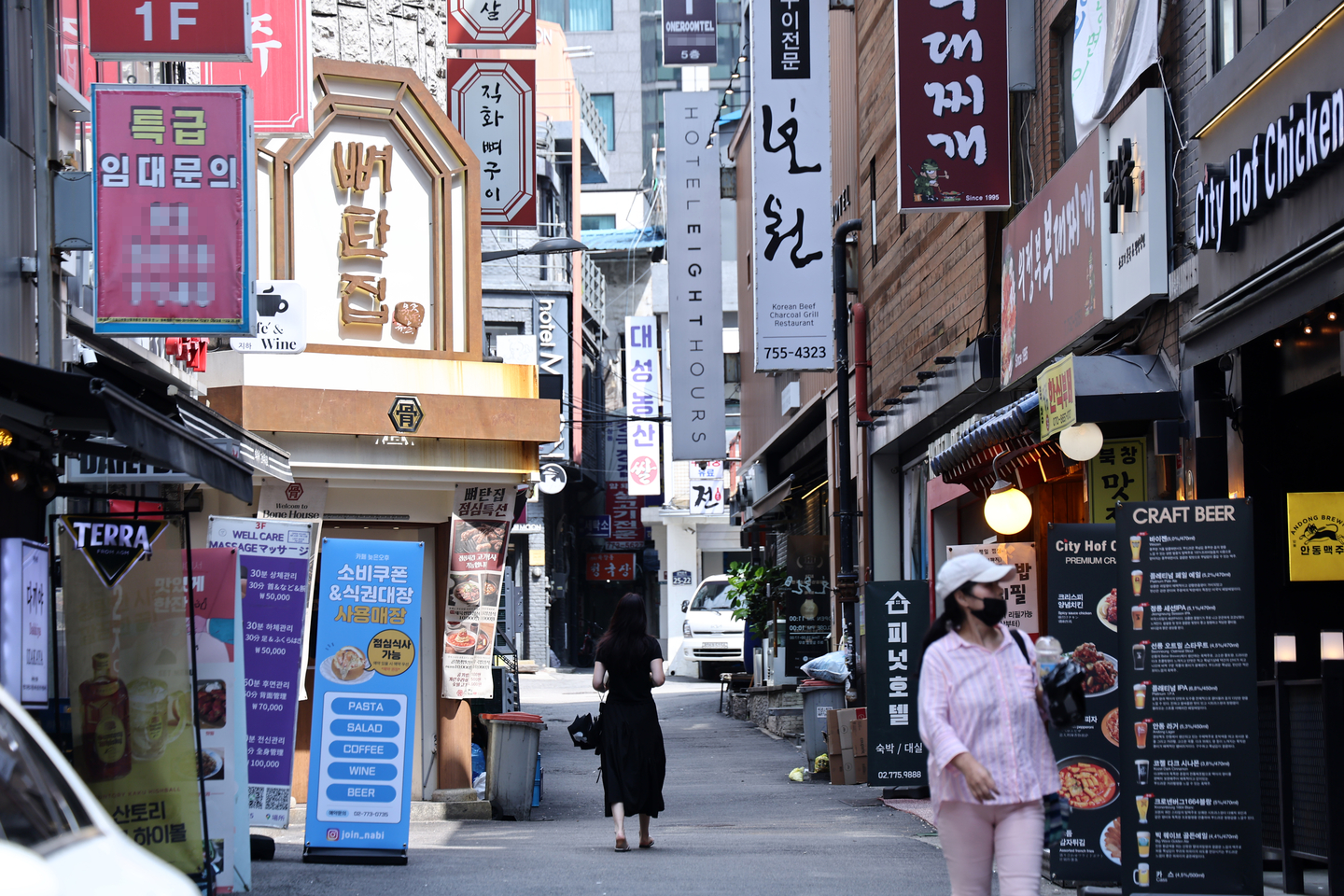
Pedestrians walk through an alley of restaurants in Jung District, central Seoul, on Aug. 18. [YONHAP]

Post a Comment for "Young Office Workers Ditch Korea's Corporate Drinking Culture: Survey Reveals Shift"
Post a Comment