Who is Fallout's Robert House and Could He Be Season 2's Villain?
The Intriguing Introduction of Robert House in Fallout Season 2
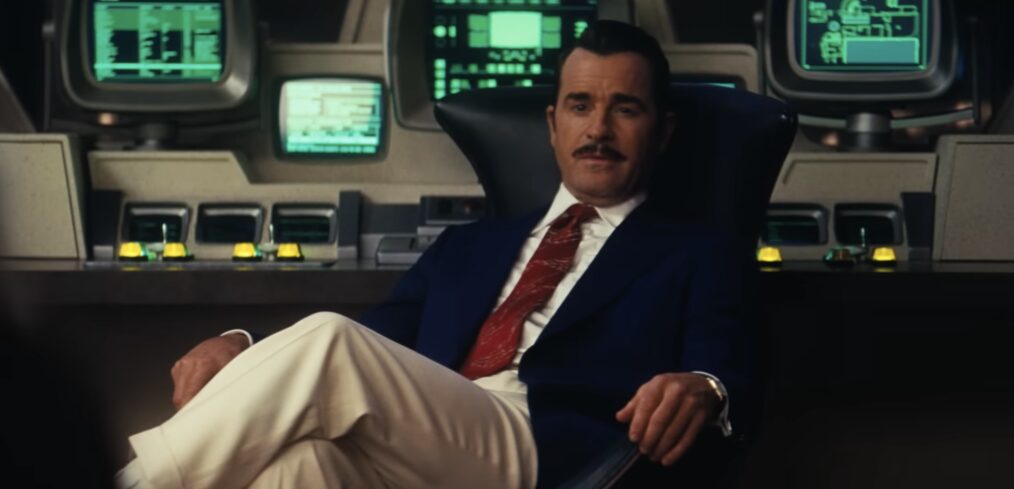
In the Fallout Season 2 premiere, viewers were treated to a scene set before the bombs fell, depicting a world on the brink of chaos. The streets were filled with riots, and people turned against RobCo and its Mister Handy robots. On television, “Robert House” calmly insisted that his machines would bring about “greater efficiency in the workplace.”
At a bar, a group of angry construction workers watched House’s speech, calling him a parasite. One of them spat, “We didn’t vote for this maggot.” From a nearby table, a dapper man coolly replied, “Oh yes, you did. Every dollar spent is a vote cast.” This statement captured their attention and redirected their anger.
Audiences then witness the man tricking the workers into testing a device for him, offering $31 million to place a device on the back of his neck for “research.” A device that turns the largest of the thugs into a killing machine before his head implodes. After taking in the bloody mess, the man retrieves his device and states, “The world may end, but progress marches on.”
And with that, audiences are introduced to Robert House in Episode 1, “The Innovator.” The real Robert House.
How Theroux Brought Robert House to Life
To adapt Mr. House from the small screen to the big screen, it starts with his voice — his trademark Transatlantic accent that sends a message to anyone listening: This man is from money.
“You can hear it in all kinds of radio announcers and newscasters, and it was very prevalent,” said Theroux. “Those people who could speak in paragraphs and beautiful elocution, and it served a purpose — the purpose of speaking in that sort of Connecticut, WASP-y way, immediately puts people beneath you and tells them that they’re beneath you the minute you open your mouth.”
“So, once I found that sort of voice, I thought, ‘Oh, that’s great. And there’s elements of that in the actor who played him in the game [originally voiced in the 2010 game by René Auberjonois].’”
“I heightened it a little bit, just because I had to play something a bit more three-dimensional than what was on a monitor or computer screen. And that was fun like that, that part of the character was fun to play. Hopefully that comes across.”
Is Robert House Based on Anyone?
“I won’t say who, but we know a number of figures in the world right now that are similar to Robert House,” Goggins said of his friend’s portrayal of the fictional tech billionaire. “Let’s call it Howard Hughes. Let’s just play that safe. [House is] one of the most well-known people in the world.”
Is Robert House a Villain?
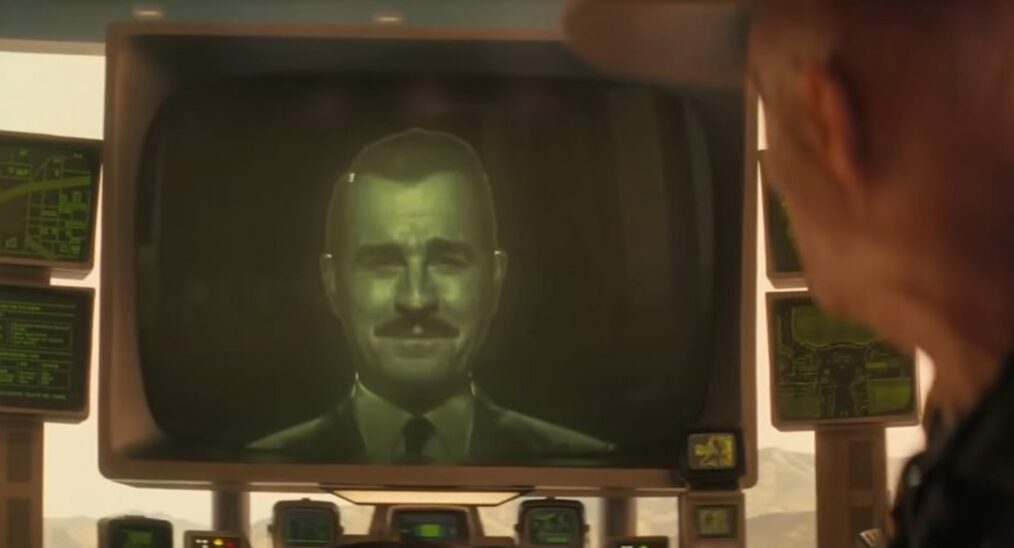
“He’s a mathematician. He just does things,” said Theroux. “If you’ve played the game, you know exactly who he is.”
“There’s a wonderful sort of speech at the beginning where he sort of talks about the hand, the electric hammer that he’s invented, and all these things, and those are really his children. The technology is his family. And that was really sort of revelatory, just to be like, Oh, he doesn’t have to burden himself with anything other than his own specific industry. He’s just in that incredibly rarefied billionaire air where he meets no resistance from anyone.”
“So you have to find a sort of toehold in how to play them. What does he care about? What does he want? And, fortunately, we have any number of billionaires in the real world who have technology that they are deploying on the population. And so I sort of found that as the toehold in, which is, ‘Oh, he’s just a guy that really believes in the things that he makes,’” said Theroux.
“The fly in the ointment comes when he has to sort of engineer the end of the world, frankly, and people have to die in order to do that,” explained the actor. “And, and I don’t think he takes human beings into account the same way you or I would. He’s sort of like a McNamara in that respect, and that, you know, he crunches the numbers. This many people have to live, this many people have to die. And it’s sort of like when people talk about colonizing Mars or the end of the world, or AI, or, you know, whatever, you know, there’s just this kind of cold math that creeps into the narrative. It’s just very disconcerting.”
Indeed, Theroux’s comparison of the Wasteland’s indifferent genius to Robert McNamara — the former U.S. Secretary of Defense known for applying a highly quantitative, data-driven management strategy to the Vietnam War — was not a casual one. It underscores the character’s calculated pragmatism and the unsettling efficiency with which he views human outcomes. And Theroux was not the only person to find House’s cold utilitarianism both off-putting and slightly familiar.
“I guess what I really sort of relished playing was some just just his affect, you know, his voice, the way he carried himself, the way he smoked, just that kind of, just from an actor standpoint, that was the really fun part.”
Within minutes, House shows audiences who he is: a futurist. He is a man who is not afraid to make the necessary sacrifices to move the conversation forward. Brilliant and savvy. He is the wealthiest man on the planet. He knows how to safeguard a desert oasis from an incoming nuclear strike. And he occasionally demonstrates a striking indifference toward human life.
As Prime Video’s Fallout expands into the stark disarray and madness of New Vegas, Theroux’s portrayal anchors Robert House as something more than a video game icon: He is a reflection of the modern technocrats who shape society from behind closed doors. The result is a character who is as unsettling as he is fascinating.

Post a Comment for "Who is Fallout's Robert House and Could He Be Season 2's Villain?"
Post a Comment