Unethical Photographers Threaten Tiny Starlit Frogs
The Galaxy Frog: A Stunning Species in Peril
The galaxy frog, one of the most visually striking amphibians on the planet, is facing a dire threat from unregulated photography trips. Scientists have raised alarms about the species' declining population, which has been severely impacted by human interference in its natural habitat.
Native to the evergreen forests of India’s Western Ghats, the galaxy frog is a tiny creature, no larger than a fingertip. Its unique appearance, marked by star-like speckles that resemble a galaxy, makes it a sought-after subject for photographers and nature enthusiasts alike. However, this very feature has also made it vulnerable to exploitation.
The frogs inhabit the damp crevices beneath rocks, fallen leaves, and decaying logs within this biodiversity hotspot. They are listed as "vulnerable" by the International Union for Conservation of Nature (IUCN), highlighting the urgency of protecting their fragile ecosystem.
A recent study published in Herpetology Notes reveals that unregulated photography trips are a major contributor to the decline of the galaxy frog population. The research found that these trips cause significant disturbances, leading to changes in the frogs’ behavior that can negatively affect their feeding and breeding success.
In early 2020, Rajkumar K P, a researcher from the Zoological Society of London, discovered a group of seven galaxy frogs nestled beneath logs in the Western Ghats. However, upon returning after a break due to pandemic restrictions, he found the entire group had vanished, raising serious concerns about the species' survival.
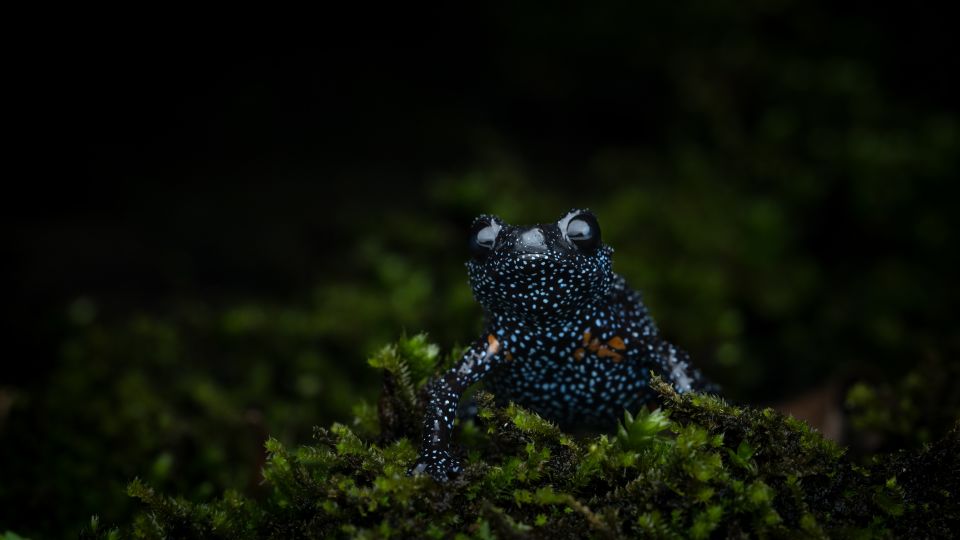
The study notes that researchers had been monitoring the area since 2019 as part of an ongoing effort to track these elusive creatures. By March 2020, they had identified a group of seven frogs hidden under decomposing logs and leaf litter. Over the next two summers, however, the site became a hotspot for photographers, who trampled the area and displaced logs in their search for the perfect shot.
According to the report, photographers were familiar with the frogs’ microhabitat, often using information from publications and local trackers to locate them. They overturned many logs while searching for the species, frequently moving the frogs onto moss or logs to create more visually appealing images.
The frogs endured repeated handling during these sessions, which lasted up to four hours per day. High-powered camera flashes illuminated the scene, exposing the delicate creatures to prolonged stress. Contact with bare hands, lack of hydration, and the absence of biosecurity protocols left the frogs vulnerable to heat, stress, and potential disease.
One tracker reported that two small frogs died during the marathon photoshoots, although this could not be independently verified by the researchers. Despite this, the incident underscores the risks posed by unregulated photography.
The Need for Ethical Photography Practices
The study calls for the establishment of ethical standards in nature and conservation photography throughout India to better protect the country's wildlife. Rajkumar emphasized that while photography can be a valuable tool for conservation, it must be done responsibly.
“This sad event is a stark warning for the consequences of unregulated photography,” Rajkumar said. “These beautiful yet rare frogs are unlike anything else on our tiny corner of the universe, but without careful and responsible management, we risk them disappearing off the face of the planet for good.”
He added that when done correctly, photography can be a huge asset to helping conservationists understand animal distribution and behavior. The resulting images can also educate others about these incredible species.
“However, irresponsible photography can turn this asset into a hazard,” Rajkumar warned. “It is crucial that photographers and nature enthusiasts recognize the impact of their actions and take steps to minimize harm to the environment and its inhabitants.”

Post a Comment for "Unethical Photographers Threaten Tiny Starlit Frogs"
Post a Comment