She Built a Nail Salon Empire from $400 in New York
The Journey of Jin Soon Choi: From Struggle to Success
New York City has a way of revealing who is serious. For Jin Soon Choi, the journey began in the early 1990s with a plane ticket, $400, and a vague belief that the city’s creative energy might change her life. She had left Korea with no fashion ambitions and no interest in beauty. Writing interested her more than polish bottles. Still, she trusted her instinct that an artsy city would teach her something she could not learn at home.
New York taught her fast, and not gently. She struggled to find work, struggled to speak English, and struggled to stay afloat. What carried her forward was not a grand plan, but a quiet refusal to give up. Over time, that persistence turned into one of the most influential careers in modern nail culture.
Sometimes Survival Jobs Reveal Your Real Advantage
Jin’s first jobs in New York ended quickly. A grocery store cashier role lasted two days. A waitressing job in Koreatown ended after one. Language stood in the way, and confidence followed closely behind. Her third job, as a manicurist in a Korean-owned nail salon, lasted.
The work suited her in unexpected ways. She could sit with clients, speak slowly, and practice English without pressure. More importantly, she discovered how she naturally worked. She was never the fastest technician in the room, but her attention to detail stood out. Clients noticed the care she took and kept coming back.
She spent four to five years working in Korean-owned salons, learning the craft and observing customer behavior. Instead of stopping at a nail license, she earned a cosmetology license to keep future options open. That choice led her to an American-owned salon near 70th Street in Manhattan, where she worked as the only manicurist for two years and built confidence with a broader clientele.
Lesson: Pay attention to what customers respond to. Your natural working style can become your edge.
Resourcefulness Can Replace Connections at the Beginning
In 1997, a regular client suggested something simple. Why not offer manicures in people’s homes? Another client gave her a bicycle. A former salon boss gave her a large backpack. Jin packed a foot bath inside and rode through New York City, traveling from apartment to apartment. Clients began calling her “Bicycle Jin.”
Those house calls changed everything. Inside people’s homes, she met stylists, editors, and creatives. One stylist explained editorial work and suggested she explore it. Jin did not know what that meant yet, but she listened. She went to Barnes & Noble and copied the names and addresses of beauty directors from magazines by hand. She mailed 50 letters introducing herself and offering her services. Only one person responded.
Andrea Pomerantz Lustig, a former beauty director at Cosmopolitan, invited her to her apartment and introduced her to an editorial agency. That single reply opened doors.
Lesson: When you lack access, persistence and preparation can create it.
Mastery Matters When Timing Finally Lines Up
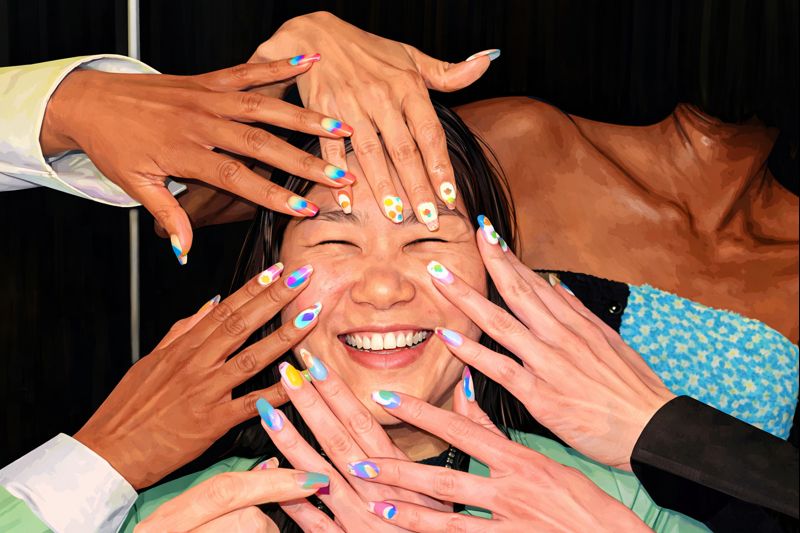
Once inside the editorial world, Jin’s meticulous work set her apart. She began working on beauty shoots for brands including L’Oréal, Revlon, Maybelline, Sally Hansen, MAC, and CoverGirl. In 2001, photographer Carlton Davis noticed her nail work and commissioned a test shoot. Those images circulated, and The New York Times Magazine ran a feature. At the time, nail art was rarely treated as a creative discipline in editorial photography. Jin’s work showed what was possible.
Fashion followed. Her first runway show was Jill Stuart, paid in clothing rather than cash. Soon, Sally Hansen and Revlon sponsored her fashion week work. She became a backstage regular, collaborating with designers like Marc Jacobs and Prada and working closely with photographer Steven Meisel. Her client list grew to include Bella Hadid, Gigi Hadid, Anne Hathaway, Kendall Jenner, and Carolyn Murphy.
Lesson: Skill compounds quietly until the right moment arrives. Be ready when it does.
Design and Atmosphere Can Redefine an Entire Category
After her editorial success, a friend connected to a nonprofit supporting women entrepreneurs encouraged Jin to open a salon. A business plan was submitted for a grant, and two years later, she received funding. Her first salon opened in December 1999 in the East Village. Jin and her husband, an architect, designed the space together. They sourced materials from flea markets and created a calm, Asian-inspired environment using rice paper, cherry wood, and bamboo outside the entrance. Many passersby thought it was a tea house.
At the time, nail salons were clinical and transactional. Jin reframed the experience as a spa. Her salons emphasized calm, beauty, and care. Signature pedicures carried poetic names like “Spirit of the Beehive” and “Summer Oasis.” Expansion followed. West Village, Upper East Side, and Tribeca locations opened, each maintaining the same attention to atmosphere and service. By 2018, four JINsoon spas operated across New York City.
Lesson: Reimagining the customer experience can unlock entirely new demand.
Products Scale What Service Proves
After collaborating twice with MAC, Jin decided to launch her own polish line. By then, she understood exactly what clients wanted. Long wear. Quick drying. Eco-conscious formulas. Elegant colors. JINsoon launched in 2012 with premium placement at Space NK and later Barneys. The formulas were 21-FREE, cruelty-free, and vegan-friendly. She used gel-like technology without actual gel ingredients to improve durability.
She and her husband designed the bottle themselves, using Italian glass and minimalist architecture. The packaging became as recognizable as the shades. The brand launched with more than 60 colors inspired by abstract art and modern aesthetics.
Lesson: Product success comes from listening closely before building broadly.
Growth Brings New Lessons If You Stay Honest
Jin has been candid about her mistakes. In a 2022 interview, she said she wished she had raised more capital before launching the polish line. Doing everything herself slowed growth and pulled her away from creative work. She advises founders to hire strong people early and resist the urge to control everything.
Even today, she avoids calling herself successful. She prefers fulfilled. Her philosophy centers on step-by-step progress, empathy, and constant learning. English remained a challenge for years, and she tackled it through self-directed study, community classes, library resources, and immersion.
As of 2025, JINsoon salons continue operating in New York. The brand remains active on runways and in editorial work. In 2024, Primrose + Honeysuckle Healing Cuticle Oil won an Allure Best of Beauty award. A gel line launched in Korea in 2023, signaling global expansion.
Lesson: Long careers are built by improving systems, not chasing shortcuts.

Post a Comment for "She Built a Nail Salon Empire from $400 in New York"
Post a Comment