Milwaukee Fuel vs. Fuel Surge: Key Differences Explained
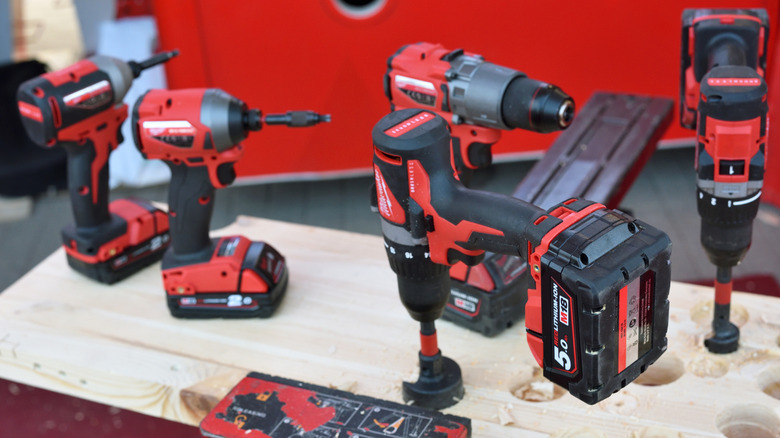
The process of purchasing any consumer product often involves a tug-of-war between buyers seeking the best value and marketers pushing for higher-priced upgrades. This dynamic is especially true in the power tool industry, where navigating through marketing jargon to find the right tool can be challenging.
Milwaukee's FUEL lineup is known for its efficient brushless motors, but not all Milwaukee tools with brushless motors are labeled as FUEL. There's also the FUEL SURGE line, which has no direct connection to motor technology. Understanding the differences between these lines can help you make an informed decision about your next tool purchase.
How FUEL SURGE Drivers Differ from FUEL Impact Drivers
At their core, FUEL SURGE drivers are an upgrade to traditional Milwaukee M12 and M18 FUEL impact drivers. They introduce a quieter and more refined hydraulic power delivery system, specifically designed for impact drivers that often generate high levels of noise, vibration, and harshness (NVH).
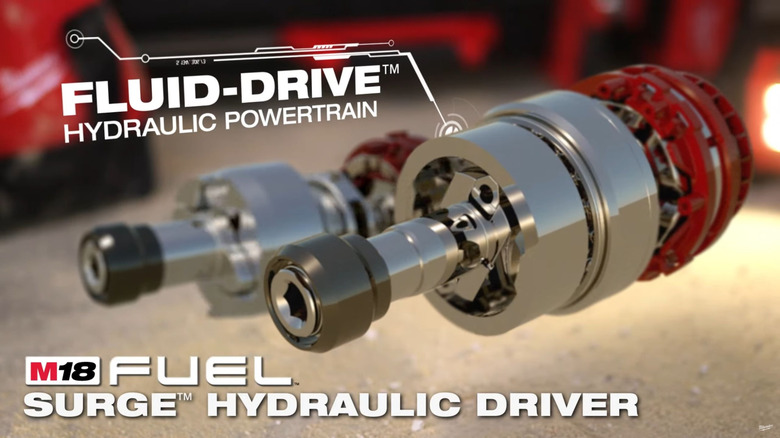
Traditional impact drivers work by delivering violent torque impulses to drive stubborn fasteners. While this method avoids kickback, it comes with risks such as hearing damage and fatigue due to vibrations. The FUEL SURGE technology uses a FLUID-DRIVE hydraulic powertrain that employs the rapid expansion and compression of hydraulic fluid to drive fasteners with greater refinement. This system acts as a cushion, reducing noise and vibration while also improving tool longevity.
Comfort Comes at a Cost
While FUEL SURGE drivers offer improved comfort, they do come with trade-offs. These hydraulic drive tools sacrifice some torque and speed compared to traditional FUEL impact drivers. For example, the 1/4-inch M18 FUEL SURGE impact driver delivers only 450 in-lb of peak torque, whereas the non-hydraulic version can reach up to 2,000 in-lb. However, this difference may not feel as drastic when driving appropriately sized fasteners.
Driving large-diameter fasteners into dense materials will still be more effective with the higher-torque FUEL impact drivers. In such cases, a 1/2-inch FUEL driver would be more suitable than a 1/4-inch tool. That’s why Milwaukee hasn’t applied the SURGE hydraulic drive system to its 1/2-inch impact drivers.
FUEL SURGE drivers are ideal for tasks like driving Phillips head screws without stripping them. They function best as specialized tools used alongside traditional impact drivers for heavy-duty jobs.
Who Should Choose FUEL SURGE Over FUEL?
The compromise in speed and torque makes FUEL SURGE drivers well-suited for applications such as electrical installations and cabinetry work. Traditional impact drivers could potentially damage delicate materials like MDF boards or electrical switchboards. The smaller M12 FUEL SURGE driver is particularly useful for smaller electrical and carpentry tasks where precision and control are essential.
In contrast, loud construction sites favor the higher torque output of M18 FUEL impact drivers despite their noise. Quieter FUEL SURGE tools are better suited for residential or office environments where minimizing disturbance is important.
Choosing Between FUEL and FUEL SURGE
The decision between FUEL and FUEL SURGE tools is straightforward. Those working in noisy environments like construction, metalwork, or framing should opt for FUEL tools. For lighter-duty tasks such as cabinetry and electrical work in occupied spaces, FUEL SURGE tools offer a quieter and more delicate alternative.



Post a Comment for "Milwaukee Fuel vs. Fuel Surge: Key Differences Explained"
Post a Comment