Is the Kia Soul Reliable? JD Power Weighs In
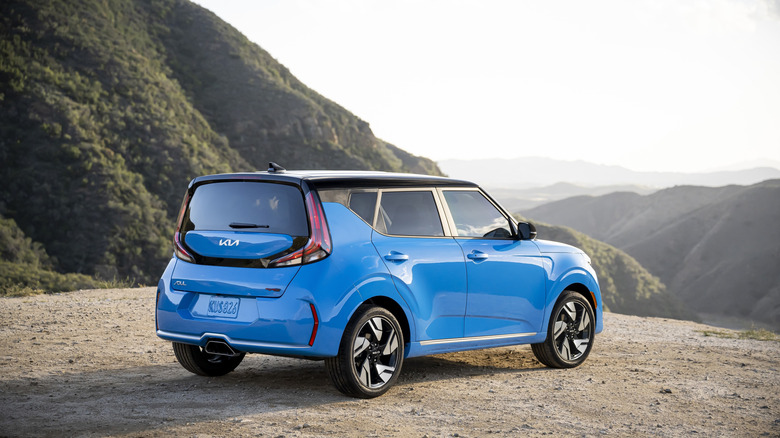
The Kia Soul has officially said goodbye, but its legacy remains strong. Since its debut in 2009, the Soul sold over 1.5 million units, a testament to its unique appeal and value. The car's funky styling, combined with low pricing and smart features, made it a standout in the compact hatchback segment. Even the 2025 model, with an MSRP of $21,395 (including destination charges), offered standard features like Android Auto/Apple CarPlay, WiFi compatibility, and Kia's Drive Wise technologies. These driver aids included automatic braking, lane-keeping assistance, and a driver-attention monitor, making the Soul not just feature-packed, but also reliable.
J.D. Power has consistently reviewed the Soul's reliability since its introduction, and it was only rated as "Average" twice. This rating is based on a 100-point score derived from hundreds of thousands of independent and unbiased opinions from verified car owners. In September, Consumer Reports highlighted improving reliability across the Kia brand, with the Soul specifically achieving the sixth-highest Predicted Reliability score in its 22-car segment. It even outperformed non-hybrid versions of the 2026 Toyota Corolla and Honda Civic.
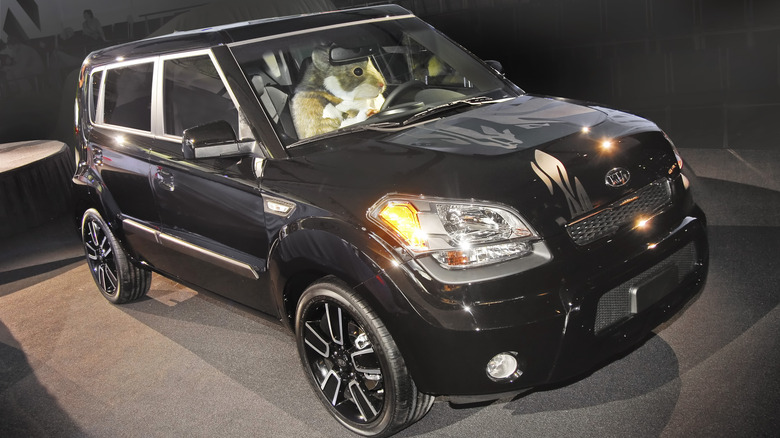
Backed by a fun-loving crew of anthropomorphic hamsters, the Kia Soul made a major impact when it debuted for the 2010 model year. It won several awards, including a spot on that year's Interior of the Year list from Ward's AutoWorld. At the time, the Soul's starting price of $13,300 (not including destination fees) came with standard air conditioning, a rarity for small cars.
In its first appearance in J.D. Power data, the 2010 Soul received an "Average" score for Quality & Reliability, just a few points behind the 2010 Toyota Corolla. The following year, the 2011 Soul improved enough to earn a "Great" rating. A 2012 refresh brought a more powerful and efficient engine, but the Q&R score dropped slightly back to "Average." However, the Soul rebounded in 2013 to maintain a "Great" rating, setting the stage for the all-new second-generation model in 2014.
The second-generation Soul sustained its "Great" ratings until the launch of the third and final generation in 2020. Kia also sold an EV version of the Soul from 2015 to 2019, though it was never rated by J.D. Power.
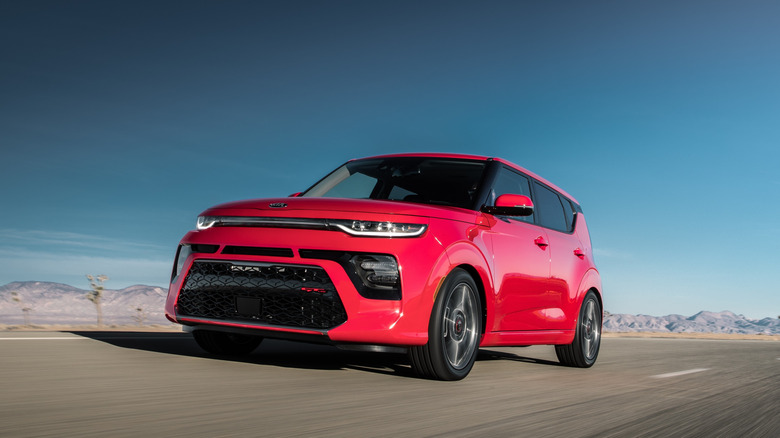
The third-gen Kia Soul premiered for the 2020 model year and quickly caught the attention of J.D. Power—not just for its reliability, but also for its performance. The Soul earned a "Great" Q&R score, outperforming top names like the 2020 Toyota Corolla. Additionally, it won segment victories in the 2019 J.D. Power Multimedia Quality and Satisfaction Study and the 2020 Initial Quality Study.
The Soul carried over pretty much unchanged for 2021 and 2022, maintaining its "Great" Quality & Reliability results. In fact, 2021 was the Soul's highest point in terms of J.D. Power Q&R ratings, as it edged out luxury SUVs like the Lexus RX.
In 2023, the Soul received a mid-cycle refresh with some nice updates, but the writing was on the wall. The number of available trim levels decreased, signaling its eventual demise. Despite boosting standard ADAS technologies, including front automatic braking, lane-keeping assistance, and a driver-attention warning, it wasn't enough to save the hatchback. The Soul's final years saw a satisfying conclusion to its run of "Great" ratings, receiving the nod for 2024 and 2025 alike. Unfortunately, a surge in demand has driven up the cost of the final Souls, making them among the worst deals on new cars as some buyers are willing to pay a premium to get one.

Post a Comment for "Is the Kia Soul Reliable? JD Power Weighs In"
Post a Comment