A vibrant return at the Studio Museum in Harlem
New York
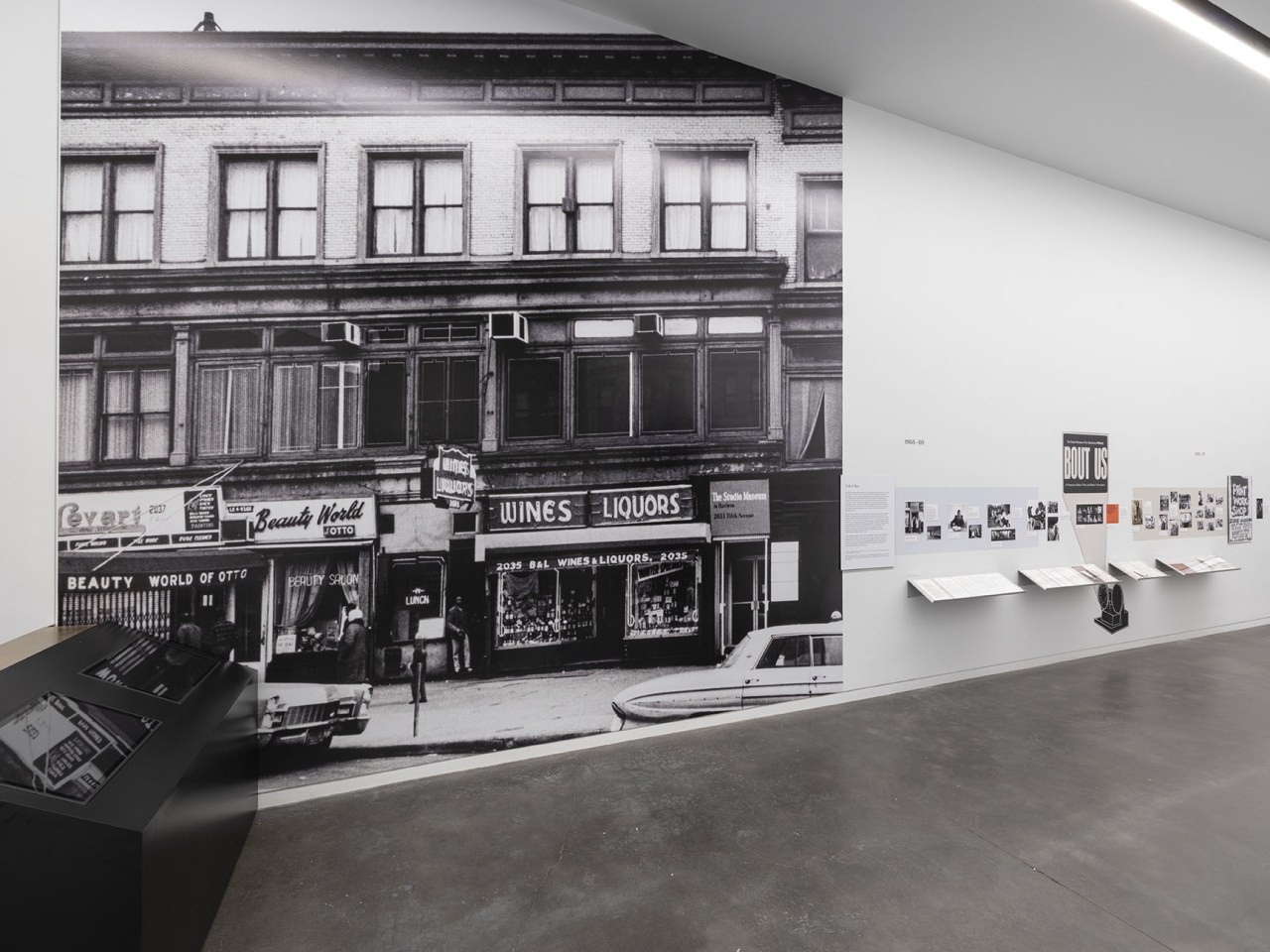
A wall text in the Studio Museum in Harlem’s new building quotes black novelist Ralph Ellison’s “Invisible Man,” published almost three-quarters of a century ago: “I am invisible, understand, simply because people refuse to see me.” Over the ensuing decades, Ellison’s words have become, thankfully, less and less true—in politics, the professions and, a bit more slowly and tardily, the art world. The Studio Museum in Harlem, whose original 1968 premises were above a liquor store on the corner of Fifth Avenue and 125th Street, was a signal it took the predominantly white art world a while to get used to.
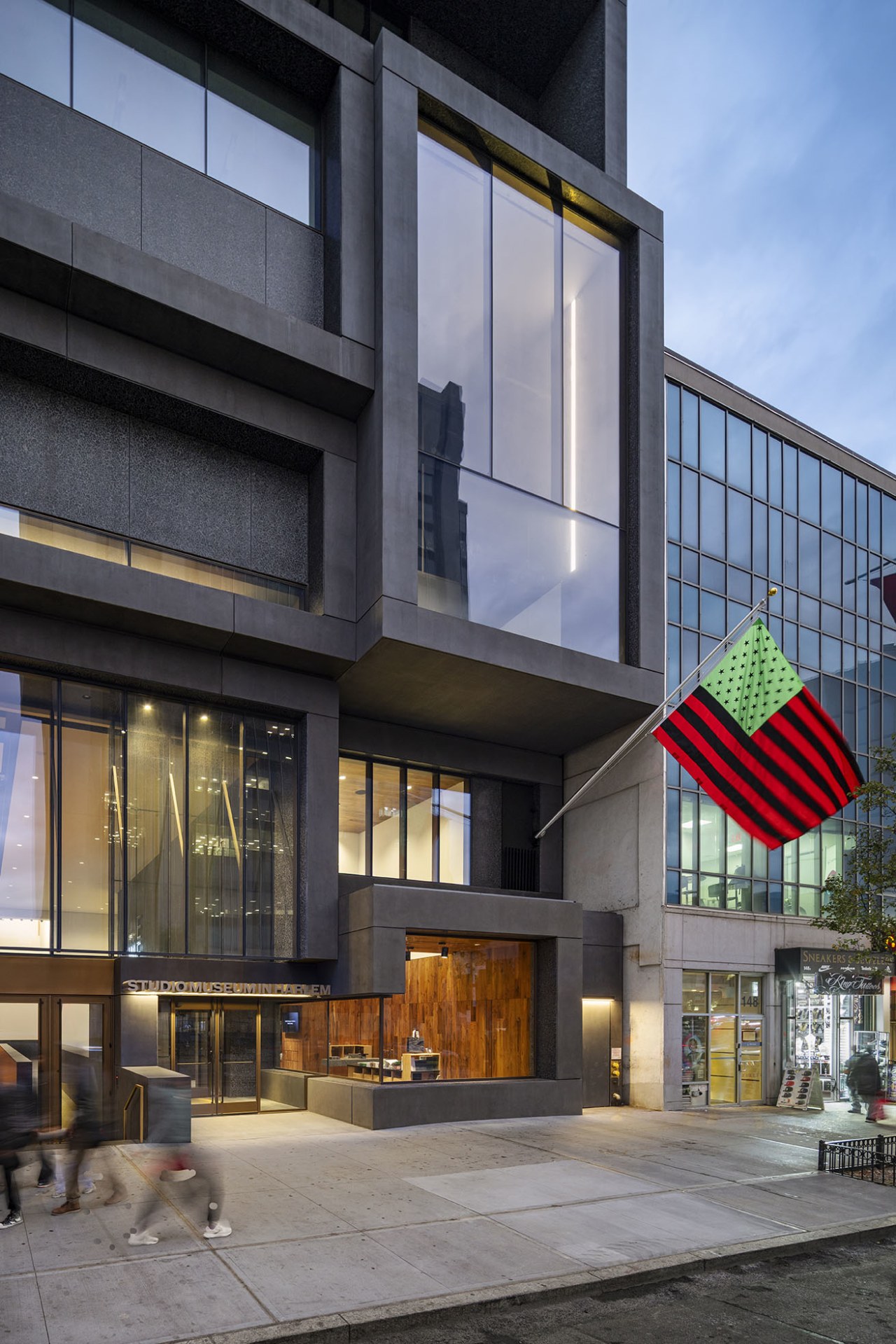
And a bit of vice-versa; when I came uptown on the subway in the 1980s to see an exhibition and was about to climb the stairs to the street, a group of young black men were lounging on the steps and blocking the way. I hesitated until one guy smiled and said to his friends, “Let the white boy through.” Today, the only hint of that friction present at the shiny new Adjaye Associates-designed edifice is David Hammons’s “Untitled” (2004), an ironic American flag made of black and red stripes and black stars on a green ground, that hangs in front of the building.
To celebrate its opening, the museum has mounted three main exhibitions. I recommend starting with the one on the top floor, “To Be a Place.” It’s a show of ephemera (a word that somehow makes the material on view sound less significant than it is), including photographs, exhibition announcements, and historical documents that tell the story of the Studio Museum. It’s not at all dry, and, if one is even remotely familiar with the institution’s story, is a moving chronicle of how it got from that above-a-storefront location to where it is now. From a photograph of the ribbon-cutting ceremony in 1968, through announcements for “The Black Masters” series of exhibitions (including Beauford Delaney in 1978 and Hale Woodruff in 1979), to images from “Freestyle” in 2001, the first show in a series dedicated to emerging artists, this crackling primer is an essential introduction.
The featured exhibition is a highlights show, “From Now: A Collection in Context.” The Studio Museum has about 9,000 objects in its holdings, so only a fraction of them could be put on view for the grand opening. The initial selection is still huge, consisting of 194 objects by 159 artists. It mixes works by prominent practitioners (e.g., Romare Bearden, Kara Walker, Melvin Edwards, Stanley Whitney, Jack Whitten and Alma Thomas) with lesser-known talents. The art on display—especially for this debut—is a little thin, at least in part because so many of the works are small. (Mr. Whitney’s abstraction is tiny, and “The Emancipation Approximation (Scene 18),” 1999-2000, by Ms. Walker is quite small compared with her more well-known work.) Slicing the show into thematic sections (e.g., “Pride,” “Allegories” and “Diaspora”) over-organizes the subject of black art in America without making matters clearer. And the inclusion of a life-size carved-wood “Mother and Child” (1993) by Elizabeth Catlett seems to be an example of sentimentally honoring history over aesthetic quality.
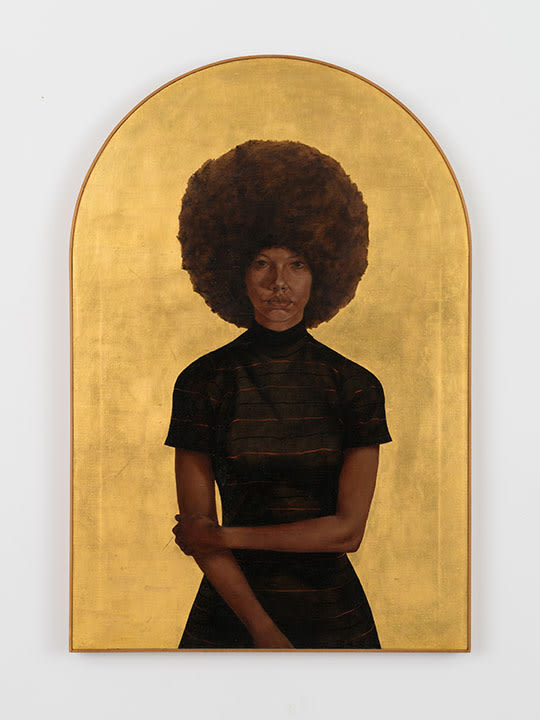
“From Now” does include, however, some good-to-terrific art. “Lawdy Mama” (1969) by Barkley L. Hendricks is a riveting, secular medieval madonna—a painting of a woman surrounded in gold, like a Byzantine icon, but brought into the 20th century by her ’60s clothing and Afro. Its more contemporary counterpart, “Kevin the Kiteman” (2016) by Jordan Casteel, is an engaging and deceptively informal painting of a familiar neighborhood figure peddling homemade art on 125th Street. Lauren Halsey’s “yes we’re open and yes we’re black owned” (2021) is a four-feet-on-a-side, enamel-painted wooden box fictively but forcefully announcing a neighborhood business. There’s a formal edginess to the work that lifts it above a mere proclamation of solidarity.
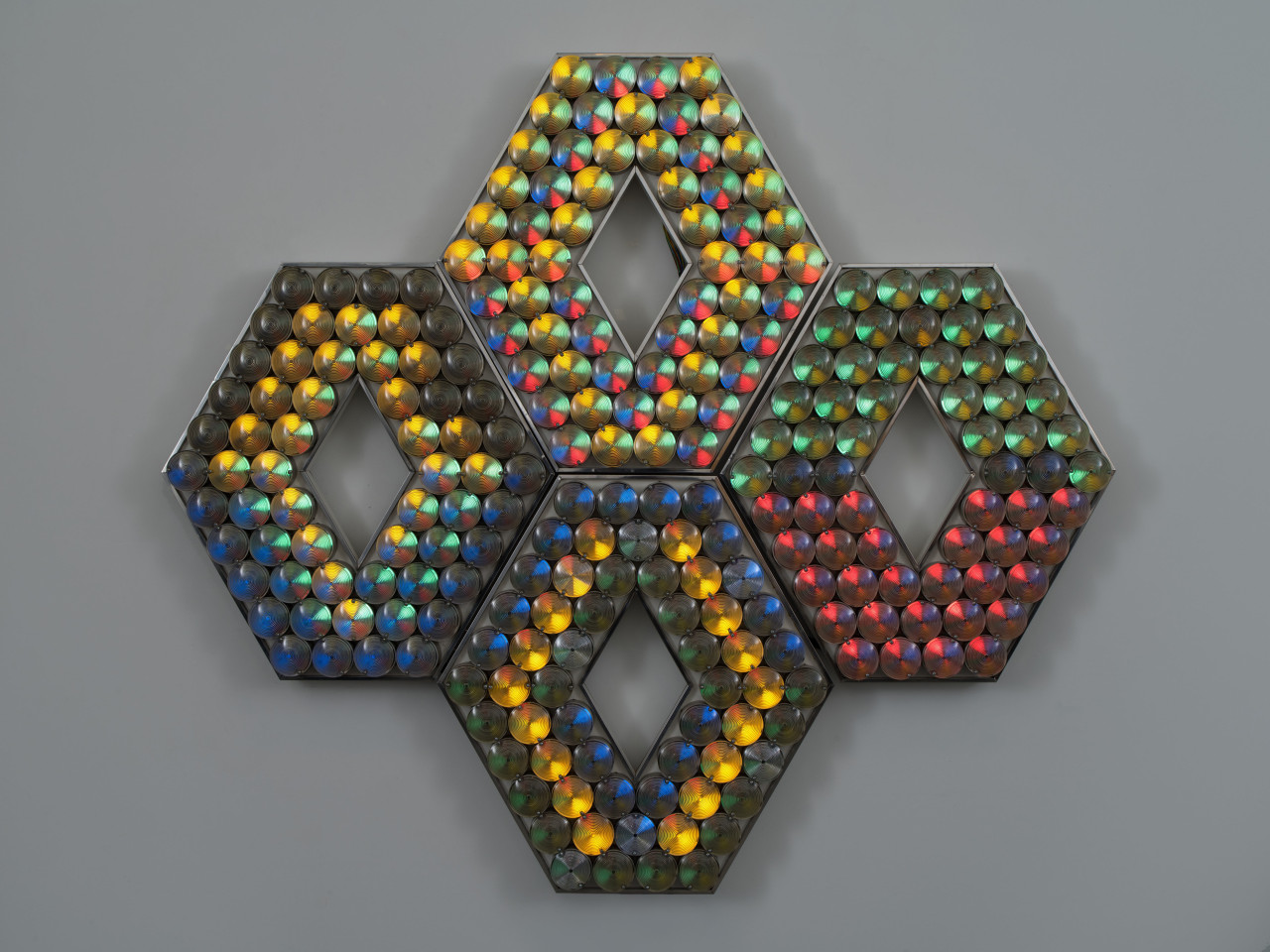
The headline solo exhibition is a show of electric-light wall sculpture by Tom Lloyd (1929-1996) that recreates the inaugural exhibition at the Studio Museum in 1968. Lloyd was initially a painter (he studied with the Abstract Expressionist Adolph Gottlieb) and assemblagist, but in the mid-’60s he began collaborating with an engineer on electric-light sculptures fashioned from the likes of Buick taillights and Christmas-tree decorations. Lloyd moved on to small, blinking, symmetrical configurations that, almost 60 years later, seem slightly old-fashioned. Where they once undoubtedly took onlookers aback, they now draw them affectionately in. Houston Conwill’s 1984 set of time capsules, “The Joyful Mysteries” (to be opened in 2034), as well as “Untitled (heliotrope),” a commissioned 2025 stairwell sculpture by artist-musician Camille Norment, add to the museum’s offerings.
The work that one sees upon first entering the new building—“Give Us a Poem” (2007)—is a neon-light sculpture by Glenn Ligon. It proclaims an over-under “ME/WE,” that reads as a word and its reflection. As placed here, the work says that the Studio Museum, while proudly a black institution, is hardly a separatist one. The friendly and flowing installation of the institution’s art reiterates that inclusionary sentiment, and in its new home the museum’s collection will surely soon match the impressiveness of its architecture.
Mr. Plagens is an artist and writer in Connecticut.

Post a Comment for "A vibrant return at the Studio Museum in Harlem"
Post a Comment