A Somber New Home for the Studio Museum in Harlem
A New Home for the Studio Museum in Harlem
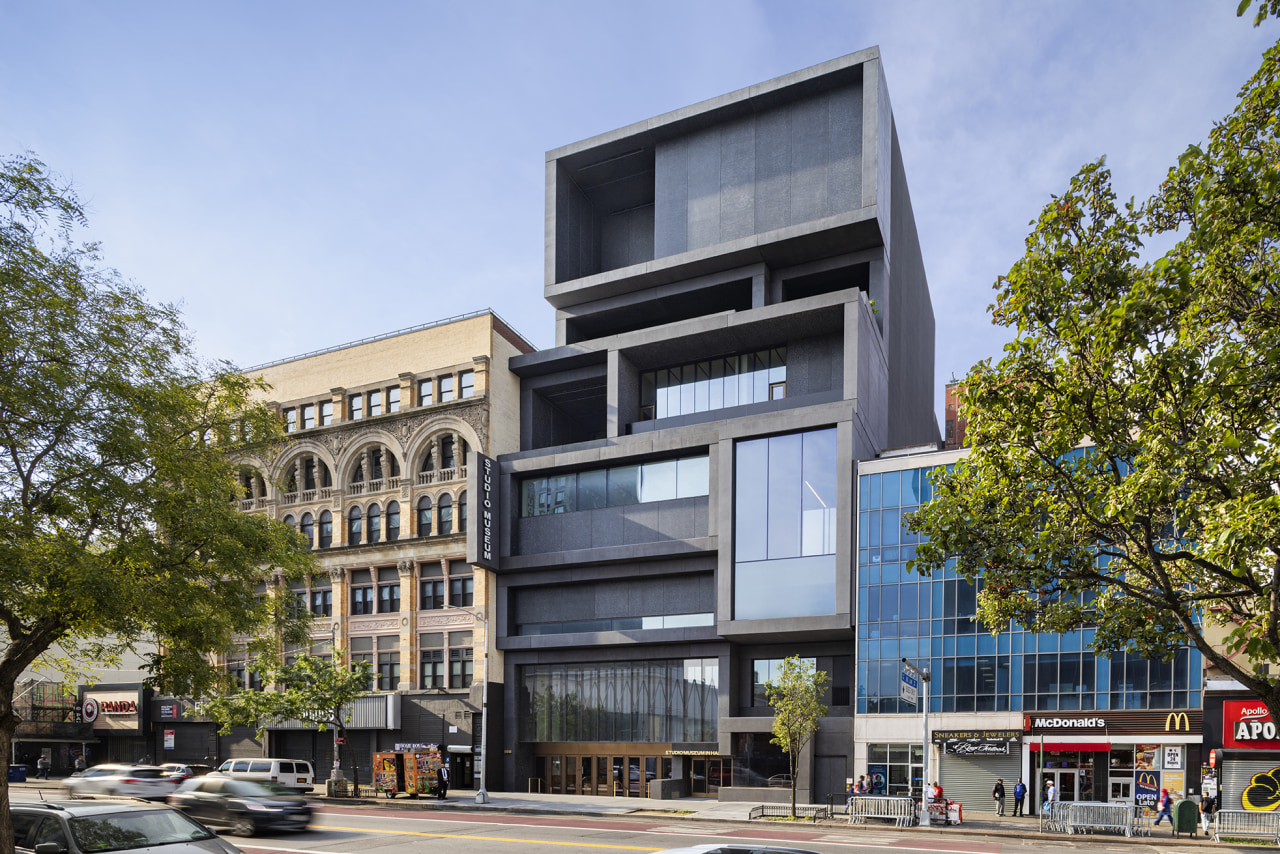
After spending most of its 57 years in a converted bank on 125th Street, having started life in a loft above a liquor store, the Studio Museum in Harlem finally has a home of its own. Its new building, which cost $160 million and was designed by Adjaye Associates, with Cooper Robertson as executive architect, opened Nov. 15. Looming six stories above the sidewalk, it provides 82,000 square feet of exhibition galleries, education space, and studios for its prestigious artists-in-residence program. But beyond this, it gives the Studio Museum what it never had before: a distinctive architectural identity.
To call that identity intriguing is an understatement. The motivating idea was to put the building “in dialogue with Harlem”—its history, its culture, and above all its vibrant urban life. To open it up to the street, the architects chose the motif of “frames, apertures and doorways.” The facade presents a series of rectangular frames, loosely stacked atop one another, as if we were peering into so many open boxes. Its character is somber and brooding, partly because of its materials—precast concrete, finely sandblasted to suggest dark gray stone—and partly because of the deep shadows they cast.
A step inside confronts you with two architectural set pieces in the form of stairs that push in different directions. Descending to your left is a broad “sitting stair,” wide enough to serve as bleachers and made of warm-colored wood. And before you are the actual stairs, monumental in size and treatment, leading to the galleries above. You hesitate for an instant, torn between the invitingly warm lower level and the formidable set of stairs leading upward.
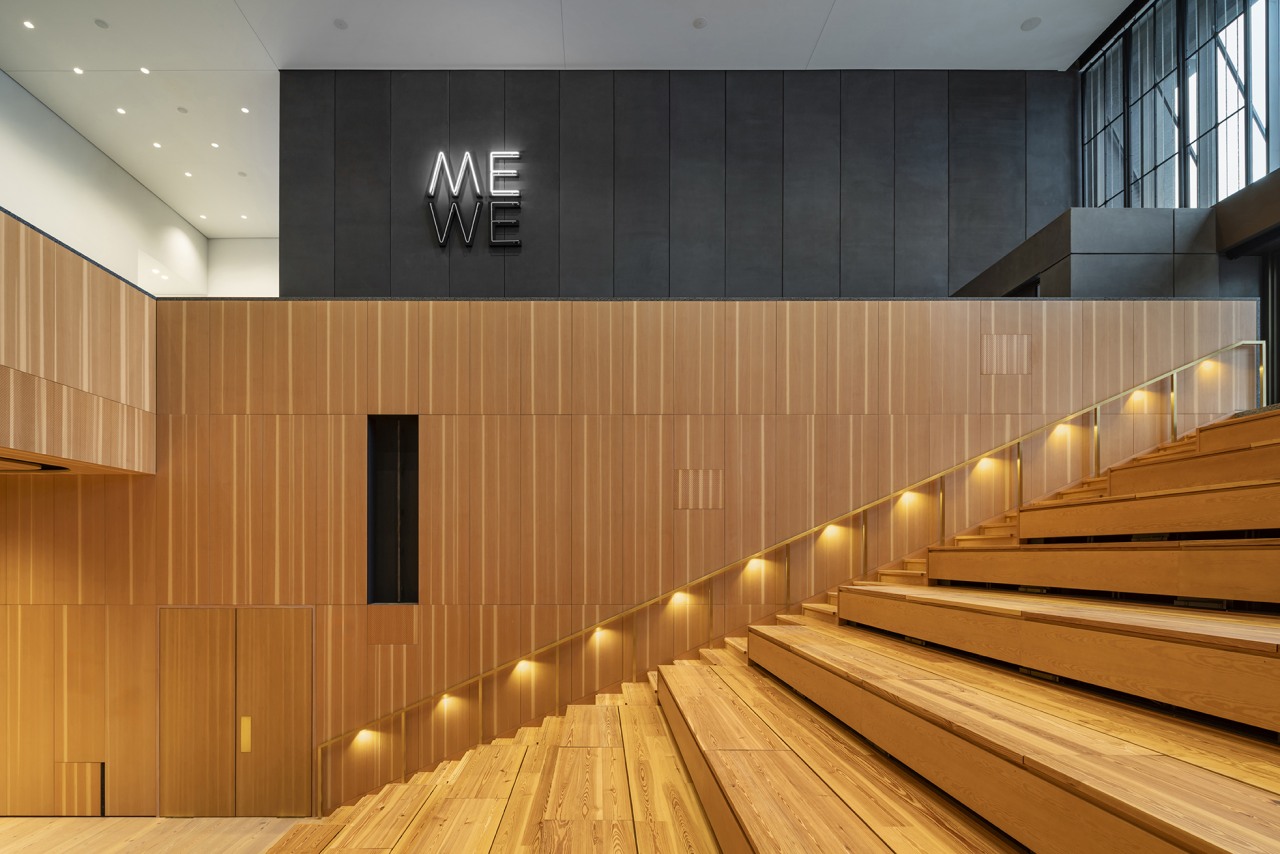
For the architects, the descending bleachers constitute a “reverse stoop,” another monumentalized form, this time of the brownstone stoops that are the front-row seats to Harlem’s street life. Here they are placed so that the doors of the museum can be thrown open to form an uninterrupted path from sidewalk to seat, welcoming the public to watch a performance. (At present the lower level mostly serves as informal seating for the café, for children’s reading sessions and the like.)
The main stair, by contrast, is prodigious. It rises in five mighty flights, tier upon tier, of precast concrete faced with terrazzo. If the scale suggests Piranesi, its reductive geometry is that of Minimalist sculpture, like something that Donald Judd might have made. But in its immensity, its implacable absoluteness, is a certain confusion between means and ends. A great stair should lead to something great, but this one dwindles away in the upper stories without fulfilling its mighty promise.
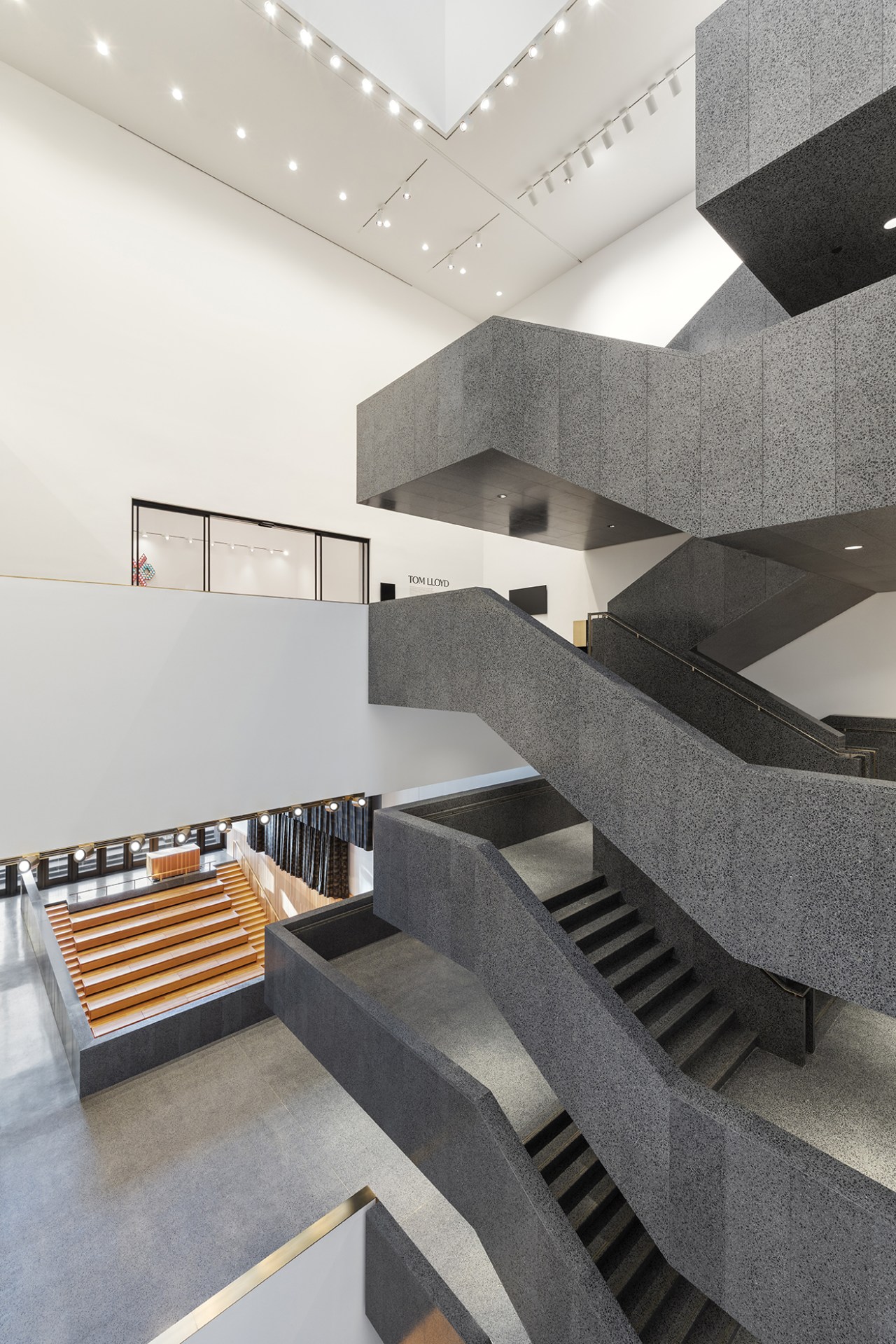
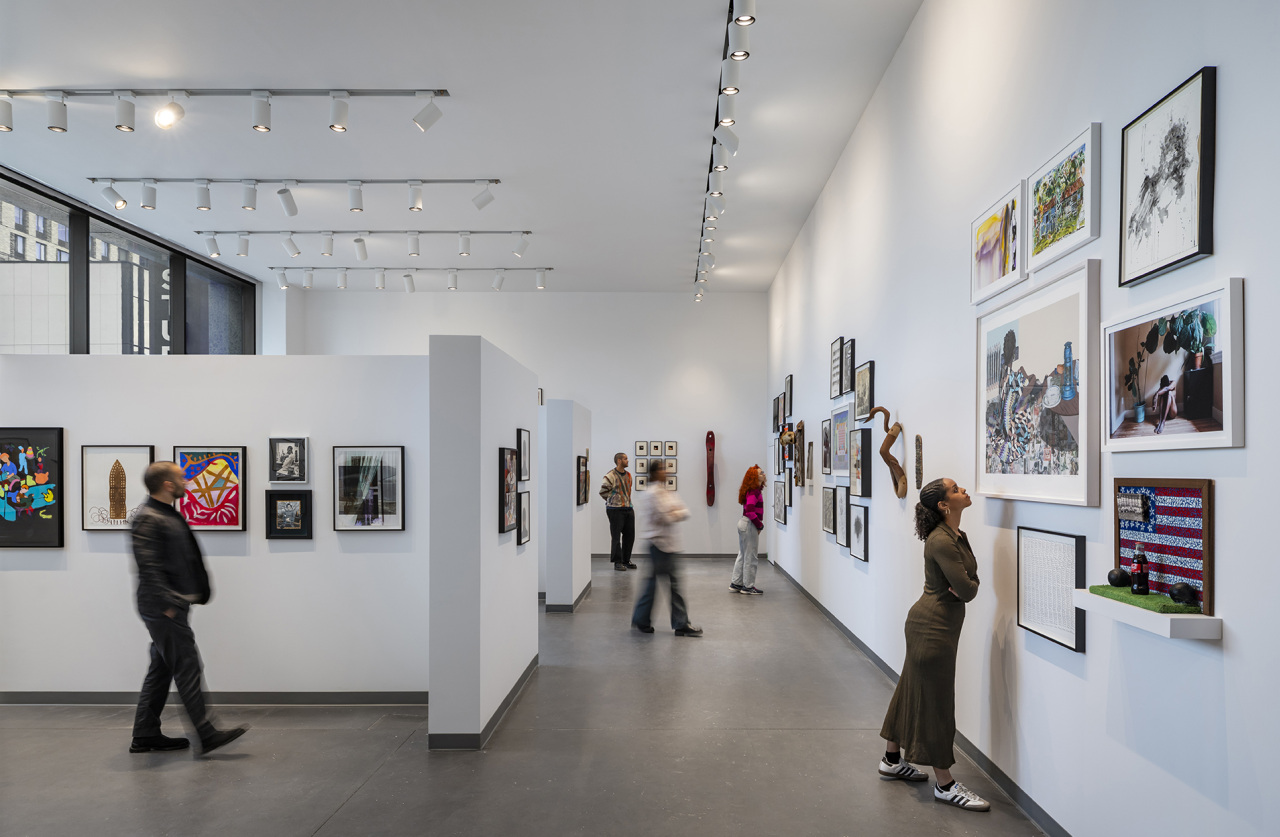
This is the inevitable consequence of the Adjaye design, which was to move the building’s architectural showpieces as close to the street as possible. So dynamic and so boisterous is the experience of the entrance that the rest of the building cannot help but feel anticlimactic. All the design energy seems to have gone into making this first impression, and much of the budget as well. For the rest of the building is disappointingly lackluster—boxy white galleries and corridors in “painted gypsum board,” i.e., sheetrock. Once past the initial exuberance, the only space of interest is the double-height gallery with a curved ceiling on the second floor.
Such is the problem of the plan, whose two great architectural episodes at the entrance have little relationship to the spatial organization of the rest of the building, which is that of a conventional side-hall plan, consisting of a run of major rooms alongside a narrow corridor, as in a townhouse. And those eye-catching episodes at the front entrance came at a cost in useful space. Although the exhibition galleries provide twice the amount of space of their predecessors, they use only about 17% of the museum’s square footage (although art can also be hung in the corridors).
Among its virtues, the Studio Museum is commendably generous to its artists in residence, who have studios and their own lounge. That program, intended to encourage “visual artists of African and Afro-Latinx descent,” has supported such prominent figures as Kehinde Wiley and David Hammons. And up on its sixth-story terrace you are above the rooftops of Harlem and can see, far to the south, Central Park and the cluster of spindly supertalls beyond. In many respects it is a good building, but those who wished for a great building will be disappointed.
It is a curious journey for an institution born in 1968, that year of creative destruction, of activism, fury and hopes. One might have expected some gesture toward its origins, rather than its cool and highly abstracted references to Harlem. I found myself missing some sense of its activist beginnings, of the passion and struggle from which urgent art can flow. After all, this is an institution that began life in a loft above a liquor store, something that might be remembered with defiant pride.
Mr. Lewis teaches architectural history at Williams College and writes about architecture for the Journal.

Post a Comment for "A Somber New Home for the Studio Museum in Harlem"
Post a Comment