Unveiling the Universe's Beginnings: 145 Low-Noise Amplifiers Complete ALMA Telescopes
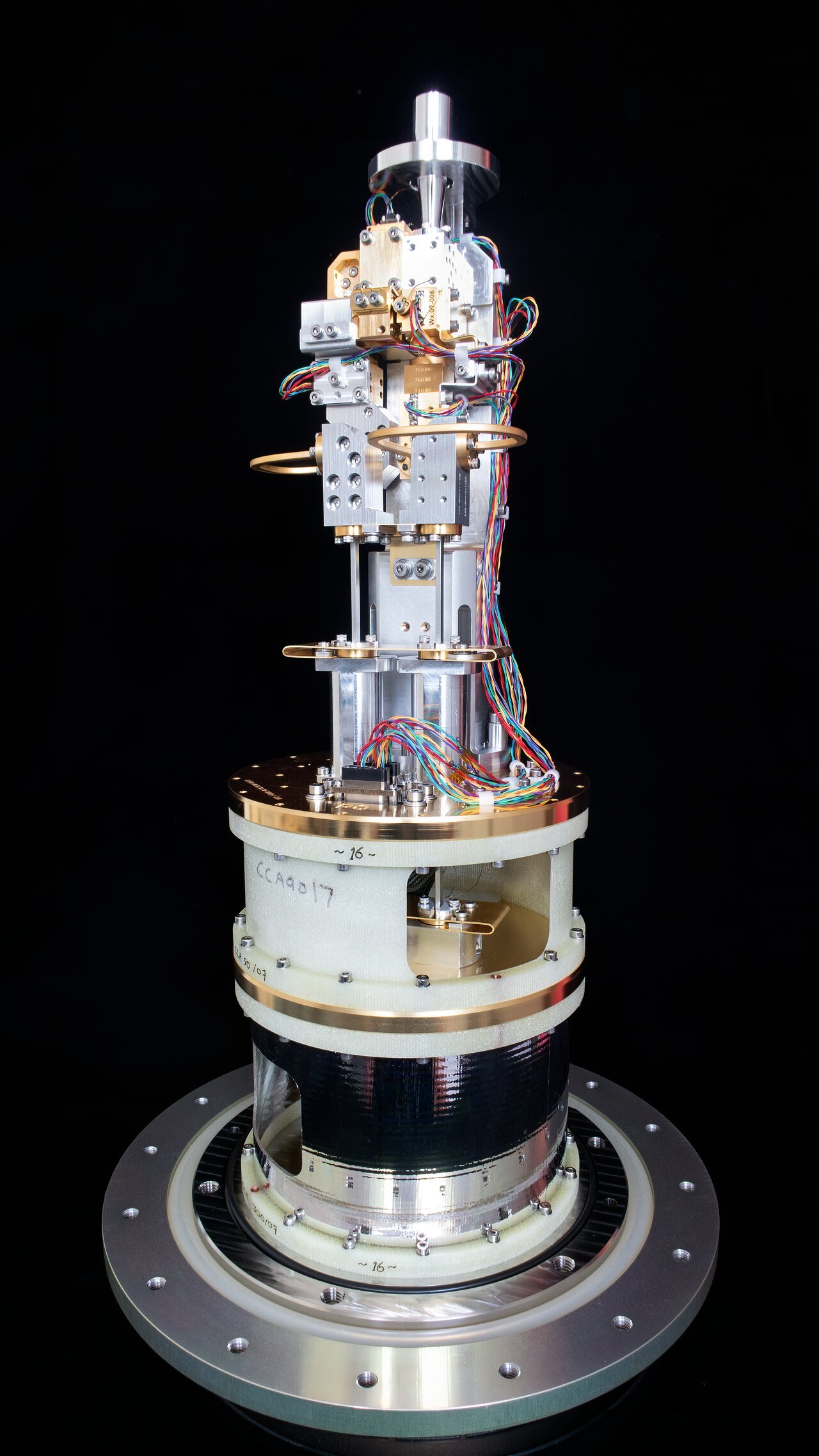
The Atacama Large Millimeter/Submillimeter Array (ALMA) is a state-of-the-art radio telescope facility located in the Chilean Andes. It is one of the most powerful instruments for studying the dark and distant regions of the universe. Researchers rely on ALMA to explore the formation of stars, planets, galaxies, and even the origins of life itself.
ALMA functions by detecting millimeter and submillimeter radiation emitted by cold molecular clouds. These are interstellar gas clouds with temperatures ranging from just a few tens of Kelvin. Within these clouds, stars are born when the conditions of density and temperature are optimal.
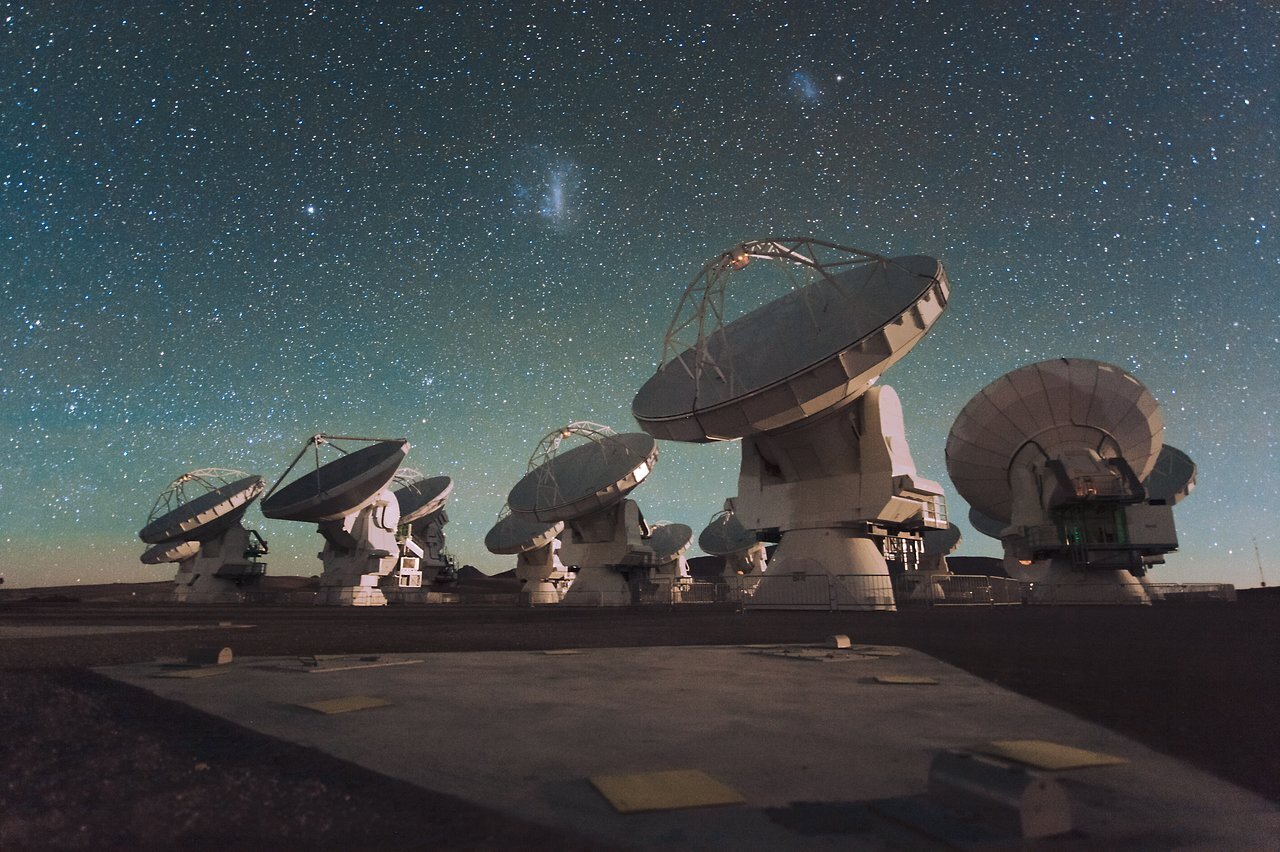
The array consists of 66 individual parabolic antennas, each with a diameter of either 12 meters or 7 meters. These antennas are equipped with high-frequency receivers capable of operating across ten different wavelength ranges, known as "ALMA bands." These ranges span from 6 to 8.6 mm (35–50 GHz) and 0.3 to 0.4 mm (787–950 GHz). Recently, the Fraunhofer Institute for Applied Solid State Physics IAF and the Max Planck Institute for Radio Astronomy (MPIfR) have provided 145 low-noise amplifiers (LNAs) for Band 2, which covers wavelengths from 2.6 to 4.5 mm (67–116 GHz). This marks the first time that all ALMA bands are fully equipped with such advanced technology.
With the enhanced capabilities of Band 2, researchers aim to gain deeper insights into the so-called cold interstellar medium. This medium consists of dust, gas, radiation, and magnetic fields that serve as the birthplace of stars. Additionally, complex organic molecules found in nearby galaxies—potential precursors to biological building blocks—will be studied in greater detail, as well as planet-forming disks.
One of the key features of Band 2 is its unique average noise temperature of 22 K, which allows for highly sensitive measurements. Dr. Fabian Thome, head of the subproject at Fraunhofer IAF, explains that the performance of receivers largely depends on the quality of the first high-frequency amplifiers installed. He emphasizes that the technology used in these amplifiers has an average noise temperature of 22 K, which is unmatched globally.
The new LNAs enable signals to be amplified more than 300 times in the initial step. This improvement allows ALMA receivers to measure millimeter and submillimeter radiation from deep space with greater precision, resulting in better data. The team is proud to contribute to a better understanding of the origins of stars and entire galaxies.
Prof. Dr. Michael Kramer, executive director at MPIfR, highlights the collaboration between the two institutions. He notes that the amplifiers not only represent "made in Germany" but also the best in the world.
Development and Production of InGaAs mHEMT LNAs for ALMA
At the core of the LNAs for ALMA's Band 2 are monolithic microwave integrated circuits (MMICs) based on metamorphic high-electron-mobility transistors (mHEMTs). These were developed by Fraunhofer IAF using the compound semiconductor material indium gallium arsenide (InGaAs). This technology results in LNAs with exceptionally low noise temperatures, significantly enhancing the sensitivity of the receivers.
Low-noise amplifiers improve the quality of incoming signals by amplifying them while minimizing disruptive background noise. Fraunhofer IAF and MPIfR were commissioned by the European Southern Observatory (ESO), which operates ALMA in collaboration with other international institutions. Fraunhofer IAF was responsible for designing the MMICs, manufacturing them, testing them at room temperature, and selecting the chips. MPIfR handled the complex assembly and qualification of the modules, including cryogenic test measurements at 15 K to meet ESO specifications.
Location and Operation of ALMA
To ensure the most accurate measurements, ALMA was constructed on the Chajnantor Plateau in the Chilean Andes. Located in the Atacama Desert at an altitude of 5000 meters above sea level, this site offers ideal conditions for radio astronomical observations. The high altitude and dry environment reduce atmospheric water vapor, allowing millimeter and submillimeter radiation from distant parts of the universe to penetrate more easily.
Provided by Fraunhofer Institute for Applied Solid State Physics IAF

Post a Comment for "Unveiling the Universe's Beginnings: 145 Low-Noise Amplifiers Complete ALMA Telescopes"
Post a Comment