Author Forecasts Emerging 'Dystopian' AI Tech—What's Next?
A New Dystopian Vision in “Coldwire”
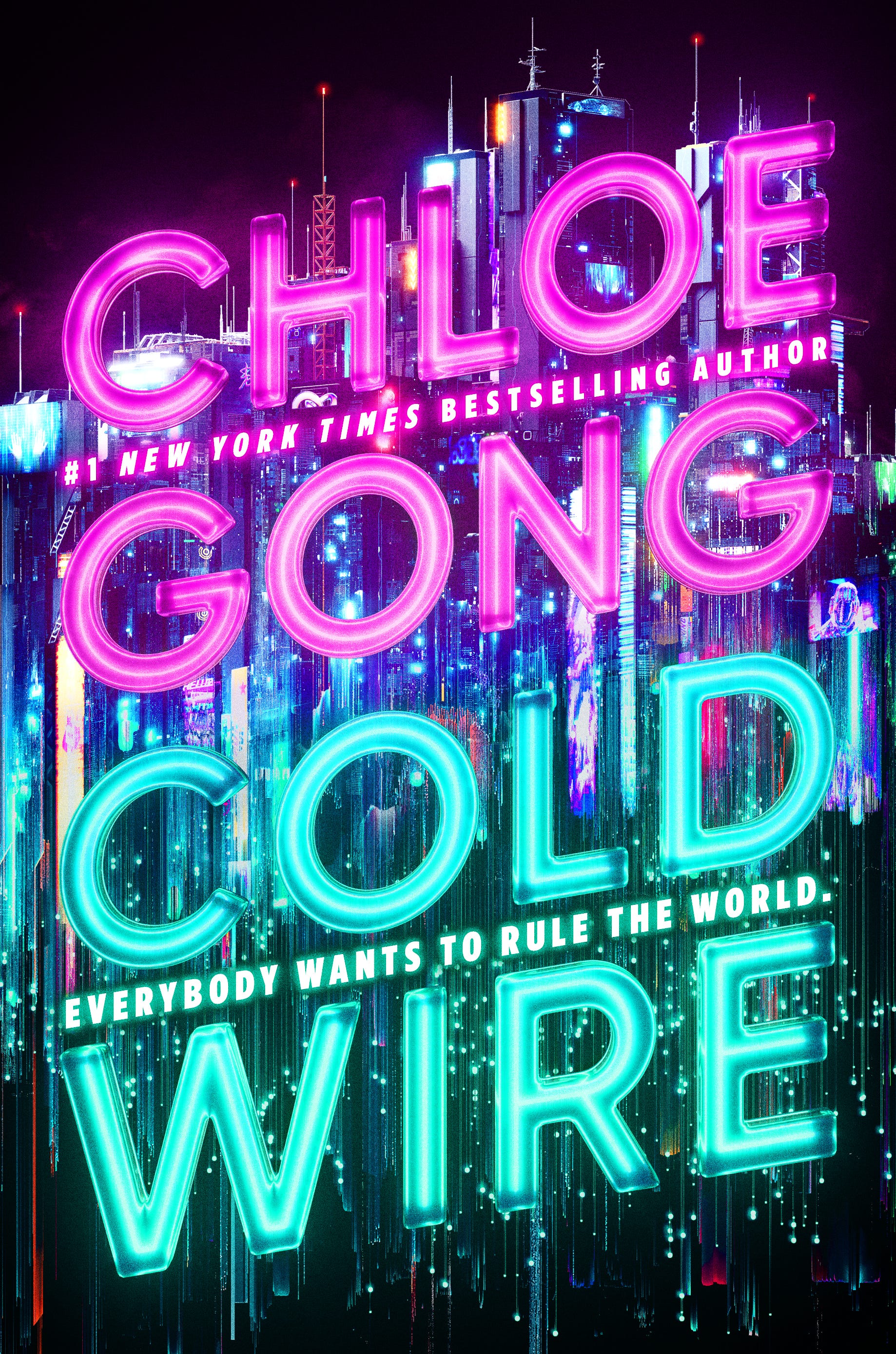
The metaverse, expanded virtual reality, and wearable technology that translates language in real-time are not just trending topics in today’s news cycles. They also serve as central plot elements in the newly released novel “Coldwire” by Chloe Gong, published by Simon & Schuster. While Gong did not set out to write a dystopian story that mirrors current events, her book has ended up reflecting the rapid technological advancements of our time.
Gong initially envisioned the technological elements in her book as futuristic concepts that would feel far-fetched at the time of publication. However, the fast-paced developments in artificial intelligence and virtual reality have made these ideas seem increasingly plausible. As she notes, “It feels like we are very rapidly heading toward that future,” especially among Gen Z, who view such scenarios as a near-future possibility rather than a distant fantasy.
The World of “Coldwire”
“Coldwire,” the first book in a new young adult trilogy, is set in a world where most of humanity resides in virtual reality. It’s a twisted narrative filled with high-stakes military missions, technological flaws, warring nations, and citizens trying to rebuild their lives in the aftermath. The story explores themes of dystopian technology, espionage, and coming-of-age struggles.
At 26, Gong has already established herself as a bestselling author with three successful series. Her debut novel, “These Violent Delights,” became a bestseller in 2020 while she was still in college. She has since become a favorite on BookTok, a platform known for its vibrant community of readers and book lovers.
Now, Gong is venturing into the cyberpunk genre, a subgenre of science fiction set in a dystopian future. In “Coldwire,” society is divided into two distinct planes: the “upcountry,” where the wealthy live in virtual reality, and the “downcountry,” where the less privileged struggle in a deteriorating real-world environment. As a cold war divides two powerful countries, the story follows two young women caught in a dangerous conspiracy—Eirale, a soldier framed for assassinating a government official, and Lia, a military academy student paired with her academic rival for a risky mission.

Both characters are outsiders in their own way, belonging to the marginalized Medan race and adopted into the prominent Atahua nation. While some characters revel in the glitzy virtual world, others are more skeptical. One character chooses to stay behind as her family logs into the virtual realm, another deals with sensory sickness that blurs the line between reality and illusion, and yet another is an anarchist fighting against a powerful corporation.
The Power of Dystopian Fiction
For Gong, dystopian fiction serves as a reflection of what the world could look like if certain societal aspects fall apart. “Dystopian books, to me, feel like we are head-on acknowledging what the world can look like if certain aspects of society disintegrate,” she explains. “This genre has always functioned best when it has something to say about our current time.”
Gong grew up reading young adult dystopian novels during the 2010s craze, including works like “The Hunger Games” and “Divergent.” This influenced her decision to target a young adult audience with “Coldwire.” “At its core, ‘Coldwire’ is a coming-of-age story,” she says. Her characters grapple with issues of belonging, betrayal, and self-discovery, all while trying to navigate the complexities of espionage and conspiracy.
She also aims to push the genre further by exploring what happens when two governments clash and how their conflicts impact the people living in the shadows of those conflicts. “What if ‘The Hunger Games’ explored countries outside of Panem?” she asks. “What happens when two governments battle for power and their big, untouchable superpower conflict comes down to affect the people living in the shadow of that conflict?”
Reimagining Cyberpunk
Cyberpunk stories often feature neon-lit cities with advanced technology, frequently inspired by Asian cities like Tokyo or Kyoto. Films such as “Blade Runner” and “The Matrix” have used Asian imagery to explore themes of technophobia, consumerism, and environmental degradation. However, Gong wanted to address this portrayal in her work.
While researching for “Coldwire,” she focused on understanding the cultural implications of these depictions. Though the book is not set in our recognizable society, she uses race and sexuality as cultural identifiers to communicate marginalization. “It makes for well-rounded characters,” she says, emphasizing the importance of representation even when it’s not the central focus of the story.
Gong first encountered the issue of racialized portrayals in a college course, where she learned about how Asian cultures and aesthetics are often co-opted in dystopian narratives. “I love these films, television shows, and books, but there's no denying this racialized element to it,” she admits. “What if I could also write within the space and both embrace the archetypes of this genre, but also subvert it from another angle, of what the canon has not really covered otherwise?”
Through “Coldwire,” Gong offers a fresh perspective on cyberpunk, blending the genre’s familiar tropes with a new, inclusive approach that challenges traditional narratives.

Post a Comment for "Author Forecasts Emerging 'Dystopian' AI Tech—What's Next?"
Post a Comment