US Plant Raid Sparks Anxiety in South Korea and Markets
A Major Immigration Raid Sparks Tensions Between South Korea and the U.S.
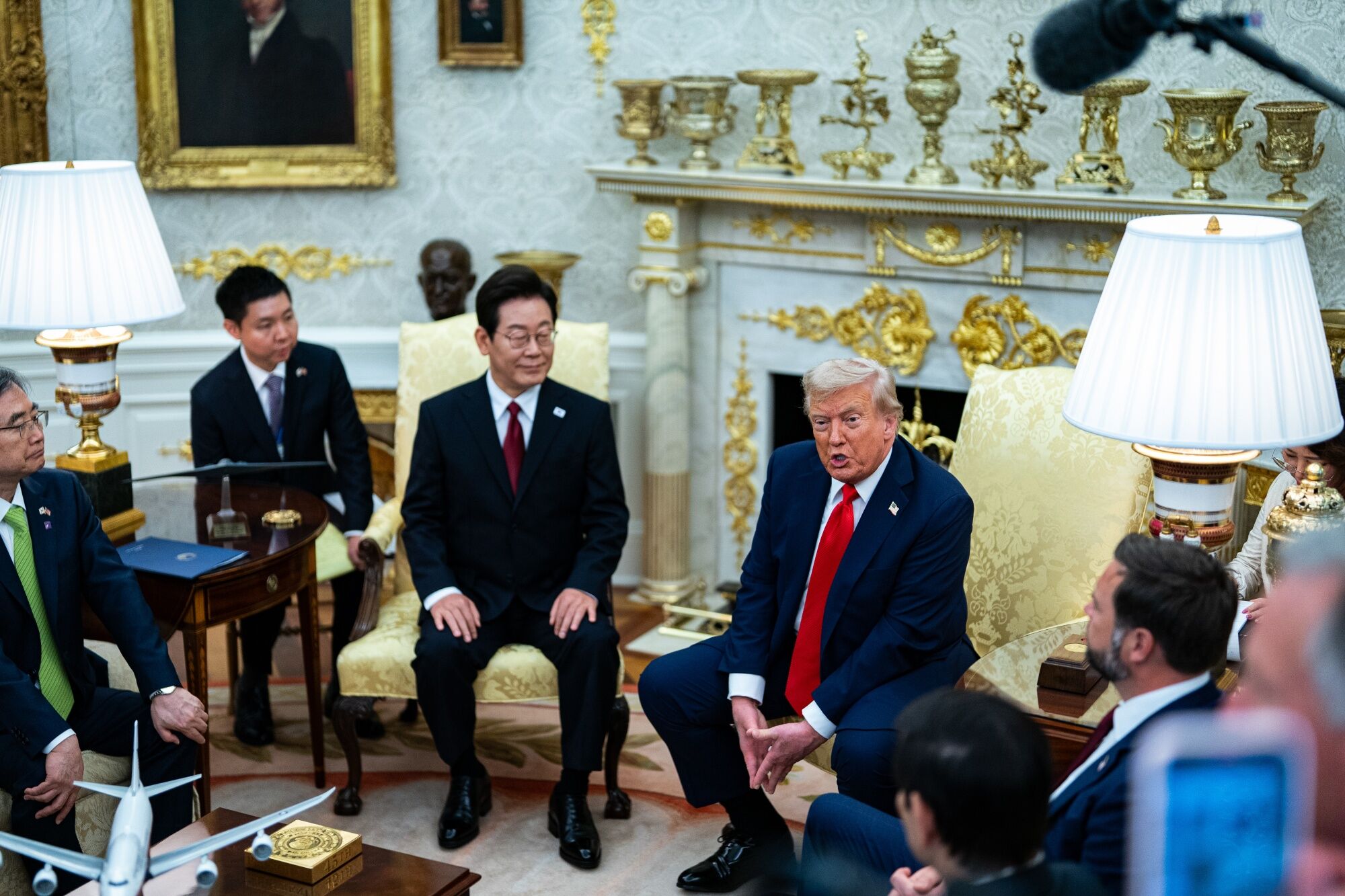
A recent immigration raid at a Georgia EV battery plant operated by two South Korean companies has caused significant concern in Seoul. The incident occurred just weeks after President Lee Jae Myung met with former U.S. President Donald Trump at the White House, where South Korean firms pledged to invest hundreds of billions of dollars in the United States. This development has raised questions about the future of such investments and the relationship between the two nations.
Korean officials have been working diligently over the weekend to secure the release of 300 citizens who were detained during the raid at a construction site for a joint venture between Hyundai Motor Co. and LG Energy Solution Ltd. According to Kang Hoon-sik, the chief of staff for President Lee, the situation is being closely monitored. Reports suggest that these workers may be able to return home via a chartered flight around Wednesday. However, the exact details regarding their visas and legal status remain unclear.
The timing of the raid could not be more sensitive. It follows a high-profile summit between President Lee and Trump, which aimed to strengthen their alliance and finalize a new trade pact. This deal includes a $350 billion fund to support South Korean firms expanding in the U.S., with $150 billion allocated for shipbuilding. Additionally, private companies have pledged an extra $150 billion in direct investment. The raid has put pressure on Lee’s government domestically and threatens to create a diplomatic rift with one of Washington's closest allies.
South Korean media has highlighted the incident extensively, with many newspapers featuring graphic images of workers being escorted onto buses while shackled. Some reports described the detention facilities as being "covered in mold, worse than prisons." This has led to public outrage, with many Koreans feeling betrayed by what they perceive as an unjust action against their compatriots.
Academic experts like Kim Tae-Hyung, a professor at Soongsil University, have expressed concerns that this raid could discourage South Korean companies from proceeding with their investment plans in the U.S. The incident casts a shadow over South Korea’s ambitious investment drive in the U.S., particularly for projects tied to key industries like electric vehicles.
Hyundai Motor, which had previously pledged to increase its U.S. investment to $26 billion through 2028, faces potential challenges. Its stock has risen 3.8% this year, but it lags behind the broader market. Similarly, LG Energy’s shares have seen a slight decline. These financial indicators reflect the uncertainty surrounding the future of South Korean investments in the U.S.
South Korean lawmakers have called on the U.S. to ensure the safety of its citizens and improve visa policies for those traveling for business purposes. They argue that without such guarantees, Korean companies may hesitate to expand further in the U.S.
Local media has also highlighted the broader implications of the raid. A cartoon published in Maeil Business Newspaper depicted Trump using a club while a figure delivers money to fund U.S. factories—only to face the unexpected detention of Korean employees. This image underscores the growing tension between the U.S.'s desire to attract foreign investment and its strict immigration enforcement policies.
The Georgia plant was intended to symbolize South Korea’s commitment to boosting U.S. manufacturing. However, continued strict enforcement of immigration laws without addressing visa issues could pose significant challenges for Korean companies seeking to operate in the U.S.
Many South Korean firms rely on the ESTA visa waiver program for short-term business trips, which allows for stays of up to 90 days. However, this system may not be sufficient for the needs of companies requiring immediate deployment of employees.
U.S. officials described the raid as the largest single-site enforcement action by the Homeland Security Department, detaining a total of 475 workers. While they emphasized that the operation was based on a months-long investigation into illegal hiring practices and not politically motivated, the optics of the situation are difficult to ignore.
South Korea is the U.S.’s sixth-largest trading partner, and its companies play a crucial role in the global EV battery supply chain. The U.S. has encouraged these investments to reduce reliance on China. However, a crackdown that targets such projects risks complicating trade relations.
The raid has already prompted immediate reactions. Construction at the Georgia plant has been temporarily paused, potentially affecting Hyundai’s broader EV production plans in the U.S. The facility is designed to produce up to 500,000 hybrid and electric vehicles annually and employ up to 12,500 workers by the early 2030s.
This incident is not the first time Hyundai has faced legal challenges related to employment issues in the U.S. In 2022, the U.S. Labor Department found child labor violations at companies supplying the automaker in Alabama.
Hyundai has stated that it is closely monitoring the situation in Georgia and working to understand the specific circumstances. It claims none of its employees were among those detained. Meanwhile, LG Energy has suspended business travel for its employees to the U.S. and advised those already there to return home. Reports indicate that 47 of its employees were among those detained, including 46 from South Korea and one Indonesian national. Other South Koreans detained were subcontractors.
The ongoing situation highlights the complex interplay between immigration enforcement, foreign investment, and international relations. As both nations navigate these challenges, the future of their economic partnership remains uncertain.

Post a Comment for "US Plant Raid Sparks Anxiety in South Korea and Markets"
Post a Comment