Ukrainian Refugees in U.S. Face Uncertain Future After Losing Work Rights
A New Life in Spokane, But with Uncertainty
Denys’s children were not familiar with the sounds of fireworks in Spokane, Washington. They had grown up near the Russian border in Kharkiv, Ukraine, where the sounds of explosions and air defense systems were all too common. In 2023, after a hospital attack that put his youngest daughter, Olivia, at risk, Denys knew he needed to find a way out of Ukraine. A former neighbor living in an American city offered him an escape: “We have a nice program — Uniting for Ukraine. If you want to come, grab your family and move.”
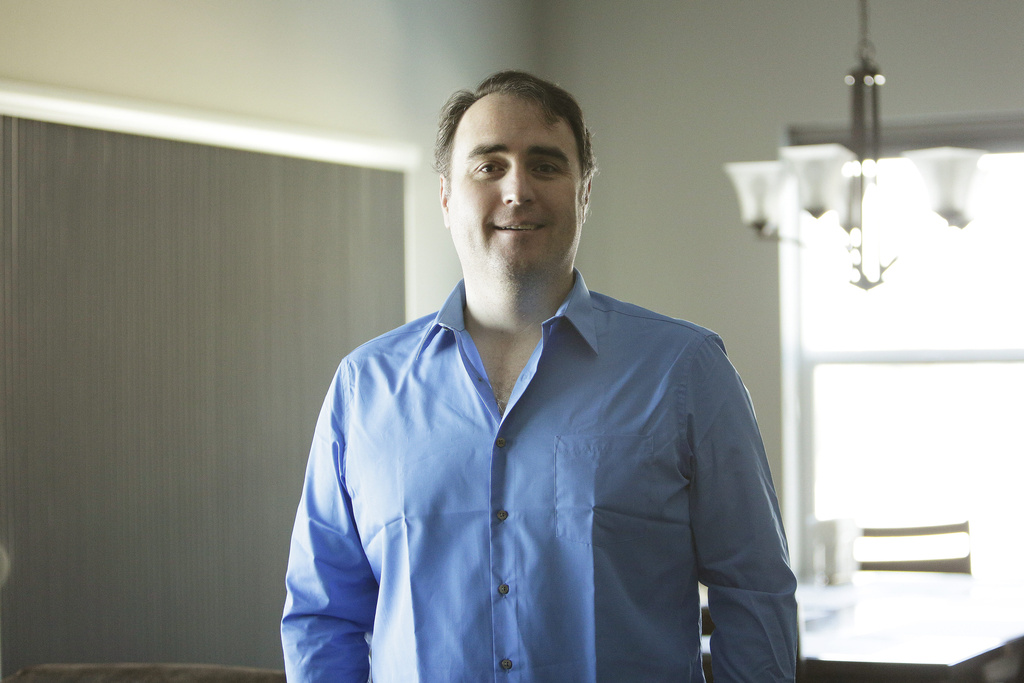
Denys, who asked to keep his last name private, quickly took the opportunity. He has been in Spokane for the past three years, adapting to a place where celebrations are marked by fireworks rather than war. He spent six months learning English and used his experience in making boilers to secure a job welding construction beams at Metals Fabrication Co.
Like many of the 240,000 Ukrainians who came to the U.S. through the Uniting for Ukraine program, Denys's future is uncertain. The program, launched by former President Joe Biden in 2022, allowed Ukrainian immigrants to stay and work in the U.S. for two years if they found a sponsor. However, under the Trump administration, which has targeted humanitarian parole programs, renewals have stalled. In June, Denys lost his job because the government failed to reauthorize his right to work.
“I’m very worried about my family,” Denys said. “I need to buy food. I have three kids.” Alongside freezing the Uniting for Ukraine program, the administration also withdrew protections for over 530,000 immigrants from Cuba, Haiti, Nicaragua, and Venezuela, as well as more than 9,000 from Afghanistan.
Many Ukrainians are watching what happens to other refugees. In Spokane, two Venezuelan immigrants who came here legally through humanitarian parole were arrested and faced deportation, despite applying for asylum. This led to a mass protest, resulting in arrests and national media attention.
Unlike Latin American, Haitian, and Afghan immigrants, most Ukrainians don’t face racial profiling or false accusations. However, they’ve still been caught in the crossfire of the Trump administration’s efforts to dismantle Biden’s immigration policies. Many are now in a state of uncertainty, facing difficult choices between waiting for a government response, working illegally, relying on charity, or leaving the U.S. entirely.
“There’s this no man’s land,” said Spokane immigration attorney Sam Smith. “There’s this in-between that they’re stuck in. There’s no good solution for them.”
A Hub for Ukrainian Immigration
Spokane, a mid-sized city on the Idaho border, has long been a hub for Ukrainian immigration since the fall of the Soviet Union in 1991. The Russian invasion of Ukraine brought a new surge of nearly 3,000 Ukrainians, many of whom quickly started building their new lives.
Maksym Bedenko, another Ukrainian immigrant, opened The Old Preacher, a small barbershop in 2023. He was lucky enough to re-enroll in the Uniting for Ukraine program last year. However, many others, including Amazon workers, factory workers, and caregivers, have lost their jobs due to the freeze on renewals.
The second Trump administration launched a campaign against nearly every aspect of the immigration system. Executive orders banned new refugees, severed contracts with resettlement organizations, and put any renewals of programs like Uniting for Ukraine on hold. On his first day in office, Trump issued an executive order to terminate all categorical parole programs that conflicted with his policies.
Three days later, the acting director of the U.S. Citizenship and Immigration Services issued a freeze on processing all Uniting for Ukraine applications, including renewal requests. Without parole status, individuals could not work legally.
Zhanna Oberemok, vice president of the Spokane Slavic Association, said drivers for her husband’s trucking company recently lost their commercial driver’s licenses as their work authorizations expired. “Within the next week or so, we’re going to be losing about seven drivers because their driver license just became inactive,” she said.
Employers like Sara Weaver-Lundberg, vice president of Metals Fabrication Co., are frustrated. She described Denys as a “gilded unicorn” — a rare, experienced worker. Losing him put a strain on production, and she reached out to her corporate attorney and congressman for help, but neither route has been effective.
Pushing Back Against the Freeze
In February, Kyle Varner, an activist who sponsored nearly 50 Venezuelan immigrants, joined a lawsuit challenging the new policies. He argued that it was fundamentally and morally wrong to treat people differently based on where they were born. The lawsuit included immigrants from Ukraine, Nicaragua, Haiti, and Afghanistan, asking the court to force the Trump administration to process humanitarian parole applications again.
So far, the verdict has been mixed. New applications remain frozen, and in May, the U.S. Supreme Court allowed the Trump administration to order a half-million Latin American immigrants to leave the country. However, a lower court ruling lifted the freeze on processing parole renewals. In theory, Ukrainian immigrants like Denys would see their right to work restored. So far, few have.
“We’ve seen some cases denied. And some cases be asked for additional evidence,” said Matthew Soerens, policy director for World Relief. “But at least the folks that we’re helping, we are not aware of cases being approved for humanitarian parole renewal from Ukraine.”
Smith, the local immigration attorney, believes the system remains functionally frozen. He suspects it’s a matter of priorities, with the Trump administration focusing more on enforcement and deportation rather than helping people stay.
Alternate Routes and Legal Challenges
Some Ukrainian immigrants are turning to alternative strategies, such as filing for asylum. While the process can take five to 10 years, they can get work authorization while waiting. However, it takes six months to get work permits after applying for asylum.
Even if Denys applied today, he wouldn’t be able to get the right to work again until March. Smith hesitates to offer certainty, noting that federal policy has been chaotic, making it hard to provide long-term assurances.
There have been attempts in Congress to make things easier for Ukrainian immigrants. A Senate bill proposes allowing them to continue working, while a House bill would give them a path to permanent residency. However, both bills have struggled to gain traction.
Spokane’s Republican congressman, Michael Baumgartner, has shown support for protecting Ukrainian immigrants. In a bipartisan letter, he called for the Trump administration to continue offering protection to Ukrainian parolees. Despite this, he has not received a response from the administration.
Hope Amidst Uncertainty
Despite the challenges, there is a sense of hope among some. The recent news of a young Ukrainian refugee woman being stabbed in North Carolina led to a social media post from Trump calling for the death penalty for the perpetrator. Oberemok sees this as a sign that Trump may not be planning to send Ukrainian immigrants back home.
However, Trump has shown little sign of making it easier for immigrants. U.S. Citizenship and Immigration Services Director Joseph Edlow has declared plans to make it harder and more expensive for immigrants to get work authorization.
For now, Ukrainian immigrants continue living under what Mariia Chava, Denys’s sponsor, calls “the big question mark.” Denys knows he cannot return to Ukraine, where war is still raging and where those who left are often seen as traitors.
He loves the beauty of nature in Spokane and the freedom of America’s open roads. But he can’t live in a place where he has to fear deportation, where he’s not allowed to provide for his family without breaking the law, and where he has no clear path to becoming legal.
“I love this country,” Denys said. “Just give me a chance to work.”

Post a Comment for "Ukrainian Refugees in U.S. Face Uncertain Future After Losing Work Rights"
Post a Comment