Trump's Second Term: Using Government to Settle Personal Grudges
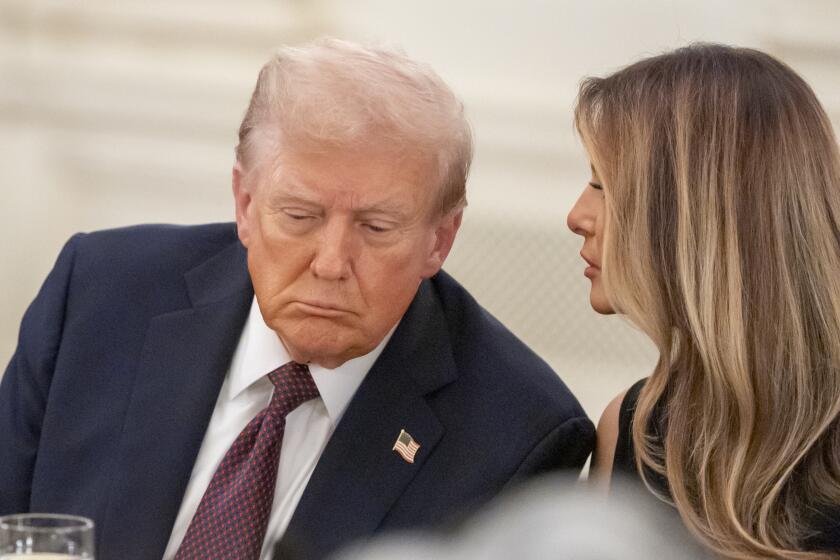
Trump’s Approach to Power and the Concept of "Having the Cards"
President Donald Trump has often used a poker analogy when discussing his relationships with partners and adversaries. He once claimed, “We have much bigger and better cards than they do,” when referring to China. In June, he stated that compared with Canada, “we have all the cards. We have every single one.” Most notably, during an Oval Office meeting with Ukrainian President Volodymyr Zelensky, he said, “You don’t have the cards.”
This phrase reflects a broader worldview where Trump sees himself as having the upper hand in any negotiation or conflict. It also highlights his approach to power—accumulating and using it strategically to achieve his goals.
Accumulating and Using Presidential Power
Seven months into his second term, Trump has been actively amassing presidential power, deploying it against various entities he dislikes. From universities and media companies to law firms and individuals, he has targeted those who stand in his way. This aligns with his campaign as an angry victim of a “deep state” that sought to undermine him. However, instead of resisting this power, he has embraced it, using government resources to advance his agenda and retaliate against opponents.
Supporters of Trump have not recoiled from these actions; instead, they have encouraged them. Sociologist David N. Smith notes that for many Trump voters, “weaponizing the state to win the culture war has been essential to their agenda.” They are not opposed to the government being used to fight the culture war on their behalf, even if it means opposing policies they previously criticized.
Weaponizing the Government
Trump has been using the federal government to serve his interests almost immediately after taking office. His methods include leveraging executive orders, personnel changes, and public statements to assert control over various sectors. For instance, he invoked a rarely used law to take control of law enforcement in Washington, D.C., and threatened similar actions in other cities led by Democrats. He also attempted to fire a Federal Reserve governor based on unproven claims of mortgage fraud.
His administration has targeted numerous institutions and individuals:
- He threatened to block a stadium plan for the Washington Commanders unless it changed its team name.
- He revoked security clearances for attorneys at law firms he disfavors.
- He cut billions in federal research funds and blocked access to elite universities for international students.
- He fired or reassigned federal employees, including prosecutors involved in cases against him.
- He dropped corruption charges against New York Mayor Eric Adams to gain cooperation in his immigration crackdown.
- He secured settlements against media organizations through lawsuits considered weak by many.
White House spokesperson Harrison Fields defended these actions, calling them a legitimate use of power rather than weaponization. He described the administration as “the most consequential in American history,” emphasizing its focus on putting America first.
The Nature of Power and Its Use
Power is both given and taken, and Trump has demonstrated a unique ability to claim it. Through executive orders, public rhetoric, and sheer boldness, he has expanded his influence beyond what previous presidents have done. His loyal base, a Congress and Supreme Court that have ceded power, and institutions that have negotiated with him have all contributed to his ability to wield power effectively.
Despite the constraints of the Constitution, laws, court rulings, and bureaucratic norms, Trump has managed to neutralize many of these limitations. According to Steven Lukes, a professor emeritus at New York University, Trump exemplifies three dimensions of power: exerting will through fear, shaping topics of discussion, and influencing preferences. Lukes noted that Trump's innovation lies in “epistemic liberation”—a willingness to make up facts without evidence.
Running Against Weaponization
Throughout his 2024 campaign, Trump positioned himself as a victim of a “vicious persecution” by the Biden administration. He claimed that he was not seeking to end government weaponization but to harness it. In a post on Truth Social, he wrote, “IF YOU GO AFTER ME, I’M COMING AFTER YOU!” During an interview with Univision, he suggested that if he were president and saw someone beating him, he would “go down and indict them.”
However, as the election approached, he largely backed off these threats, even while continuing to criticize government weaponization. Upon winning, he declared an end to it, claiming that his victory ended felony criminal cases against him, including his role in the Capitol insurrection. Despite this, he entered the White House as the only felon to occupy the presidency, following his conviction on fraud charges related to a hush-money payment.
A Full Circle of Power
In his second term, Trump has continued to use his power aggressively. One of his first acts was issuing pardons or commutations for over 1,500 people involved in the January 6th events. He claimed that no longer would the government be used to persecute political opponents, echoing his own experiences.
Yet, as he has moved forward, the cycle of weaponization has come full circle. With fewer restraints, Trump continues to play his hand aggressively, reshaping the landscape of power in the United States.

Post a Comment for "Trump's Second Term: Using Government to Settle Personal Grudges"
Post a Comment