South Korea Announces Deal to Free Detainees in Hyundai Georgia Raid
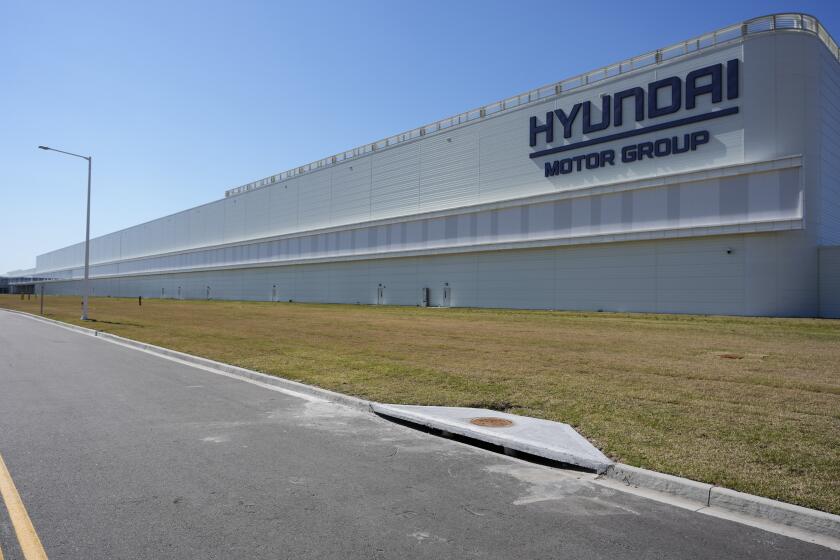
South Korea and the U.S. Navigate Tensions After Major Immigration Raid
South Korea has announced that the United States has agreed to release hundreds of its citizens who were detained during a large-scale immigration raid in Georgia. The news came from Kang Hoon-sik, the chief of staff for the South Korean president, who confirmed that negotiations with U.S. officials are nearing completion. The detained workers were employed at a factory being constructed by LG Energy Solution and Hyundai in Ellabell, Georgia.
Kang emphasized that the South Korean government is closely monitoring the situation and will ensure the safe return of its citizens. He mentioned that the workers could potentially return home on a chartered flight as early as this week. This development marks a critical step in resolving a situation that has sparked significant concern among South Koreans and their leaders.
The immigration crackdown took place on Thursday when federal agents arrested 475 individuals at the factory site. Over 300 of those detained were South Korean citizens working for LG and its subcontractors. The timing of the raid has raised questions, especially since South Korea's largest companies have made substantial investments in the U.S. as part of a trade deal between former President Donald Trump and South Korean President Lee Jae Myung earlier this year.
Trump had previously announced that tariffs on most South Korean imports would be reduced to 15% after South Korea committed to investing $350 billion in key U.S. industries and purchasing $100 billion worth of liquefied natural gas. However, the raid has created a rift, with some in Seoul expressing disbelief and frustration over the timing of such a significant action against one of South Korea’s most ambitious U.S. investments.
In a press conference, ruling party lawmaker Oh Gi-hyoung called for the U.S. to treat South Koreans with the respect they deserve, given their status as a major ally and investor. He pointed out that the U.S. accounts for the largest share of South Korea’s overseas investments, with $26 billion invested last year. South Korea is the eighth-largest trading partner of the U.S., with bilateral trade reaching $242.5 billion in goods and services last year.
The U.S. attorney’s office in the Southern District of Georgia stated that the operation was part of a nationwide initiative called Operation Take Back America, aimed at combating illegal immigration. According to ICE, the arrested individuals were found to be working illegally, often on short-term or recreational visas that do not permit employment.
Despite the potential for swift releases, experts warn that this heavy-handed approach could affect how South Korea views its trade relationship with the U.S. Industry analysts suggest that the crackdown might lead to logistical challenges for ongoing and future projects by South Korean companies in the U.S.
South Korea recently announced a $150 billion project to revive the American shipbuilding industry, and there are several other battery plant projects underway across the country. For years, companies have sent technical specialists to oversee construction using nonwork travel permits like ESTA, which allows visitors to stay for up to 90 days. While these visas technically do not allow work, they have been tolerated by U.S. authorities for a long time.
However, obtaining legal work visas, such as the H-1B, is challenging and time-consuming. The H-1B visa is awarded through a lottery, and the process has become more difficult under previous administrations. South Korean companies often avoid this route due to the lengthy lead time and uncertainty of approval.
Experts like Hwang In-song, an industrial policy expert, point out that it is nearly impossible to find enough skilled Americans to staff South Korean factories, particularly in specialized areas like lithium-ion battery manufacturing or shipbuilding. As a result, companies rely on experienced South Korean specialists.
After the release of the detained workers, South Korean officials have pledged to seek improvements in U.S. work permits for their citizens. Countries like Chile, Australia, and Singapore have special work visa programs that allow their citizens to work in specialized roles in the U.S. Until then, the arrests at the Georgia battery plant may lead to costly delays as the joint venture struggles to redeploy workers.
For companies like LG Energy Solution, this incident may prompt a reevaluation of their strategies for sending workers to the U.S. The situation highlights the complex relationship between South Korea and the U.S., where economic cooperation and immigration policies must be carefully balanced.

Post a Comment for "South Korea Announces Deal to Free Detainees in Hyundai Georgia Raid"
Post a Comment