Shape-Shifting Collisions Reveal Early Universe Secrets
New Insights into the Quark-Gluon Plasma
This summer, the Large Hadron Collider (LHC) experienced a unique moment as it shifted its focus from traditional proton beams to a new type of collision. The 27-kilometer ring was reconfigured for the first time to conduct oxygen-oxygen and neon-neon collisions. These experimental runs, which lasted six days, generated valuable data that was recently shared during the Initial Stages conference in Taipei, Taiwan.
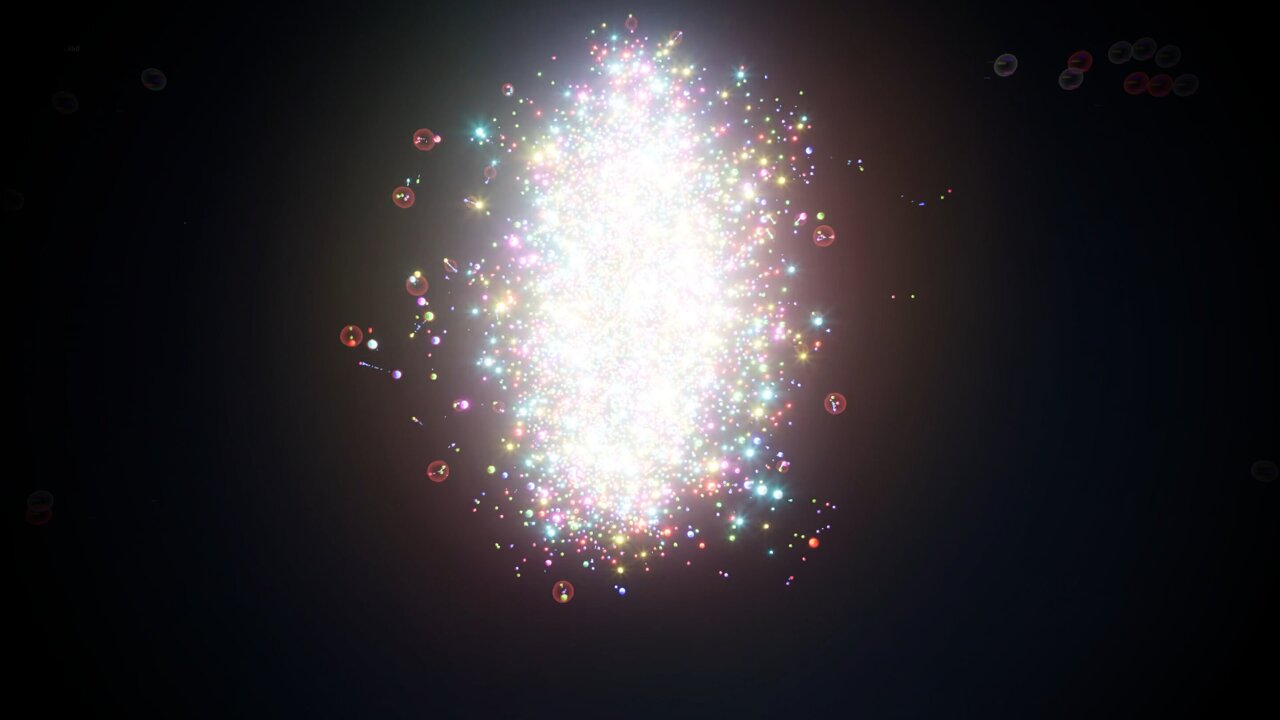
The primary goal of these collisions is to explore the quark-gluon plasma (QGP), an extraordinary state of matter that resembles the conditions of the early universe, just microseconds after the Big Bang. Scientists have previously studied QGP using collisions involving heavy ions like lead or xenon, which create larger plasma droplets. However, the recent experiments with lighter ions such as oxygen offer a fresh perspective on the properties and evolution of this extreme form of matter.
Lighter ion collisions provide several advantages. They are smaller than those involving heavier ions, allowing researchers to investigate the minimum size required to produce QGP. Additionally, their irregular shapes offer new insights into nuclear structure. For example, a neon nucleus is predicted to be elongated, resembling a bowling pin. Recent findings from the LHC have helped confirm this shape with greater precision.
The experiments focused on analyzing subtle patterns in the angles and directions of particles emitted as the QGP expands and cools. These patterns, caused by small distortions in the initial collision zone, can be described using fluid-dynamics calculations typically used for everyday fluids. This approach allows scientists to study both the properties of the QGP and the geometry of the colliding nuclei.
The accuracy of these models has enabled more precise exploration of flow in oxygen-oxygen and neon-neon collisions compared to previous proton-proton and proton-lead collisions. Experiments such as ALICE, which specializes in QGP research, along with general-purpose detectors like ATLAS and CMS, have observed significant elliptic and triangular flow in these collisions. Their findings show that the flow depends heavily on whether the collisions are glancing or head-on.
The agreement between theoretical predictions and experimental data is comparable to that seen in collisions involving heavier xenon and lead ions, despite the smaller system size. This suggests that the flow in oxygen-oxygen and neon-neon collisions is primarily driven by the geometry of the nuclei, supporting the bowling-pin shape of the neon nucleus. It also demonstrates that hydrodynamic flow emerges consistently across different collision systems at the LHC.
Complementary results from the LHCb collaboration further support the bowling-pin structure of the neon nucleus. These findings are based on lead-argon and lead-neon collisions conducted in a fixed-target configuration using data collected in 2024 with the SMOG apparatus. The LHCb team has also begun analyzing data from oxygen-oxygen and neon-neon collisions.
"Taken together, these results bring fresh perspectives on nuclear structure and how matter emerged after the Big Bang," says CERN Director for Research and Computing Joachim Mnich.
These discoveries open new avenues for understanding the fundamental nature of matter and the forces that shaped the universe. As the LHC continues to push the boundaries of particle physics, the insights gained from these collisions will play a crucial role in advancing our knowledge of the cosmos.

Post a Comment for "Shape-Shifting Collisions Reveal Early Universe Secrets"
Post a Comment