Rare 30,000-Year-Old Hunter's Toolkit Unearthed by Archaeologists
A Unique Discovery in the Czech Republic
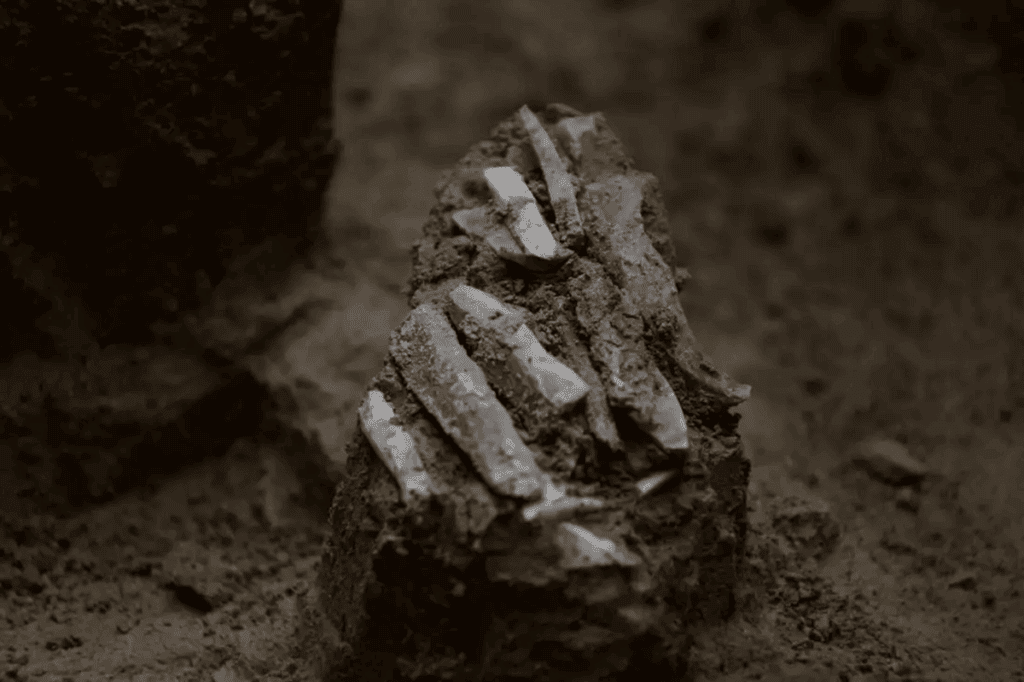
Archaeologists often find remnants of the past scattered across time—animal bones, broken spear tips, and the remnants of ancient fires. However, in the rolling hills of southern Moravia, Czech Republic, a remarkable discovery was made: the toolkit of a prehistoric hunter who lived approximately 30,000 years ago. This collection of tools offers an intimate glimpse into the life of a Gravettian hunter-gatherer.
The toolkit consisted of 29 blades and points, carefully arranged as if they had once been stored in a leather or hide pouch. Though the pouch itself has long since decayed, the tools remained preserved in place until a road collapse in 2009 revealed forgotten cellars beneath the village of Milovice. This discovery provides an unusual and clear context for understanding life during the Paleolithic era.
A Personal Toolkit from the Stone Age
According to Dominik Chlachula and his colleagues in their paper published in the Journal of Paleolithic Archaeology, this assemblage likely represents a personal toolkit that was either lost or discarded. Unlike most Paleolithic finds, which are often mixed deposits from multiple occupations, this site offered a rare snapshot of a single moment in time. Charcoal from the same layer dates back between 29,550 and 30,250 years ago, along with a fireplace, animal bones from horses and reindeer, and the meticulously arranged toolkit. These elements together create a vivid picture of daily life for a Gravettian hunter-gatherer.
The tools themselves were not pristine. Most blades showed signs of heavy use, dulled from cutting hides and scraping wood. Some bore microscopic impact marks, suggesting they were used as projectiles. However, a few retained a glossy polish from hafting, the process of attaching blades to wooden shafts. Six of the artifacts had fractures commonly associated with projectile use, indicating they were likely spear or arrow tips. Others served as multipurpose knives or scrapers.
Practicality and Resourcefulness
The hunter was resourceful, recycling old tools whenever possible. Several bladelets were spalls—shards snapped off larger tools and repurposed. One particularly small piece showed signs of hide-working polish, demonstrating that even fragments could be useful. The kit supports the idea that it was part of personal gear used during hunting expeditions or migrations through areas where raw materials were scarce.
Stones from Distant Lands
The materials used to make the tools also provide valuable insights. About two-thirds of the stones came from flint cobbles found in glacial deposits over 130 kilometers north. Others were radiolarites from western Slovakia, 100 kilometers to the southeast, and one was made of opal from as far as 135 kilometers away. How did the hunter acquire such a diverse range of materials? Possible explanations include direct travel or trade with other groups. Either way, the toolkit reflects a social and geographic network spanning central Europe.
The question remains: why did the hunter keep so many broken pieces? One possibility is practicality—on expeditions through raw-material-poor landscapes, even fragments could be refashioned into useful tools. Another explanation is more emotional. It’s possible the hunter kept them in the hope of recycling them—or even for sentimental value.
A Glimpse into the Gravettian World
The Gravettian culture is well-known for its artistic achievements, such as the Venus figurines of Dolní Věstonice, located just a few kilometers from Milovice. These small, stylized depictions of women, crafted from fired clay around 29,000 years ago, are among the oldest known ceramic sculptures. They suggest a symbolic and artistic dimension to Gravettian life, beyond mere survival.
However, this modest pouch of tools captures something more practical—the daily struggles of surviving in Ice Age Europe. It offers a rare and personal connection to the lives of those who once roamed these lands, highlighting both their ingenuity and their resilience.

Post a Comment for "Rare 30,000-Year-Old Hunter's Toolkit Unearthed by Archaeologists"
Post a Comment