Keep the Power Going: Top 2025 Home EV Chargers Tested
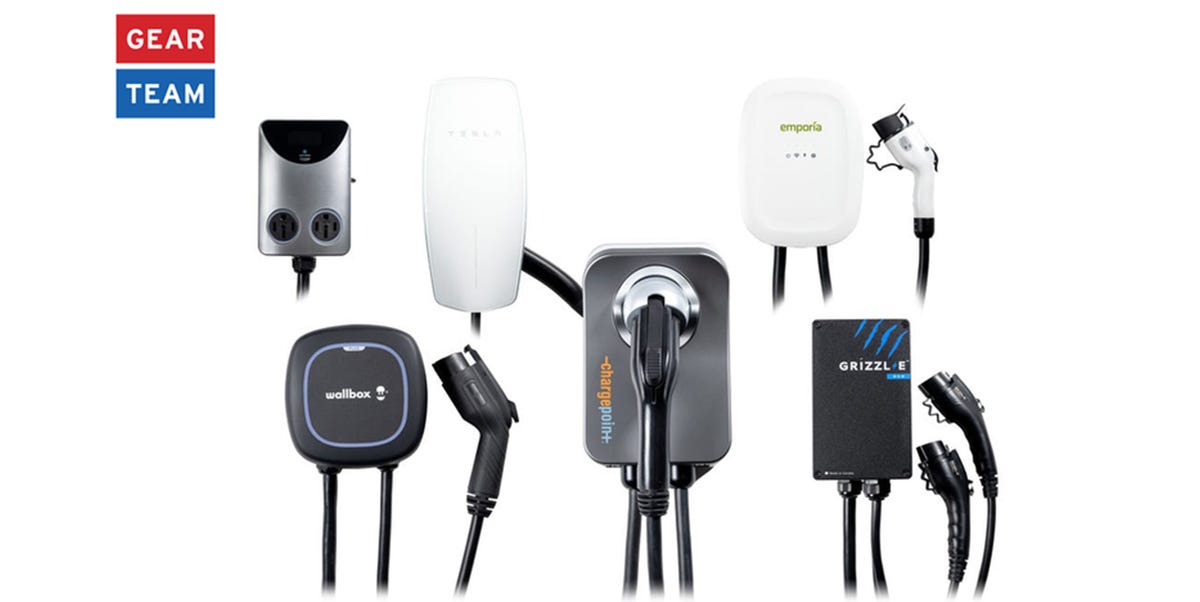
Best Home EV Chargers for 2025
If you've recently purchased an electric vehicle, one of the most important considerations is how and where to charge it. Unlike traditional gasoline vehicles, owning an EV requires a different approach to charging. The best way to start is by setting up a home charging station, which offers both convenience and cost savings.
Home charging is significantly cheaper than using DC fast-charging stations, typically costing about one-third as much. It also allows you to charge your vehicle while it's parked, making it ideal for daily use. Most home EV chargers have an upfront cost ranging from $400 to $700, depending on the model and features.
ChargePoint Home Flex – Best Overall
The ChargePoint Home Flex is a top choice for its seamless integration with the ChargePoint app, which is used for both public and home charging. This app provides detailed insights into charge rates, total energy output, and even allows users to schedule charging during off-peak hours to save money. The app also supports variable-rate electricity plans, giving users precise control over their charging costs.
The unit includes a built-in cord management system that makes it easy to wrap the cable neatly, eliminating the need for additional accessories. Its user-friendly interface and advanced features make it a strong contender for any EV owner looking for a reliable and efficient charging solution.
Emporia – Best Budget
Emporia offers a more affordable option without sacrificing performance. It comes with a Wi-Fi-connected system that allows users to monitor their electricity usage and track charging costs. While the app can be a bit overwhelming due to its extensive feature set, the device itself is highly capable, offering a 11.5-kW output that’s among the highest in this category.
Emporia also supports load management, which helps prevent electrical overloads by adjusting the charger's output based on the household’s overall power consumption. This feature can help avoid costly electrical upgrades and ensure safe operation.
Grizzl-E Duo – Best for Two EVs
For households with multiple EVs, the Grizzl-E Duo is an excellent choice. It allows two vehicles to charge simultaneously from a single outlet, splitting the power evenly between them. The unit comes with two J1772 connectors and 24-foot cables, making it easy to manage charging for two cars.
While it lacks Wi-Fi connectivity and advanced app features, it provides a straightforward and cost-effective solution for those who need to charge more than one vehicle at home. It’s also one of the most affordable dual-plug options available.
Other Home EV Chargers We Tested
Other models tested include the Wallbox, which is compact and easy to install, but lacks some of the advanced features found in other models. The Lectron Socket Splitter is another option for charging two EVs from a single circuit, though it doesn’t split power equally like the Grizzl-E Duo.
Each of these units was tested under real-world conditions, including long-term use with various EV models such as the Tesla Model 3, Rivian R1T, BMW i4, and Hyundai Ioniq 5. The testing involved measuring energy output, evaluating charging efficiency, and comparing performance across different models.
How We Tested EV Chargers
To simulate the experience of a new EV owner, we installed a dedicated 240-volt outlet in our garage and tested each charger with a variety of vehicles. We measured the energy delivered to the battery using third-party software and inline electrical meters to ensure accuracy.
We also evaluated factors such as charging speed, ease of use, and compatibility with different vehicle models. Despite differences in cord length and thickness, there was no significant variation in performance or efficiency across the tested units.
EV Charging at Home
Understanding the different levels of EV charging is essential for choosing the right equipment. Level 1 charging uses a standard household outlet and is the slowest, while Level 2 charging, which uses a 240-volt circuit, is much faster and suitable for overnight charging. Level 3, or DC fast-charging, is the fastest but is not practical for home use due to its high cost.
When selecting a home charger, consider factors such as your household’s electrical capacity, the desired charge rate, and whether you want Wi-Fi connectivity for remote monitoring. Some models also offer load management features to prevent overloading your electrical system.
Tax Breaks for EV Charging
The Inflation Reduction Act reinstated a federal tax credit of 30% for EV charging equipment, capped at $1,000. This includes the cost of the charger itself, electrical upgrades, and wiring. The credit is set to expire in 2026, so it’s a good idea to take advantage of it if you’re planning to install a home charger.
Things to Consider Before Buying a Home EV Charger
Before purchasing a home EV charger, assess your household’s electrical capacity. A 40- or 50-amp circuit is typically sufficient for most EVs, allowing for overnight charging without overloading your system. If your home requires an electrical upgrade, the cost can range from a few hundred to a few thousand dollars.
Wi-Fi connectivity is also an important consideration if you want to monitor and control your charging remotely. Many models come with different variants, such as plug-in or hardwired configurations, and different connector types to accommodate various vehicle models.
FAQs About EV Charging
EV charging is categorized into three levels: Level 1 (slow, using a standard outlet), Level 2 (faster, using a 240-volt circuit), and Level 3 (very fast, using DC power). Not all home EV chargers are the same, with differences in output capability, connectivity, and installation methods.
Most EV chargers are compatible with a variety of vehicles, and adapters are available to switch between different connector types. Outdoor-rated models are also available, ensuring safe operation in different weather conditions.
Why Trust Us
With over 20 years of experience testing and reviewing vehicles, I’ve developed a deep understanding of EV technology and charging systems. This article is the result of extensive testing and evaluation, ensuring that the recommendations are accurate and up-to-date.
Car and Driver has been testing vehicles since 1956, and our team continues to measure performance, fuel economy, and other key metrics. Our commitment to honesty and transparency ensures that readers receive reliable information when making decisions about their EV ownership.

Post a Comment for "Keep the Power Going: Top 2025 Home EV Chargers Tested"
Post a Comment