John Burton, mastermind of California's Democratic machine, dies at 92
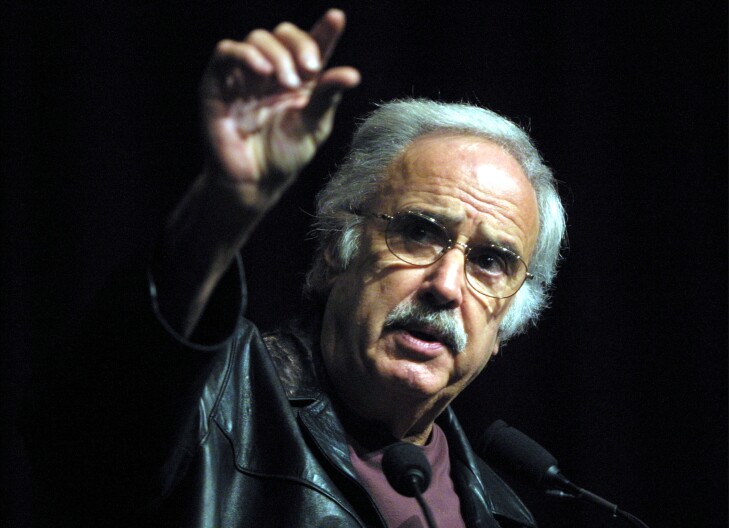
A Legacy of Political Influence and Social Advocacy
John Burton, a towering figure in California politics, passed away at the age of 92. Known for his blunt, no-nonsense approach, he played a pivotal role in shaping the political landscape of the state alongside his late brother, Phillip. Their influence, often referred to as the "Burton machine," left an indelible mark on San Francisco and California politics for decades.
Burton's career spanned both Sacramento and Washington, D.C., where he became a fierce advocate for labor unions and the working class. His unfiltered style, often laced with colorful language, made him a memorable presence in the political arena. In 2017, when he stepped down as chair of the California Democratic Party, he emphasized the importance of standing up for those without power: “There’s a lot of people out there that if we don’t fight for them, nobody’s going to fight for them because they don’t have any power.”
His impact was recognized by many, including Nancy Pelosi, who once praised his authenticity and effectiveness. “His language is authentic, his purpose is sincere and his effectiveness is undeniable,” she said. Former Lt. Gov. Gavin Newsom highlighted how Burton's work helped shape the Bay Area and California politics, while then-Gov. Jerry Brown called him the man who gave life and structure to the California Democratic Party.
The Rise of the Burton Machine
Born in Cincinnati during the Great Depression, Burton grew up in San Francisco with his brothers, Phillip and Bob. His rise to political prominence began in 1964 when he was elected to the California Assembly. This was the same year that Jerry Brown, another future political ally, entered the Assembly. Phillip, his older brother, also won a seat in Congress, setting the stage for the family's political legacy.
Phil Burton became a key player in Washington, mastering the art of reapportionment, which involved drawing districts to favor Democrats. Together, the brothers built a powerful network that united organized labor, Black churches, Asian Americans, and the gay community. This coalition became known as the "Burton machine" and ensured decades of political dominance.
In 1974, John Burton was elected to represent San Francisco and part of Marin County in Congress. He served until 1982, when he stepped down to address his cocaine addiction. Phil Burton, who had nearly become Democratic majority leader in Congress in 1976, died suddenly in 1983. His widow, Sala Burton, succeeded him and anointed Nancy Pelosi as her preferred heir before passing away in 1987.
Political Philosophy and Cross-Party Collaborations
Despite being a staunch Democrat, Burton often worked across the aisle with Republican governors and legislators. He counted many Republicans as friends, though their brand of politics differed from today's standards. In a 2018 oral history, he praised then-Gov. Ronald Reagan for signing a relatively liberal abortion bill and former GOP Gov. Pete Wilson for raising taxes to balance the budget. “Pete deserves a great amount of credit for that,” Burton said.
Wilson, who served in the Legislature and as governor, expressed admiration for his old political adversary. “The combination of John Burton and Willie Brown negotiating budget and policy solutions during a time of crisis in the Reagan Cabinet Room was some of the finest policy and political talent California has ever seen,” he said.
Even so, Burton occasionally clashed with Democrats. Less than a year into Gray Davis’ tenure as governor, Davis told an editorial board that the Legislature was “there to implement my vision.” Burton, then Senate president, shot back, “I have an absolutely different view. I believe in checks and balances.”
Advocacy and Controversies
Burton was strongly anti-war throughout his political career, championing the working class and leading opposition to the Vietnam War and apartheid in South Africa. His legacy includes civil rights laws, environmental protection policies, and legislation supporting children in the foster care system.
After leaving the Legislature, he chaired the California Democratic Party from 2009 until 2017. He also founded the John Burton Foundation for Children Without Homes. However, the foundation faced controversy when Kathleen Driscoll, the executive director, sued him, alleging repeated sexual harassment. The case was settled under confidential terms.
Westly defended him against the allegations, emphasizing his impact on others. “He gave me my spine. When I worked with him, he helped me believe in myself and the values I had and to stick to them,” she said.
Mentorship and Lasting Impact
Burton mentored younger staff members, including Barbara Boxer, who later won his seat and joined Dianne Feinstein in the U.S. Senate. “John Burton was the most authentic elected official I have ever met in my 40 years in public service,” Boxer said. “He taught me to never betray my conscience and to stand up against the most powerful to help those without a voice.”
While not without detractors, Burton’s legacy includes the candidates he boosted and his steadfast defense of old-fashioned liberal politics—championing women, the working class, farmworkers, and other marginalized Californians. His ability to work with Republicans when needed to advance his agenda further solidified his place in political history.

Post a Comment for "John Burton, mastermind of California's Democratic machine, dies at 92"
Post a Comment