"It Drags Air From the Room": Dyson Engineer Reveals Bladeless Fan Power
Understanding Dyson’s Bladeless Fans: A Deep Dive into the Technology
Dyson has long been a pioneer in the world of innovative home appliances, particularly with its introduction of bladeless fans. As a writer who regularly covers the best fans on the market, I’ve often found myself fascinated by these devices but puzzled about how they actually work. What causes that powerful stream of air? On a recent trip to Dyson's campus in Malmesbury, England, I had the opportunity to speak with Sophie Harold, an acoustics and vibration engineer at Dyson, who provided some fascinating insights.
The Science Behind Bladeless Fans
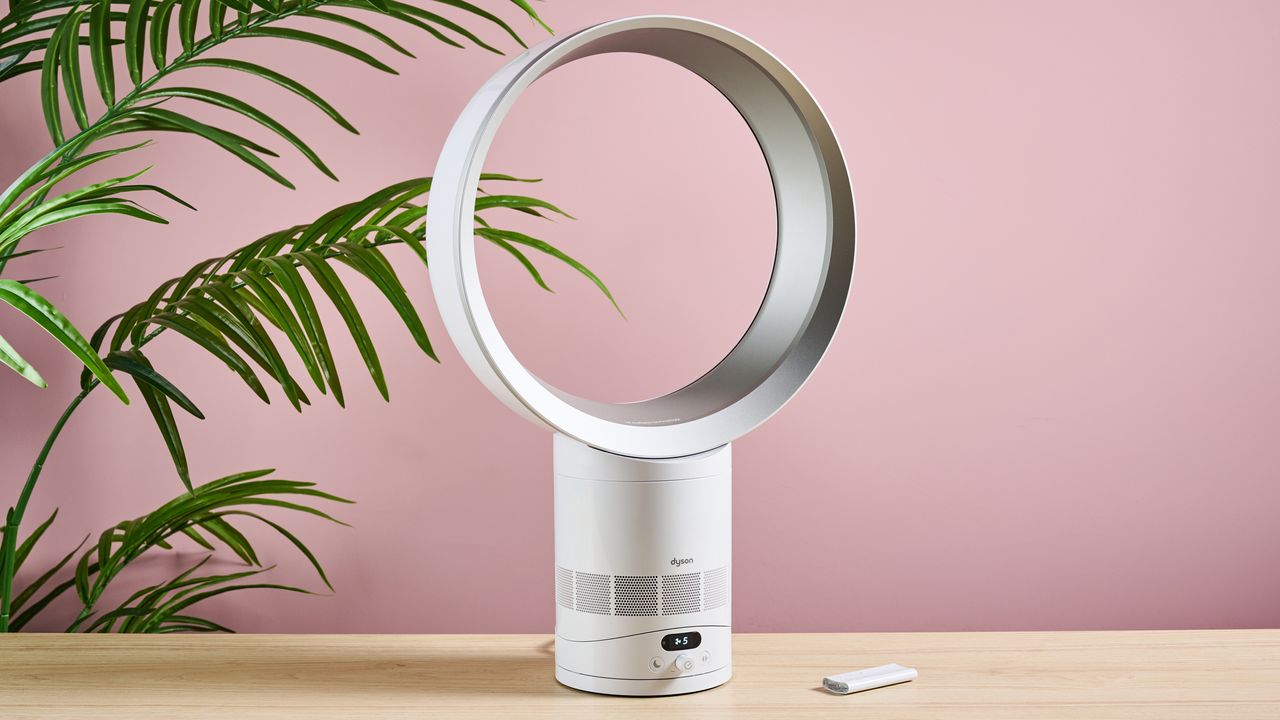
Dyson engineers refer to their bladeless fans as "Loops," "Amps" (short for "Air amplifiers"), or sometimes "Race tracks." These are the traditional formats for Dyson’s aircare products. According to Sophie, the Loop design features a central gap and side slots that allow fast-moving air to exit the plastic outer loop. This setup creates a phenomenon known as "entrainment," where the fan pulls in air from the surrounding room, effectively multiplying the airflow.
"This means that when you place a product like the CF1 on your desk, the air you feel at your face is actually more than what the motor or compressor alone can produce," Sophie explains. "It's pulling in additional air from the room, creating a stronger effect."
Alternative Designs: Cones and Stars
While the Loop is one of Dyson’s most recognizable designs, the company also uses other shapes to manipulate airflow. For example, some of its air purifiers use a "Cone" instead of a Loop. This design resembles a bowl and is used in models like the Dyson Big+Quiet. Unlike Loops, which require a central gap, Cones can be more compact and efficient.
"The Cone utilizes Coanda technology, which causes airflow to adhere to surfaces," Sophie says. "This is the same principle used in the Airwrap barrels to create curls in hair. In this case, it helps direct the airflow without needing to oscillate the device."
Instead of moving back and forth, the Cone adjusts the strength of the air jet at the top and bottom to control the direction of the airflow. This makes it more versatile and user-friendly.
The HushJet Purifier Compact: A New Approach
The latest addition to Dyson’s lineup, the HushJet Purifier Compact, takes a different approach with a "Star" nozzle. Unlike the Loop or Cone, the Star nozzle doesn’t require a central gap, allowing for a more compact design. It still relies on entrainment to pull in air from the room, creating a powerful jet of air.
"The star shape helps drag in surrounding air, creating a strong jet without the need for a large central opening," Sophie explains. "The bending edges encourage additional air to join the fast-moving jet, making it highly effective."
She compares the Star nozzle to a jet engine or a hair dryer’s concentrator nozzle, emphasizing its efficiency and power.
Fans vs. Purifiers: Different Goals, Different Designs
Many of Dyson’s fans also function as air purifiers, but not all models serve both purposes. Sophie explained that the design approach varies depending on whether the appliance is meant to circulate air or purify it.
"For a purifier, the focus is on mixing the air in the room rather than directing it toward a specific point," she says. "That’s why filters are so important in these models."
In contrast, fans like the CF1 don’t have filters because they prioritize efficiency and lower running costs. "They’re designed to provide a cool breeze directly to your face, rather than focusing on air purification," Sophie adds.
Conclusion
From Loops to Cones to Stars, Dyson continues to innovate with its bladeless fan and air purifier designs. Each shape serves a unique purpose, combining advanced engineering with practical functionality. Whether you're looking for a powerful fan, a compact purifier, or a combination unit, Dyson’s technology offers something for every need.

Post a Comment for ""It Drags Air From the Room": Dyson Engineer Reveals Bladeless Fan Power"
Post a Comment