Israeli Strikes Target Hezbollah's Elite Radwan Force in Southern Lebanon
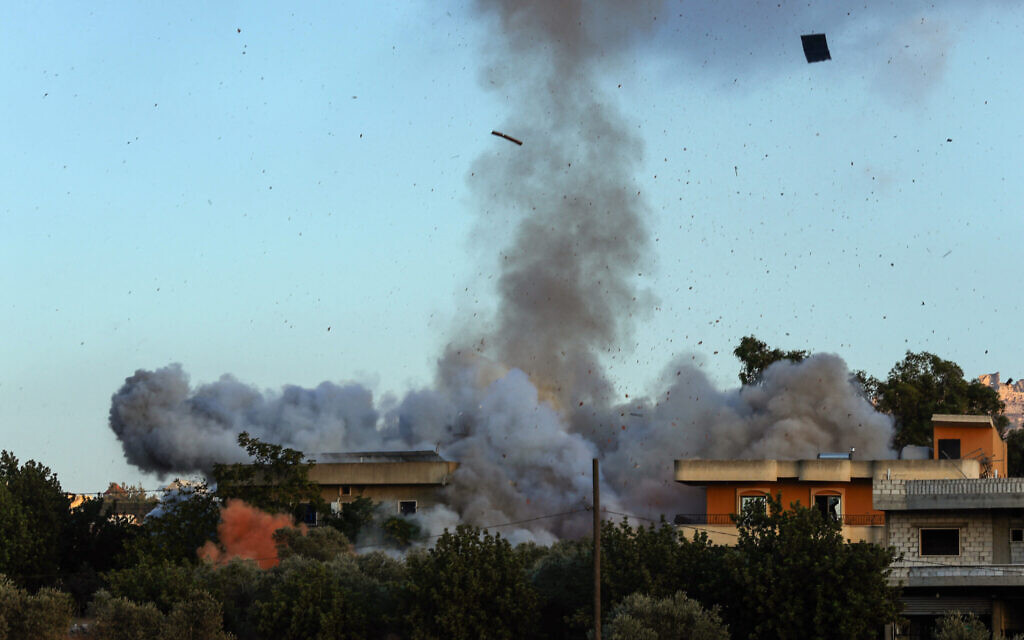
Israel Launches New Airstrikes Against Hezbollah in Southern Lebanon
Israel has carried out a new wave of airstrikes targeting Hezbollah in southern Lebanon, aiming to prevent the militant group from reorganizing and rebuilding its operations in the region. The military emphasized that these strikes were a direct response to Hezbollah's efforts to restore its infrastructure, particularly focusing on the elite Radwan Force.
Before the attacks, the Israeli Defense Forces (IDF) issued evacuation warnings for four locations in southern Lebanon. Later, they expanded the warnings to include two additional buildings. Colonel Avichay Adraee, the IDF’s Arabic-language spokesman, stated that the strikes were ordered due to Hezbollah’s “prohibited attempts to rebuild its activities in the area.” He published maps showing the targeted buildings and urged residents and those nearby to evacuate immediately, maintaining a distance of at least 500 meters.
The strikes occurred in two main waves, affecting areas such as Mays al-Jabal, Kfar Tebnit, Dibbin, Chehabiyeh, and Burj Qalaouiyah. According to Lebanon’s state-run National News Agency, roads leading out of Kfar Tebnit were filled with people fleeing their homes ahead of the attacks. The agency reported material damage in the affected areas.
The IDF confirmed that the strikes specifically targeted weapon depots belonging to Hezbollah’s Radwan Force. This unit was previously responsible for planning invasions into Israel and had been advancing Hezbollah’s "Conquer the Galilee" plan for years. However, the 2023-2024 conflict significantly weakened Hezbollah’s leadership.
In a statement, the IDF said that Hezbollah’s attempts to rebuild the Radwan Force violated the ceasefire agreement. They noted that troops have been actively working over the past two years to counter the unit’s efforts to recover and regain strength. The military warned that Hezbollah continues to attempt to restore terror infrastructure in southern Lebanon, posing a threat to the State of Israel.
Lebanon’s Prime Minister Nawaf Salam strongly condemned the strikes, questioning Israel’s commitment to ending hostilities in the region. He highlighted the frequent attacks against what Israel claims are Hezbollah targets, despite the existing ceasefire. Salam referred to the meetings held by the US, Lebanon, and Israel aimed at upholding the ceasefire that has been in place since November 2024. He raised concerns about Israel’s adherence to these frameworks and its continued actions that contradict the goal of resolving conflicts.
Last month, Salam and Lebanese President Joseph Aoun supported a US proposal to disarm Hezbollah by the end of the year. However, the Iran-backed group has vowed to resist such efforts.
Hezbollah lawmaker Hassan Fadlallah criticized the strikes, stating that Lebanon and its people needed no further proof of the lack of international or diplomatic guarantees to curb what he called “Israel’s terrorism.” He did not address Israel’s claims that Hezbollah is rebuilding its forces.
Under the November 27, 2024, ceasefire between Israel and Hezbollah, weapons in southern Lebanon were supposed to be under state control, allowing the IDF to act against imminent threats from the group. Since then, Israel has conducted hundreds of attacks on Hezbollah personnel or assets, primarily in southern Lebanon, but also in the Beqaa Valley, a stronghold of the Iran-backed group.
According to the IDF, they have carried out over 500 airstrikes against Hezbollah targets in Lebanon, killing more than 300 operatives and destroying dozens of sites. They claim these actions were necessary due to violations of the truce.
On Thursday, the Lebanese army warned that Israeli strikes, which it considers violations of the ceasefire, are hindering its deployment in the south and could block the implementation of its plan to eliminate Hezbollah’s armed presence south of the Litani River.
The ceasefire agreement followed nearly 14 months of conflict triggered by Hezbollah’s unprovoked attacks on Israeli border communities starting October 8, 2023—just a day after Hamas launched its attack on southern Israel, sparking the Gaza war. These attacks displaced around 60,000 residents of northern Israel. In an effort to secure their return, Israel intensified operations in Lebanon in September 2024, significantly weakening Hezbollah’s leadership.

Post a Comment for "Israeli Strikes Target Hezbollah's Elite Radwan Force in Southern Lebanon"
Post a Comment