Indie Art Gallery Superchief Hangs in Balance as Downtown Businesses Close
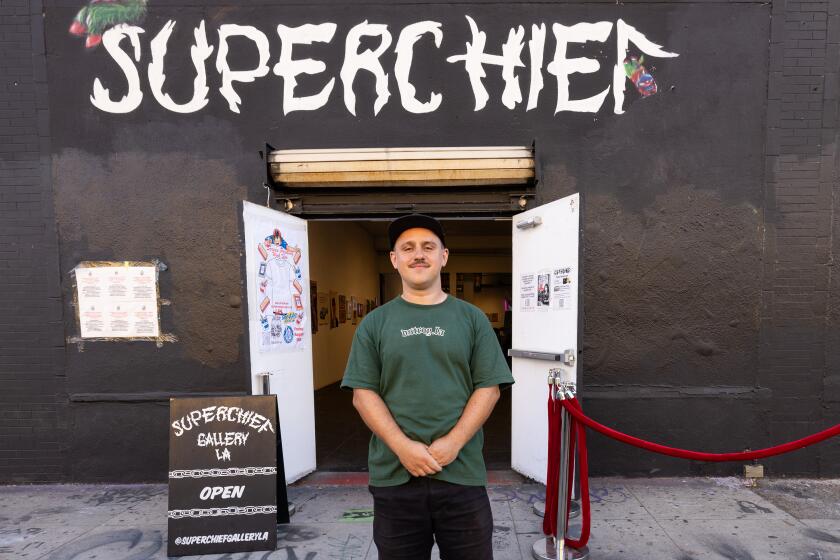
A Lasting Legacy at Superchief Gallery
Inside the walls of Superchief Gallery, a vibrant energy filled the air as approximately 60 individuals gathered for a screen printing workshop on a late summer evening in August. The downtown art space was buzzing with excitement, drawing in young families, friend groups, and couples who were eager to create their own designs on T-shirts. Neon pink pews lined the room, and salsa music played in the background, setting the tone for an engaging and creative atmosphere.
Artworks adorned the walls, including a fine-line David Lynch drawing, a ceramic Garfield, and a depiction of a lowrider’s paint job. However, despite the lively environment, this gathering might be one of the last. Co-founder Bill Dunleavy revealed that the gallery may have to close this month if it cannot raise enough funds to cover its bills.
“We thought we had until November to save Superchief, but it came early,” Dunleavy said. “It's not easy to build the type of community we've built. It would be a real shame, and set the culture back to some degree.”
For over a decade, Superchief has served as a hub for punk rockers, graffiti writers, street photographers, and homegrown fine artists. It has been a place where counterculture enthusiasts come together to celebrate creativity and innovation. However, the possible closure of the gallery adds to the growing list of businesses in downtown Los Angeles that have struggled to recover from the impacts of the COVID-19 pandemic.
Although the area continues to attract residents, many office buildings are facing challenges with falling values and high vacancies. This year alone, several legacy businesses, such as the Original Pantry Cafe and Cole’s French Dip, have permanently closed. The Mayan, a historic nightclub, is also set to shut down later this month, while Angel City Brewery announced the sale of its Arts District taproom.
Nick Griffin, executive vice president of the DTLA Alliance, explained that these closures reflect the natural ebb and flow of business and changing tastes rather than the overall condition of downtown Los Angeles. He pointed out that while some businesses are closing, others like Dataland, the digital AI Art Museum, and the Lucas Museum are opening, highlighting the ongoing evolution of the cultural landscape.
Art galleries across the city have also faced significant challenges. According to the Art Basel and UBS Global Art Market Report, the global art market declined by 12% in 2024, marking the second consecutive year of falling sales. Several other galleries, including Blum, Clearing, and Tanya Bonakdar, have recently announced the closure of their L.A. locations.
Dunleavy first noticed a decline in business about a year ago. The gallery’s usual sponsors began pulling out, and revenue from digital art (NFT) sales dropped significantly. “People are just being more careful with their money,” he said. “They're scaling back their advertising and promotional budgets. At the same time, fewer people are buying art. These are the two things that keep an art gallery business model afloat: sponsors and sales.”
To combat these challenges, Dunleavy and his business partner Ed Zipco launched a fundraising campaign, starting a Patreon to engage individual audiences and offer exclusive perks. Subscribers and regular gallery-goers have participated in various events, including carving pinewood derby cars and attending figure drawing classes. The crowdfunding effort now has around 400 members.
Despite the support, the gallery still struggles to cover monthly expenses, which range from $10,000 to $15,000, primarily for renting the 10,000-square-foot building. The gallery employs two part-time employees and is only open on weekends. Dunleavy has not paid himself in over two years and has taken on additional loans to meet expenses.
“We started to incur a lot of debt in order to stay afloat, hoping things were going to get better. But things didn't get better, they just got worse,” he said.
Superchief moved into its current location in 2022 after relocating from a warehouse in Skid Row. The gallery, which opened in 2014, had previously built strong relationships with L.A.’s underground art scene. However, a nearby explosion in 2020 forced the gallery to move again.
“The economy is unreliable, and the art market is not what it was pre-pandemic, so it's forcing us to make some real pivots and adaptations,” Dunleavy said.
Though September may mark the final curtain call for the gallery, Dunleavy remains determined. He plans to host ticketed parties and other fundraising events with the gallery’s associated artists. “Patreon is about halfway where it needs to be in order to be sustainable,” he said. “I've learned how to cope with stressful situations by throwing crazy parties and unconventional events — so that’s exactly what I plan to do.”
Surrounded by ink-flooded screens and piles of white T-shirts used for the August workshop, Audrey Caceres, a frequent Superchief visitor, shared her thoughts on the gallery’s impact. The Boyle Heights resident believes the gallery has brought new life to the commercial area and is essential to the local art scene.
“I really can't imagine LA [sub]cultures without Superchief. It's such a strong foundation for photographers, zine makers, and multimedia artists,” she said. “So, if they weren’t here, I don't know where people would run to display their work.”

Post a Comment for "Indie Art Gallery Superchief Hangs in Balance as Downtown Businesses Close"
Post a Comment