Detective Mary 'Mae' Foley Way: The Trailblazing Cop Who Took Down Nazis and the Mob in Queens
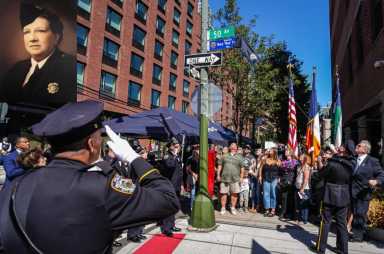
Honoring a Trailblazer: The Legacy of Detective Mary "Mae" Foley
In a heartfelt ceremony over the weekend, New York City police officers and community members came together to honor a remarkable woman whose contributions to law enforcement and justice left a lasting impact. The event marked the renaming of a street in her honor, celebrating the life and achievements of Detective Mary "Mae" Foley, a pioneering figure in the NYPD during the early 20th century.
Detective Foley was more than just a member of the "Masher Squad," a group tasked with apprehending men who preyed on women. She was also a dedicated Nazi hunter who worked to stop fascist infiltrators before World War II. Her efforts extended to the investigation of infamous gangster Charles “Lucky” Luciano, one of the most notorious mobsters in American history. Despite her many accomplishments, she was also a beloved grandmother to her grandson, Bob Carr, who fondly remembered her as "Nana."
“She was a tough woman, you know, she didn’t take any guff,” Carr said. “She was a good grandmother, she really was. She was very loving.”
Foley’s journey in the NYPD began in 1923, when she started as a patrol officer. She quickly made a name for herself by taking down predatory men who abused women. Over time, she rose through the ranks, eventually becoming a homicide detective. Her work took her into the heart of some of the city’s most dangerous cases, including investigations into the German American Bund, an organization that supported Nazi Germany and sought to spread Hitler’s ideology in America.
Her commitment to justice and public safety did not go unnoticed. Her story was detailed in the book The Girls Who Fought Crime by Mari K. Eder, a major general who conducted extensive research into Foley’s life. Eder relied on newspapers, documents from the New York Public Library, and interviews with family members to piece together the legacy of this extraordinary woman.
“My primary sources were newspapers, some items from the New York Public Library, the city museum. And also, I had a trip around the city with a tour guide,” Eder said, reflecting on her research. “This is someone who made a difference in this city and who did it for generations to come.”
The street renaming ceremony took place at the corner of 5th Street and 50th Avenue in Long Island City, just one block away from the 108th Precinct headquarters where Foley once worked. Dozens of NYPD officers, including mounted police and K9 units, joined elected officials, family members, and community leaders for the event. The ceremony highlighted the significance of Foley’s contributions and recognized her as a true pioneer in law enforcement.
NYPD Deputy Chief Raymond Porteus praised Foley’s resilience and skill, noting that she was as tough as nails. He shared how she could defend herself using techniques like jiu-jitsu, which she mastered. “Through her own tenacity, determination, and investigative skills, she rose up through the ranks,” he said. “She investigated the Lucky Luciano case; they trusted her.”
As part of the ceremony, the new street sign reading “Detective Mary ‘Mae’ Foley Way” was unveiled. Porteus expressed hope that people would be inspired by her story. “I hope when people see it, they get their phones and say: ‘Hey, let me check to see who this was,’ and then they’ll see her story online. They can be inspired as well.”
The event was a powerful reminder of the impact one individual can have on a community and the importance of recognizing those who paved the way for future generations. Through her bravery, dedication, and unwavering commitment to justice, Detective Mary "Mae" Foley continues to inspire those who follow in her footsteps.

Post a Comment for "Detective Mary 'Mae' Foley Way: The Trailblazing Cop Who Took Down Nazis and the Mob in Queens"
Post a Comment