Cai Guo-Qiang and Arc'teryx's Fireworks Controversy Ignites Chinese Social Media
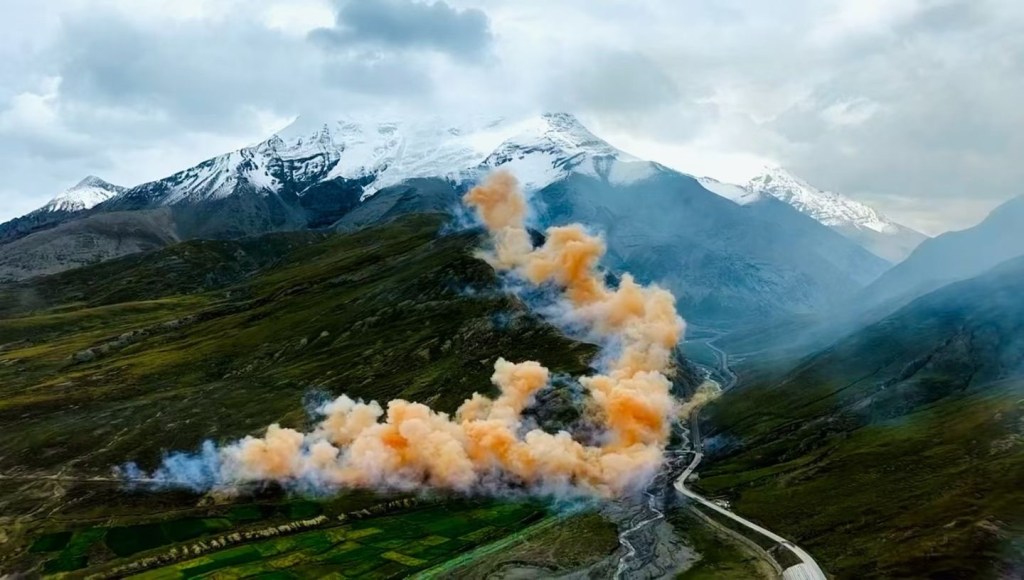
A Fireworks Display in the Holy Mountains Sparks Controversy
Amid the majestic "holy mountains" of Mount Everest, a fireworks display by renowned Chinese artist Cai Guo-Qiang and outdoor brand Arc'teryx aimed to honor nature and reach out to the universe. However, what was intended as an artistic expression quickly turned into a public relations disaster for both the artist and the brand.
Cai, known for his work with gunpowder and fireworks that explore themes such as spirituality, cultural identity, and destruction, spent nearly a week in the small Tibetan village of Relong. This location is part of the region called the "hometown of Mount Everest." It was the first time he had worked on such a large scale in mountainous terrain, with the installation reaching up to 5,000 meters in altitude.
"My intent is to co-create with nature," Cai explained after the event. "When the artwork leaves the hands of the artist, nature imbues it with magic and an uncanny craftsmanship."
The setup involved overcoming extreme conditions, including altitude sickness, sunburn, rain, and hail. Cai's team used drones to transport materials uphill over 600 times, and waterproof firework pots were placed along a 3,000-meter pathway.
On Friday afternoon, around 200 guests, including local journalists, influencers, shopping mall representatives, VIP shoppers, 12 local primary school students, and a living buddha, witnessed the 30-minute showcase. Cai warned guests not to blink before each explosion, which lit up the sky in split seconds.
The display, titled "Ascending Dragon," included three parts: a rainbow dragon that twirled around the mountain, a water dragon that interacted with the audience, and a golden dragon that reached toward the snowy peaks. After the show, Cai thanked the mountains, local farmers, and "intelligent animals" for helping him realize his childhood dream.
"We are living through a seismic shift for humanity," Cai said. "This flying dragon is meant to spread hope, energy, and blessing to the world."
Despite efforts to highlight environmental care, such as using biodegradable materials and relocating herdsmen and livestock, the message did not resonate with online audiences. Visuals of the event quickly spread on social media, with Chinese netizens criticizing the project for its environmental impact and disrespect for sacred mountains.
Related posts reached over 2 million views on Weibo. Influential fashion critic Huang Hong wrote on Xiaohongshu that the event was seriously damaging to the plateau's fragile ecosystem. She criticized the use of materials that take 10,000 years to degrade and called for more responsibility from artists.
Netizens also criticized Arc'teryx for its "tone deaf and arrogant" campaign, believing it contradicted the brand's commitment to nature conservation. They began questioning the local government for approving the event.
A local government official stated that the fireworks used environmentally friendly materials and that no environmental assessment was required. The official emphasized that approval from township, village, and county governments was sufficient and that the selected location was not within an ecological protection zone.
With growing public backlash, nationalist influencer Hu Xijin defended both Cai and Arc'teryx, arguing that any human activity has some impact on the environment, but the key is whether it meets national standards. He urged people to refrain from interfering and criticized the negative perception of Tibet's development.
Local authorities announced they had formed a special investigation unit to look into the matter. On Sunday, Cai Studio and Arc'teryx issued separate apologies, acknowledging the event's misalignment with their values and committing to change their approach to avoid future issues.
Arc'teryx, once considered the "Hermès of the outdoors market," has seen steady growth fueled by China's outdoor sports boom following the 2022 Beijing Winter Olympics. Founded in Canada in 1989, the brand is now part of Amer Sports, acquired by Anta Sports and other investors in 2019.
Cai's controversial land art is part of Arc'teryx's "Spirit Upward" project in the Chinese market, which includes destination events aimed at adding a wellness element to the brand's luxury proposition. The project has featured events on a 3,000-meter mountain in Shangri-la and at the foot of Mount Namcha Barwa in Tibet.
Cai's original work, "Ascending Dragon: Project for Extraterrestrials No. 2," was meant to be an imaginary dialogue with French artist Paul Cézanne's Mont Sainte-Victoire series. Cai expressed a shift in perspective, appreciating androgynous beauty and a softer kind of magnificence.
In addition to the fireworks, Cai brought a lifelike robot version of his AI model, cAI, to observe the event. He plans to use the robot's reflections in his next Paris exhibition.

Post a Comment for "Cai Guo-Qiang and Arc'teryx's Fireworks Controversy Ignites Chinese Social Media"
Post a Comment