1960s US Weapon Firing 6,000 Rounds Per Minute
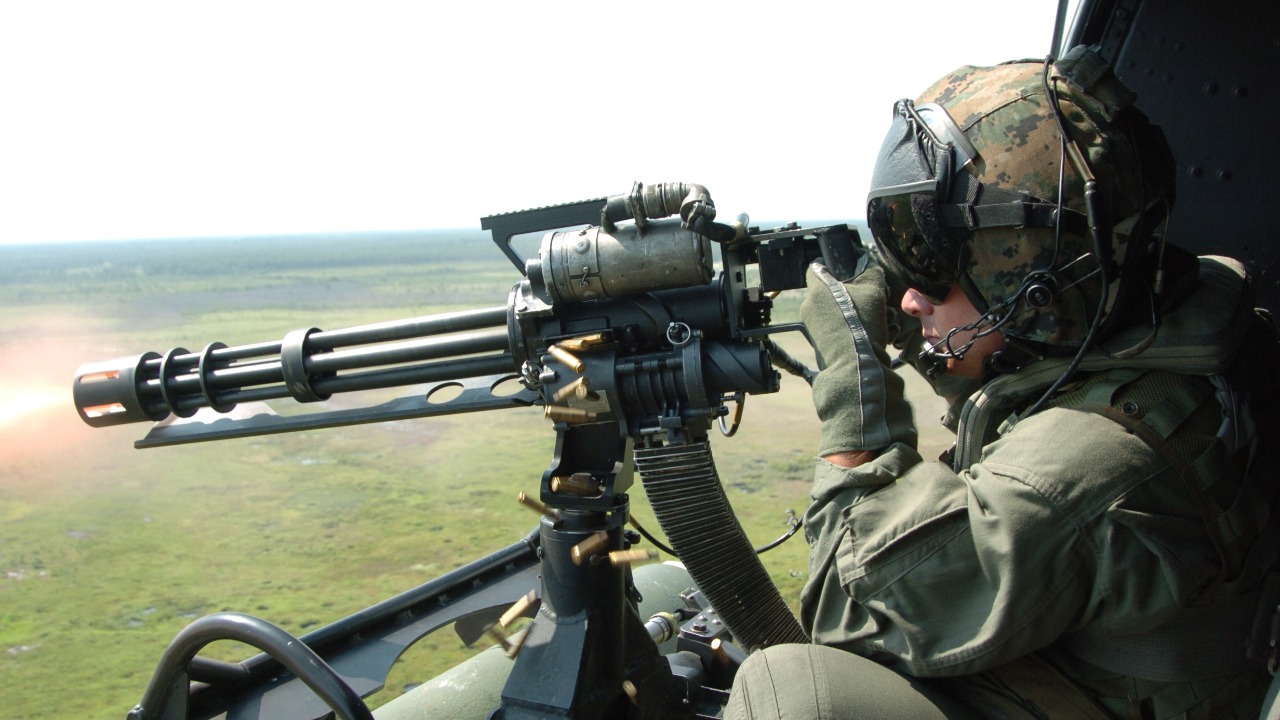
The Evolution of the M134 Minigun
The M134 Minigun, a six-barrel rotary machine gun, marked a significant advancement in military technology during the 1960s. Capable of firing up to 6,000 bullets per minute, this powerful weapon reshaped battlefield dynamics and continues to capture the interest of military historians and enthusiasts.
Origins and Design of the M134 Minigun
The development of the M134 Minigun was driven by the need for increased firepower in the military arsenal. It was an experimental adaptation of the larger M61 Vulcan, scaled down for use by infantry and on helicopters. The gun’s high rate of fire is achieved through its six rotating barrels, which also help distribute heat and reduce wear on each barrel.
General Electric played a crucial role in the creation of the M134 Minigun, utilizing their expertise in electrically-driven rotary systems. The gun's motor-driven mechanism, powered by electricity or gas, enables the high-speed rotation of the barrels and the rapid feeding of ammunition, contributing to its iconic rate of fire.
Operational Use and Effectiveness of the M134
The M134 Minigun was widely used during the Vietnam War, primarily by the US Army and Air Force. Its high rate of fire proved invaluable in suppressive fire roles, especially during helicopter-based operations. The gun's performance significantly impacted battlefield strategies and transformed close air support.
Case studies from the Vietnam War highlight the M134's effectiveness in combat. For example, it was often mounted on UH-1 Huey helicopters, providing critical fire support during troop insertions and extractions under heavy enemy fire. The psychological impact on the enemy was equally profound, often breaking their will to engage when faced with such overwhelming firepower.
The M134 Minigun’s Impact on Ballistics and Wound Trauma
The ballistic properties of the M134 Minigun are another key aspect of its effectiveness. The gun’s high rate of fire and the velocity of the 7.62mm rounds result in a significant energy transfer upon impact, causing devastating wounds.
Medical journals have extensively studied the wound trauma caused by the M134. The gun’s rounds often cause cavitation injuries, where the energy transfer from the bullet creates a temporary cavity in the body tissue, resulting in severe trauma. Compared to other firearms of the same era, the Minigun’s ability to inflict such damage further enhances its reputation on the battlefield.
Legacy and Modern-Day Applications of the M134 Minigun
The design and effectiveness of the M134 Minigun have greatly influenced subsequent firearm designs. The concept of rotary barrels and electrically driven mechanisms can be seen in various modern automatic weapons. Moreover, the M134 continues to be used in the US military and by foreign armed forces, demonstrating its enduring relevance and effectiveness.
The Minigun's presence in popular culture is also significant, featuring in numerous films and video games. Its unique design and devastating firepower have made it a symbol of overwhelming force, often used to signify a turning point in the narrative.
Comparison: M134 Minigun and the M61 Vulcan
The M61 Vulcan, another high-rate-of-fire US military gun, shares its roots with the M134 Minigun. Both were developed by General Electric and feature a multi-barrel rotary design. However, the Vulcan is significantly larger and fires a larger caliber round (20mm) compared to the Minigun’s 7.62mm.
When comparing the effectiveness of both guns, one must consider their intended roles. The Vulcan, with its larger caliber and higher muzzle velocity, is primarily used in an anti-aircraft role, while the Minigun is used more for ground support. Both guns have left a lasting impact on modern warfare, redefining the concepts of firepower and suppressive fire.
The M134 Minigun remains a testament to the ingenuity and innovation in military technology, continuing to influence both real-world applications and cultural representations of power and weaponry.

Post a Comment for "1960s US Weapon Firing 6,000 Rounds Per Minute"
Post a Comment