Women Share Painful Therapy Truths That Are Deeply Insightful
The Harsh Truths Women Have Learned in Therapy
Going to therapy can be a transformative experience, but it's not always easy. Many women have shared the difficult truths they've had to confront during their sessions. These raw and honest accounts reveal personal struggles and moments of self-realization that have shaped their lives. Here are some of the most emotional and eye-opening responses from women who have gone through therapy.
-
One woman shared, "My therapist told me, 'You don't need to save someone to add value to their lives,' and I cried. I think more people need to hear that." This statement highlights the importance of recognizing one's own worth without the need to rescue others.
-
Another individual said, "Something I learned in my therapy sessions is that I'm the only one keeping myself from happiness. It's easier to sit and feel sorry for yourself than to make an attempt to do certain things that make you happy. I've started doing things that make me happier, like attending events at my public library. I've never felt happier and more myself."
-
A third person described their fear of those who seem to have their lives together, leading them to only make friends with people who also have issues. They explained, "There have been so many times when I enjoy someone’s company and can see us being friends, until they say something that intimidates me — something as small as them saying, 'I woke up to run this morning.' Basically, my subconscious says, I could NEVER do that. She must have her life together, and there’s no reason she would want to be around someone as screwed up as me."
-
Another woman reflected on the realization that she isn’t responsible for other people's feelings. She shared, "I’m not in charge of other people’s feelings, even when they feel bad because of my actions. For example, my dad being disappointed that I’m not pursuing higher education, or my mom being sad because I won’t let her track me anymore. I had a therapy appointment today and cried because of this. Instead of doing what everyone around me wants me to do, even if it hurts them, I have to do what I want to do and find happiness in that."
-
Some women have come to accept that being alone is good. One said, "Even though there will be friends and family around, I am still an individual, and I need to start accepting that being alone is good. Being alone doesn't need to feel lonely."
-
Another shared a painful truth about their parents: "That my parents (mostly my mother) were/are emotionally immature and abusive. It was so normalized my whole childhood. I knew they weren't great parents, but I didn't realize the amount of trauma I experienced until it surfaced in therapy."
-
Some individuals revealed patterns of behavior rooted in past experiences. One woman said, "I don't do nice things for others because I'm a 'nice' person, but I do it in a self-serving manner to keep myself 'safe.' Growing up, I worked tirelessly doing nice things for my mother, who had an alcohol addiction, so she wouldn't hurt me. Now, as an adult, I compulsively do nice things for others so that I won't be rejected by them."
-
Others have faced the reality of codependency and how it affects their relationships. One person said, "I have developed codependency, and it has pretty much wrecked how I view my relationships and how I act towards myself. Oh, and also how trauma has affected the way I view people’s tones of voice and facial expressions. This has caused me to be hyper-aware of body language. It can be a good and bad thing, depending on how you look at it."
-
Many have struggled with the idea of their own needs. One woman said, "That I was not a 'low effort' kid. My parents raised me in such a way that I just stopped having needs because it was easier than expecting them to meet them. It's still hard for me to admit that I have needs sometimes, and to admit that I feel pain when they aren't met."
-
Some have realized that they are their own worst enemy. One woman said, "I water red flags so they can grow into beautiful disasters. I am my own worst enemy."
-
Others have accepted that healing is a personal journey. One person shared, "I can heal myself, but not my family, and the parts of them that hurt me the most at times were the maladaptive coping skills they developed during their own traumatic childhoods. But that doesn’t excuse their behavior."
-
Some have come to terms with their own trauma. One woman said, "I have PTSD because my life has been full of trauma. It felt terrible when I first heard it. Surely the 'trauma' label must be for people who had it worse than me? It feels much more realistic and objective now that I've been treated by a therapist who specializes in PTSD."
-
Others have recognized the impact of emotional unavailability. One person said, "Someone who is emotionally unavailable can often make someone who is emotionally available feel like their basic needs are too much."
-
Some have learned that moving on without an apology is sometimes better. One woman shared, "Sometimes moving on without that apology you want so bad is better than trying to get it. Some people just can't give a sincere apology for the pain and trauma they caused."
-
One woman discussed the reality of mortality. She said, "I will die someday. I ended up in therapy because I couldn't stop thinking about dying — blood clots, strokes, heart attacks, cancer. I panicked about it all. Everyone around me would say, 'Stop being silly, of course you're not dying,' but it never assured me or helped at all. The therapist told me I am dying, and every day I get closer to it, just like everyone else. It's a fact of life we all need to accept."
-
Others have come to understand their inherent worth. One person said, "You have worth even if you contribute nothing. You shouldn't have to prove your value. And your self-esteem should not be based solely on how others perceive you."
-
Some have faced the reality of harmful relationships. One woman shared, "My first 'real' relationship was a grooming situation. I was 19 with someone 25 years older than me, and of course, I thought, No one understands our relationship! This is different than other age-gap relationships. It wasn't. I wasted 4–5 years of my youth on it."
-
Others have had to accept that their parents may not be who they hoped for. One woman said, "My mother will never be the person I need her or want her to be, and I have to let go of that dream of her which I created. I can keep her in my life or cut her out of it, but only by accepting her for who she is and letting go of the fiction."
-
Some have recognized the harsh way they speak to themselves. One woman said, "I talk to myself in such a mean, hateful way — a way I'd never dare talk to another living person. I tend to show grace to everyone except myself. I’m my own worst critic, and it’s self-defeating."
-
Others have realized that some friendships are based on convenience rather than genuine care. One person said, "Sometimes your best friends are only there out of convenience (small town or group), and don’t actually care about you. Once that convenience is removed, the friendship has no base, and they’ll no longer care about you, no matter how strong that friendship once was."
-
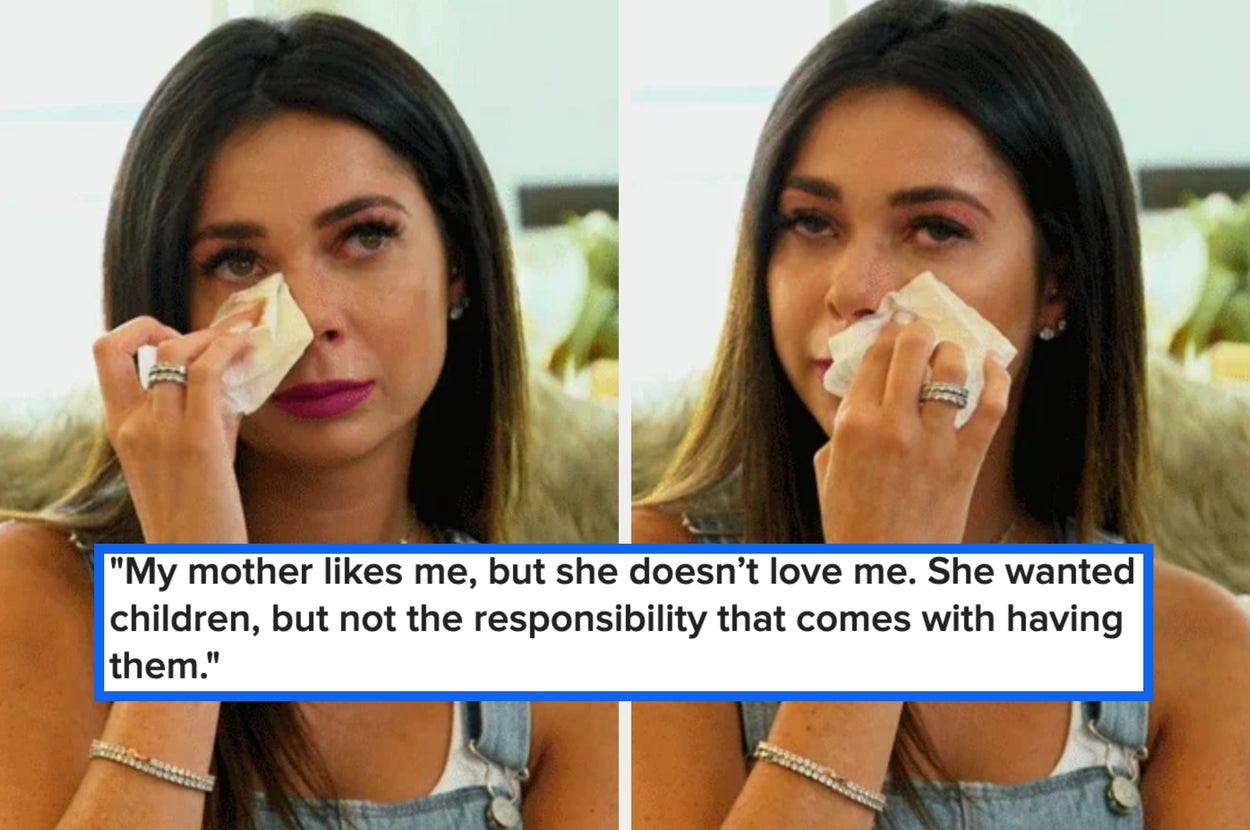
Some have come to terms with the limitations of their parents. One woman said, "My mother likes me, but she doesn’t love me. She wanted children, but not the responsibility that comes with having them, or the responsibility of supporting them after they’re cute and cuddly."
-
Others have faced the reality of chronic illness. One person said, "My disease isn’t curable. I am NOT going to improve. I have to quit waiting on better days to start enjoying my life, because those days are never, ever coming. This is my new permanent life. This is my new normal, and even after several years of being sick, I can’t really accept it."
-
Some have learned that rejection is not the end. One woman shared, "Rejection is not the worst thing that can happen to you. Stating your wants and needs is healthy. It’s better to be alone than to stay with someone with whom you can’t share your needs and feelings — or even worse, someone who doesn’t want to meet those needs."
-
Others have come to terms with the loss of a parent. One person said, "When my mom died, I realized through therapy that I wasn't mourning the loss of my mother, but the realization that she had never been one, and her death made that definite. Years later, I'm honestly still taken aback by that one."
-
Finally, one woman reflected on the importance of self-awareness. She said, "Sometimes, I am the problem and source of my own issues. Recognizing that is a good thing and a catalyst to change. Therapy is also not meant to side with me. It takes a lot of work to unlearn a lot of unhealthy skills I have learned throughout my life."

Post a Comment for "Women Share Painful Therapy Truths That Are Deeply Insightful"
Post a Comment