What Is PLA in 3D Printing?
Understanding the Basics of 3D Printing
In today's era of rapid technological progress, many innovations capture public attention. However, one area that often goes unnoticed is the rise of 3D printing. This industry is expected to grow significantly over the next decade, with a projected increase of nearly 25% year-over-year. The potential applications of 3D printing span various fields, including space exploration, sustainable housing, and even orthopedic surgery. As such, understanding how 3D printers work, the materials they use, and their possible applications could be crucial for both professional and personal development.
How 3D Printers Work
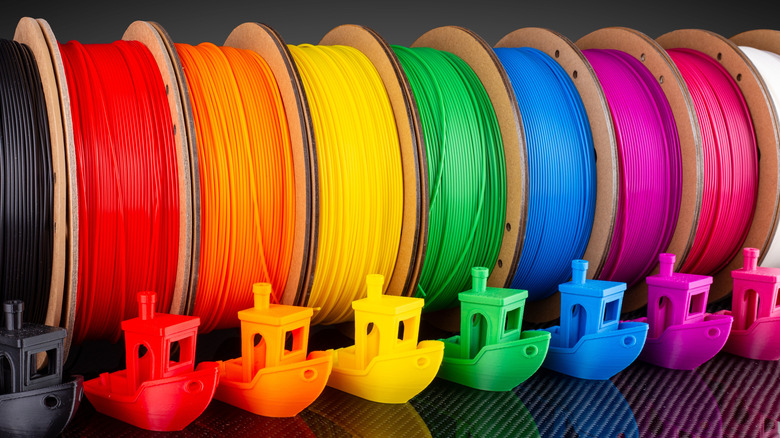
The most common type of 3D printing technology is Fused Deposition Modeling (FDM). In this process, layers of melted filament are deposited onto a base platform according to a pre-loaded digital design. The list of FDM materials can be quite extensive, featuring abbreviations like ABS, PETG, and PEI. Among these, polylactic acid (PLA) stands out as the most popular filament for 3D printers.
PLA is a thermoplastic typically derived from sugarcane or cornstarch. It is favored by both home and industrial users because it is cost-effective, environmentally friendly, and has a relatively low melting point. Its ease of use makes it an excellent choice for 3D printers designed for children and teenagers.
PLA At A Glance
Since its invention in 1930, polylactic acid has remained a staple in the additive manufacturing industry. Today, it continues to gain popularity as one of several durable consumer-grade filaments used in FDM 3D printers. The production of PLA involves fermenting starchy plants such as sugarcane, maize, and cassava, which are then broken down into lactic acid. Two primary polymerization methods are used: ring-opening and condensation.
Some variations of PLA, known as PLA+, are enhanced by adding other ingredients to alter the appearance, stability, malleability, and tensile strength of the filament. For example, adding carbon fiber increases the strength and stiffness of prints but can be harder on the printer’s nozzle. Metal powders like brass, copper, and bronze provide metallic finishes with improved mechanical properties. Biomass additives, such as bamboo, wood, hemp, or flax, can enhance strength and flexibility while giving printed objects a more natural look. However, these enhancements usually come at a higher cost compared to standard PLA.
Environmental Impact of PLA
Due to its natural origins, PLA is considered more eco-friendly than many other filaments. However, its biodegradability remains a topic of debate. Although it is made from degradable starches, the manufacturing process makes it highly resistant to degradation. This means it only breaks down quickly under specific aerobic conditions. As a result, PLA degrades rapidly in industrial composting facilities but may take up to 80 years to decompose in natural environments. Despite this, PLA is still a more sustainable option than traditional plastics, as its production requires 65% less energy and emits 68% fewer greenhouse gases.
Is PLA Right for You?
Printing with PLA is straightforward, making it a popular choice among hobbyists. Its low melting point allows for the use of inexpensive printers with lower nozzle temperatures without issues. Additionally, it does not require an enclosed printing environment. Compared to alternatives like Acrylonitrile Butadiene Styrene (ABS), PLA is less sensitive to temperature fluctuations during layering, resulting in greater dimensional accuracy and reduced warping. Sharp corners and intricate details are easier to print with PLA, and the high intra-layer bonding leads to smoother surfaces. This makes it a forgiving material for beginners experimenting with printer settings.
However, PLA is not suitable for all applications. Its lack of toughness and low impact resistance make it unsuitable for parts that experience high stress. Engineers often avoid using PLA for bearings, components, or test pieces. Additionally, its low melting point, while beneficial for beginners, makes it prone to melting or deforming when exposed to heat or direct sunlight. Exposure to water and chemicals can also cause warping, limiting its use in outdoor environments.
Applications of PLA
Amateurs and professionals alike commonly use PLA filaments for creating models, prototypes, decorative figurines, containers, toys, and gadgets. PLA+ versions offer increased strength, flexibility, and heat resistance, making them ideal for projects requiring these properties. Whether you're a hobbyist or a professional, understanding the strengths and limitations of PLA can help you make informed decisions about your 3D printing projects.

Post a Comment for "What Is PLA in 3D Printing?"
Post a Comment