Utah: The Surprising Redistricting State – What You Need to Know
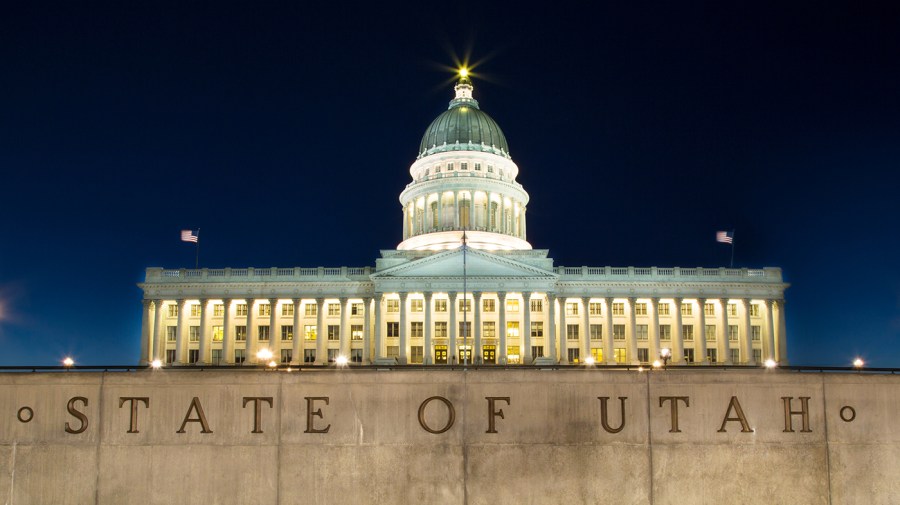
Utah Faces Redistricting Ruling, Opening Possibilities for Democratic Gains
Utah may soon find itself in the spotlight of a national redistricting battle, as a recent court ruling has forced the state to reconsider its congressional boundaries. This development comes amid growing concerns over partisan gerrymandering and the potential for significant shifts in political power.
The ruling was issued by District Judge Dianna Gibson, who determined that Utah’s Republican-led legislature had bypassed voter-approved anti-gerrymandering safeguards when drawing the latest congressional maps. These maps were designed to strengthen Republican control of the state’s four House seats. The judge ordered the state to redraw its districts before the midterms, a decision that could have far-reaching implications for both parties.
While the ruling may face further legal challenges, both sides of the case reportedly agreed on a timeline that could lead to changes as early as this fall. Unlike other states such as Texas and California, where redistricting plans aimed to boost party margins, Utah is now under a court-mandated requirement to redraw its lines. Experts suggest that these new maps could provide Democrats with a rare opportunity to gain a seat in what is typically a Republican stronghold.
Why Is Utah Being Forced to Redraw?
In 2018, Utah voters approved an independent redistricting commission via ballot initiative. However, this system was effectively dismantled by a state law passed in 2020, which rendered the commission advisory rather than authoritative. In 2021, legislators ignored a proposal from the commission, resulting in maps that received an F-grade from the Gerrymandering Project's "Report Card."
A previous Utah Supreme Court decision last year ruled that the state legislature lacked the authority to revise voter-approved reform initiatives, including those related to redistricting. Judge Gibson's recent ruling emphasized that the current maps are unlawful because they disregarded the voter-passed proposition. If no further legal complications arise, lawmakers will need to create new maps within a month.
What Does This Mean for Utah Democrats?
All four of Utah’s congressional districts are currently held by Republicans, and the state has consistently favored Republican candidates in recent elections. The last Democrat to hold a House seat in Utah was Rep. Ben McAdams, who was unseated in 2020. The new redistricting could potentially create a more competitive district in Salt Lake County, a Democratic stronghold in an otherwise conservative state.
Political science professor Matthew Burbank noted that Democrats are hoping for a district situated in Salt Lake County, which could make them more competitive. Experts predict that this situation could spark interest among Democrats, even if it's just out of curiosity about whether the new district offers a better chance than previous ones.
Utah Democrats have welcomed the court ruling as a “mandate for change” and are preparing for potential future campaigns.
How Are Republicans Responding?
Republicans have expressed strong opposition to the ruling, with Sen. Mike Lee claiming that Utah’s electoral system is “under attack by Democrats and their leftist allies.” Former President Donald Trump also criticized the ruling, calling it “absolutely unconstitutional.” He questioned how a Republican state like Utah ended up with so many “Radical Left Judges.”
Utah Gov. Spencer Cox has also voiced disagreement with the ruling but acknowledged that voters felt their initiative was ignored. While Republicans can appeal the decision, experts believe they are unlikely to succeed given the recent state court decision.
Are Any Incumbents Affected?
Depending on how the new lines are drawn, especially around Salt Lake County, some Republican incumbents could be at risk. Analysis from the Cook Political Report suggests that Rep. Burgess Owens, who represents a large portion of Salt Lake County voters, could be the most obvious target. Other Republican representatives, including Blake Moore, Celeste Maloy, and Mike Kennedy, could also see shifts in their districts.
The independent commission proposed several maps in 2021 that would have kept Salt Lake City intact and created a district that could have supported a Democratic candidate in the 2024 election. If the legislature decides to create a blue district, it could lead to difficult choices for Republicans, who would need to balance losing one seat against maintaining others.
How Will the Process Play Out?
Despite initial criticism from top Republicans, the state legislature has agreed to move forward with redrawing the maps under the court’s deadline. A timeline submitted to Judge Gibson sets a Sept. 25 deadline for the public release of new maps, followed by a public comment period, a legislative vote, and a hearing.
Experts emphasize that the maps must be finalized quickly to take effect before the midterms. With the upcoming election cycle approaching, the timing is critical for ensuring that all necessary preparations are made. As Cann noted, this is a pivotal moment for Utah’s political landscape.

Post a Comment for "Utah: The Surprising Redistricting State – What You Need to Know"
Post a Comment