Ukrainian Civilians Turn Spare Cash Into $40 Million Against Russia
The Role of Crowdfunding in Ukraine's Military Efforts
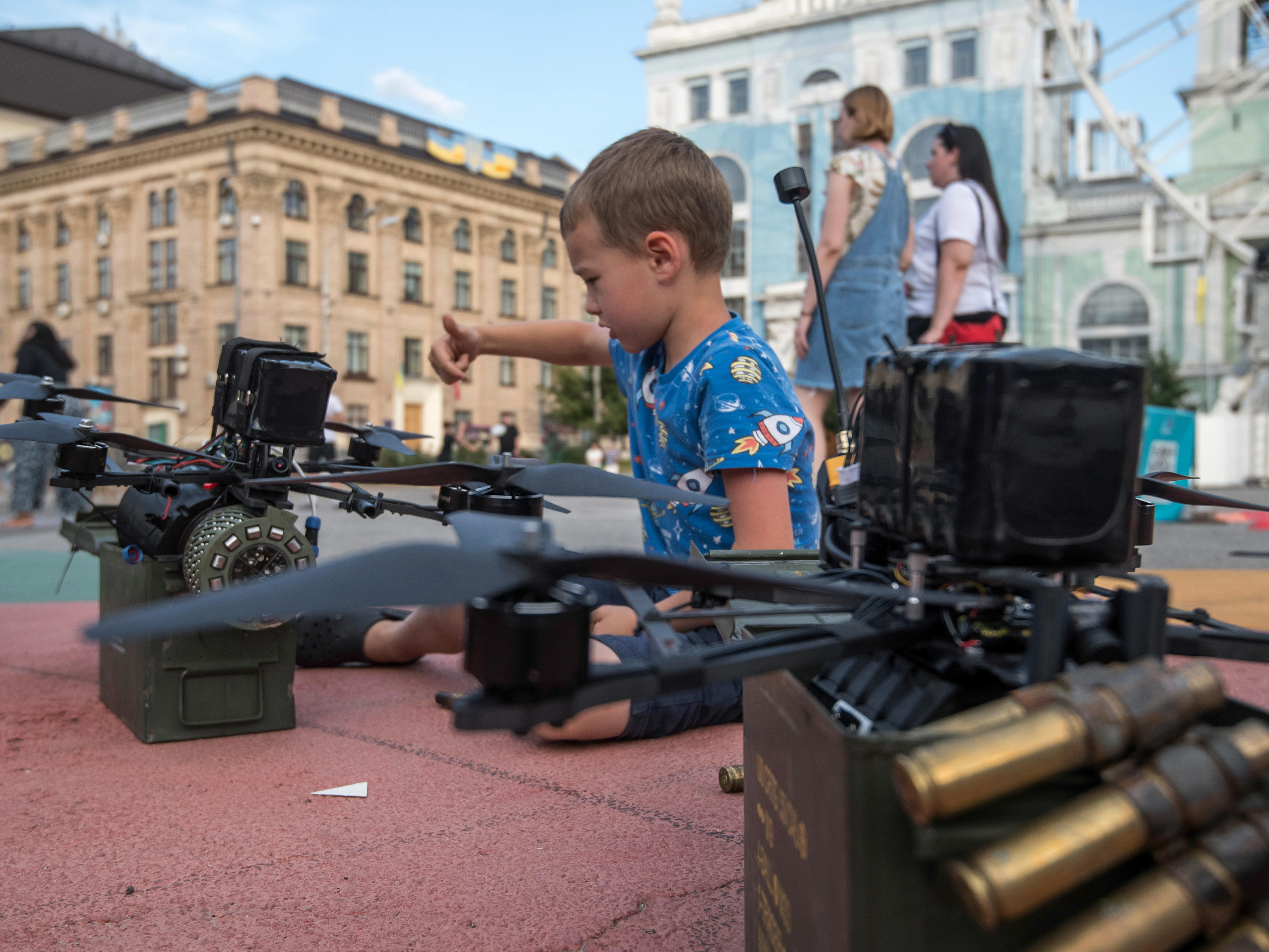
In the ongoing conflict in Ukraine, crowdfunding has emerged as a crucial lifeline for elite military units, particularly those operating with first-person-view (FPV) drones. These drones have become one of the most effective tools on the battlefield, and their supply is heavily supported by civilian donations. One of the most notable groups involved in this effort is the Sternenko Foundation, which plays a significant role in ensuring that Ukrainian forces are well-equipped with these advanced aerial weapons.
The foundation’s ability to deliver updated FPV drones within days or weeks has made it a vital asset for frontline units. Drone pilots often emphasize how these donations can be the difference between life and death on the rapidly evolving battlefield. While many of the individuals involved in these efforts prefer to remain anonymous for safety reasons, their contributions have had a profound impact on the war effort.
A Small Contribution with Big Impact
One such donor is Ilia, a 33-year-old bridal shop owner who, despite being blind in one eye and exempt from military service, continues to contribute small amounts—usually no more than $7—to the Sternenko Foundation. For him, the decision to donate is clear: “If I had any doubts about how my money is being used, I wouldn't give it.” His contributions, like those of hundreds of thousands of others, go toward equipping Ukrainian defenders with thousands of attack drones.
The Sternenko Foundation operates through online fundraisers, using platforms like Telegram to reach Ukrainians across the country. This model has allowed the group to raise substantial funds quickly, enabling them to provide critical support to military units. With Western allies not always able to meet every need, crowdfunding has become a key pillar of Ukraine’s war effort.
The Cost-Effectiveness of FPV Drones
The use of FPV drones in modern warfare has proven to be remarkably cost-effective. The Sternenko Foundation aims to raise around $250,000 per day, and its recipients claim that the damage inflicted on Russian military hardware over the past three years has reached into the billions of dollars. These claims are often backed by videos showing the effectiveness of the drones in action.
One of the most notable beneficiaries of the foundation’s efforts is the Ronin drone unit of the 65th Separate Mechanized Brigade in Zaporizhzhia. The unit has carried out some of the most audacious examples of asymmetric warfare, using relatively inexpensive FPV drones to disable high-value targets.
A Strategic Advantage
In January, Ronin pilots claimed to have disabled a Buk medium-range air defense system worth approximately $40 million using a $500 FPV drone. A video of the strike was uploaded, showing the drone approaching the launcher from above before crashing into its missiles. Over the following months, the unit continued to push deeper into Russian-held territory, carrying out attacks on additional Buk systems.
According to Andriy, a pilot from the Ronin unit, the success of these strikes would not have been possible without the support of the Sternenko Foundation. The foundation has delivered over 210,000 drones since the start of the war, a fraction of the 2.2 million total drones produced by Ukraine in 2024 alone. However, pilots argue that the foundation’s drones offer distinct advantages due to their rapid updates and improvements.
Rapid Feedback and Constant Upgrades
The Sternenko Foundation works closely with drone pilots to identify needed upgrades, allowing manufacturers to deliver improved drones within days or weeks. This fast feedback loop enables continuous enhancements to the drones’ performance, making them more effective in combat situations.
Andriy explained that even during nighttime operations, pilots can contact developers and resolve issues on the spot. This level of responsiveness has allowed the Ronin unit to gradually improve their 10-inch FPV platforms, which have become essential in their operations.
The Strategic Importance of FPV Technology
FPV drones, originally designed as flying cameras, have evolved into one of the primary weapons on the battlefield. Soldiers have equipped them with explosive payloads, allowing them to target armored vehicles, fortified positions, and enemy troops. Both sides are now engaged in an arms race, developing new drone defenses that require constant upgrades.
Thanks to the updates provided by the Sternenko Foundation, the Ronin unit eventually received FPV quadcopters capable of flying beyond 18 miles. Many of Russia’s Buks were positioned beyond this range, allowing the unit to strike effectively. The foundation also provided signal repeater drones, improving communication in jammed areas.
A High Cost-Efficiency Ratio
The cost-effectiveness of the drones is staggering. According to Andriy, the Ronin unit spent approximately $27,500 to disable 15 Buk systems collectively valued at between $150 million and $600 million. This means that for every dollar donated through the foundation, the unit inflicts roughly $5,450 in damage to Russian military assets.
Analysts agree that while it is difficult to determine the exact value of these strikes, their cost efficiency is extraordinary. Benjamin Blandin, a researcher with the Yokosuka Council on Asia-Pacific Studies, noted that the export price of a Buk-M3 battery is around $100 million, but Russia likely purchases such systems at a much lower cost.
Civilian Involvement and the Future of Drone Warfare
Beyond the military, civilians like Ilia play a crucial role in supporting the front lines. He volunteers by driving donated vehicles and equipment to soldiers in the Sumy and Donbas regions, despite facing multiple close calls on his supply runs.
Ukraine, strained by years of war, has long relied on its civilians to provide battle supplies. Oleksandr Skarlat, director of the Sternenko Foundation, emphasized that the majority of donations come from Ukrainian citizens, with the foundation raising about $7.2 million monthly from over 450,000 individual contributions.
As the war continues, the Sternenko Foundation remains at the forefront of Ukraine’s drone efforts, working to develop new interceptors to counter Russian Shahed drone attacks. The foundation’s work highlights the growing importance of civilian-led initiatives in modern warfare, proving that even small contributions can have a massive impact on the battlefield.

Post a Comment for "Ukrainian Civilians Turn Spare Cash Into $40 Million Against Russia"
Post a Comment