Trump's Era Sees Surge in Supreme Court Emergency Cases
The Rise of the Emergency Docket and Its Implications
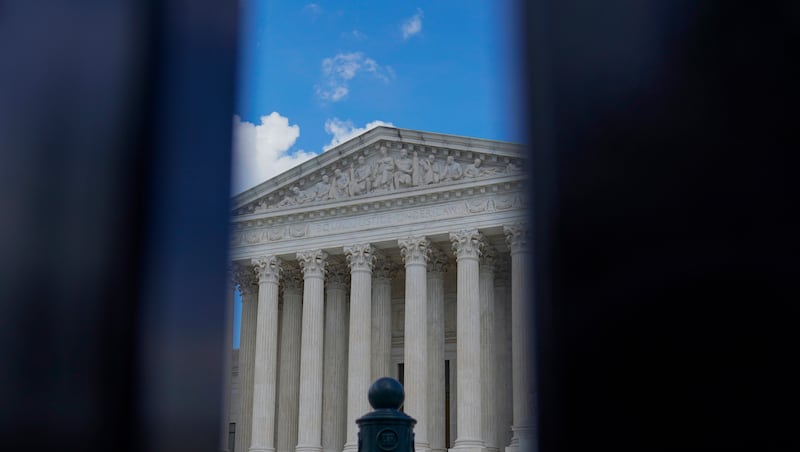
The recent term of the Supreme Court, while not marked by major controversies or landmark decisions like the overturning of Roe v. Wade, has seen significant changes that may be overlooked by the public. According to several experts, one of the most notable developments is the increased use of the emergency docket, also known as the “shadow docket.” This process allows the court to issue urgent rulings without following traditional procedures such as oral arguments or detailed opinions.
The shadow docket is a method used by the Supreme Court to address time-sensitive issues, such as execution orders or other pressing legal matters. However, these decisions often lack context or reasoning, leading to criticism from legal scholars and the public alike. The process has been under scrutiny, particularly due to its frequent use by the Trump administration, which filed a large number of emergency applications over the past few months.
Ilya Shapiro, a senior fellow at the Manhattan Institute, noted that while the court decided fewer cases on the merits this year, it remained highly visible in the news cycle due to its involvement with the emergency docket. He pointed out that at least half of the court’s recent visibility can be attributed to these emergency cases. Similarly, Steven Vladeck, a law professor at Georgetown University, emphasized that the Trump administration had filed an unprecedented number of emergency applications with the high court, far exceeding the number filed by the Biden administration during its four years in office.
One example of the impact of the emergency docket was the unanimous decision in January to uphold a federal law requiring the social media app TikTok to be sold to new owners or face a ban in the United States. Chief Justice John Roberts referenced this decision during oral arguments for the recent Trump v. CASA case, highlighting how quickly the court can move on certain issues.
Peter Loge, a professor at George Washington University, compared the use of the emergency docket to the work of emergency medical technicians who assess situations quickly and respond without the thorough approach of doctors. He noted that while some of these decisions have had significant impacts, they often lack the detailed explanations that the public would expect.
Shapiro explained that the rise in emergency docket rulings is linked to an increase in executive actions by presidents in recent years. As Congress legislates less and the government relies more on executive actions, there are more instances of litigation challenging these actions. This trend has led to an increase in emergency applications, which have political and societal consequences.
Experts like Vladeck and Loge argue that the lack of reasoning behind emergency docket rulings can erode public trust in the court. Unlike decisions such as the Dobbs ruling on abortion, which come with detailed arguments, emergency rulings often leave the public without a clear understanding of the court's reasoning. This lack of transparency raises concerns about the court’s relationship with the executive branch and its role in checking presidential power.
Vladeck emphasized that the court’s responsibility is to either push back against potential lawless behavior by the executive or to explain why it is allowing such behavior to continue. He argued that the volume and significance of recent emergency rulings make them stand out, as they often affect a large number of people without providing the necessary context.
While the Supreme Court has always had a political aspect, with justices being appointed by the president and confirmed by the Senate, there is still an expectation of independence. However, as the American public becomes increasingly divided, the court is often viewed through a political lens. Loge stressed the importance of maintaining public belief in the court’s independence for democracy to function effectively.
Looking ahead, the Supreme Court will continue to face high-profile cases, including those related to birthright citizenship and campaign finance. One such case involves Vice President JD Vance, who is challenging campaign finance restrictions. The outcome of these cases could have significant implications for future elections and the balance of power between the branches of government.
As the court moves forward, the use of the emergency docket and its impact on public perception will remain a critical issue. Experts suggest that the court must find a balance between addressing urgent matters and maintaining transparency and accountability to ensure the continued legitimacy of the institution.

Post a Comment for "Trump's Era Sees Surge in Supreme Court Emergency Cases"
Post a Comment