Trump Withdraws Habba's U.S. Attorney Nomination, Names Her as Acting Official
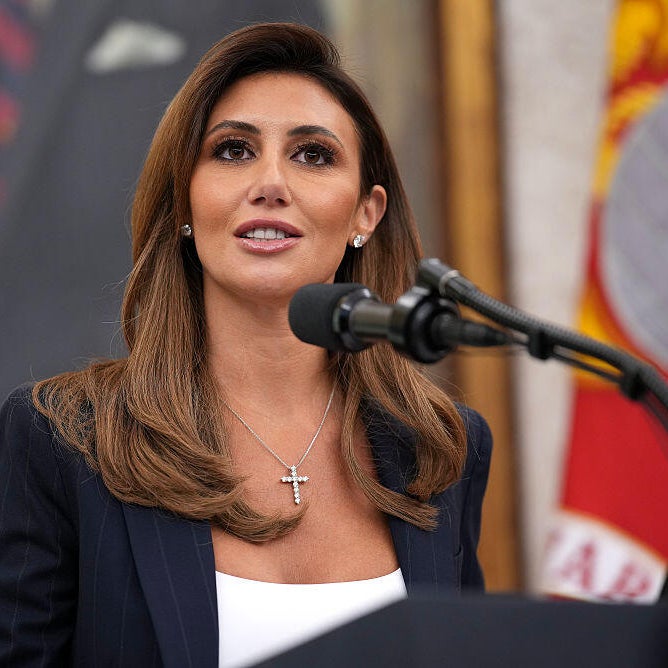
The Complex Legal and Political Struggle Over the U.S. Attorney Position in New Jersey
President Donald Trump recently withdrew the nomination of Alina Habba, his former defense lawyer, to serve as the top federal prosecutor in New Jersey. This decision came after a legal and political battle over who should lead the U.S. attorney's office in the state. The move cleared the way for Habba to take on an acting role, but it also sparked a broader debate about the balance of power between the executive branch and the judiciary.
Habba was initially appointed by Trump as an interim U.S. attorney in March 2024, with her term set to expire after 120 days. However, as the deadline approached, a panel of federal judges in New Jersey decided to replace her with Desiree Leigh Grace, her deputy. This action led to a significant conflict within the Justice Department, as Attorney General Pam Bondi criticized the judges for bypassing the president’s authority.
Bondi took to social media to express her frustration, stating that the judiciary had overstepped its bounds by appointing Grace instead of allowing Habba to continue in her role. She emphasized that the Department of Justice would not tolerate what she described as "rogue judges" undermining the president’s constitutional powers.
The situation raised questions about the legal framework governing U.S. attorney appointments. A federal statute allows district courts to step in if the attorney general fails to appoint someone within 120 days. In this case, the judges in New Jersey invoked that law, leading to Grace being named as the new U.S. attorney. However, this decision clashed with the president’s appointment of Habba, creating a legal and political standoff.
Habba, who had been serving as an acting U.S. attorney, faced additional complications due to the Federal Vacancies Reform Act. This law limits who can serve as an acting officer if the president has already submitted their nomination to the Senate. Since Trump had nominated Habba earlier in the year, she was initially ineligible to serve as an acting U.S. attorney. However, after withdrawing her nomination, she became eligible again.
This legal maneuver allowed Habba to assume the acting role, even though the judges had previously removed her from the position. The White House supported Habba, with spokesperson Harrison Fields stating that the president had full confidence in her ability to serve the people of New Jersey.
Despite this support, Habba faced opposition from New Jersey’s two Democratic senators, Cory Booker and Andy Kim. Under the Senate Judiciary Committee’s “blue slip” policy, a nominee for U.S. attorney must receive approval from both home-state senators before moving forward. Their rejection of Habba’s nomination added another layer of complexity to the situation.
Habba’s critics argued that she lacked experience as a prosecutor, pointing out that she had never held a formal prosecutorial role before. However, some supporters, like Armen Morian, a colleague from a 2023 civil case involving Trump, defended her qualifications. Morian praised her judgment and said she was well-suited for the position.
The dispute over the U.S. attorney role in New Jersey is part of a larger pattern of judicial interventions in executive appointments. Historically, courts have occasionally stepped in when the president fails to fill a vacancy within the 120-day window. For example, in 2008, a New Mexico court appointed Gregory Fouratt as U.S. attorney, and in 2018, a New Jersey court did the same for Craig Carpenito.
However, the legality of such actions remains debated. While some legal scholars argue that the president retains ultimate authority over U.S. attorneys, others suggest that the judiciary has a role in ensuring that the executive branch fulfills its responsibilities.
As for Grace, she indicated on LinkedIn that she was no longer the first assistant U.S. attorney but was prepared to follow the court’s order to serve as the interim U.S. attorney. Her post received widespread support from law enforcement officials in New Jersey, highlighting her strong connections and reputation in the state.
The ongoing conflict over the U.S. attorney position in New Jersey underscores the complex interplay between the executive and judicial branches of government. It also raises important questions about the limits of presidential authority and the role of the courts in filling vacancies within the federal government.

Post a Comment for "Trump Withdraws Habba's U.S. Attorney Nomination, Names Her as Acting Official"
Post a Comment