Thailand Strikes Cambodia With F-16s Amid Border Conflict
Escalating Border Tensions Between Thailand and Cambodia
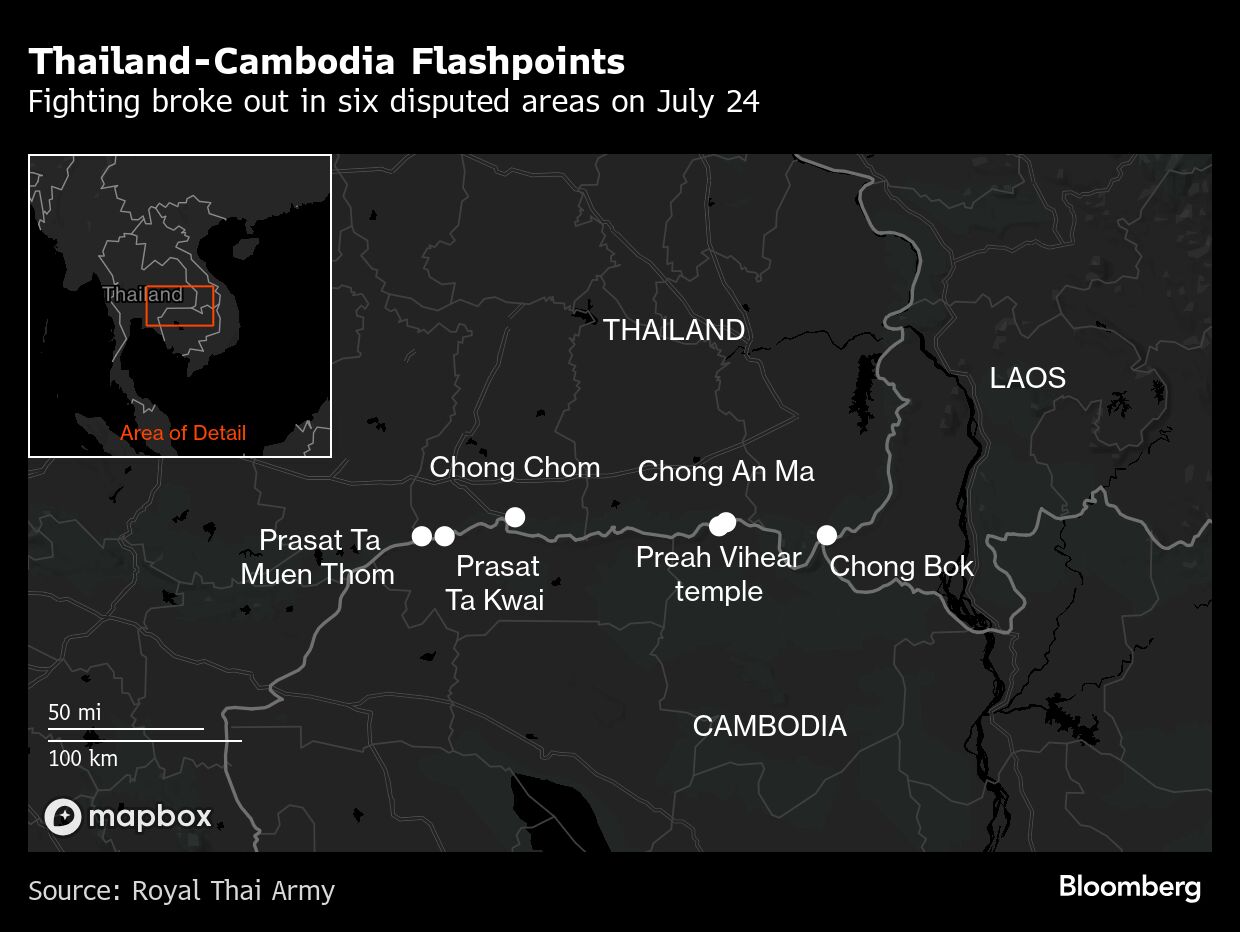
Recent clashes between Thailand and Cambodia have reignited a long-standing border dispute, resulting in the deaths of at least 14 people. The conflict, which has seen Thai F-16 fighter jets strike military sites in Cambodia, marks the worst violence between the two nations in over 14 years. Both countries have exchanged accusations of initiating the attacks, with reports of artillery and rocket fire intensifying tensions along their shared frontier.
The recent violence occurred amid a series of escalating incidents, including a deadly exchange of gunfire in May that claimed the life of a Cambodian soldier. This has been followed by political developments in Bangkok that have threatened the stability of the ruling coalition. Thailand's military operation has reportedly targeted three Cambodian army bases near the border, while Cambodia claims that rockets fired from its territory killed several civilians. Among the casualties was an eight-year-old boy, according to revised health ministry figures.
Casualty numbers remain inconsistent, with Thailand reporting 14 fatalities, including one soldier, and 32 civilians and 14 soldiers injured. The situation on the Cambodian side remains unclear. Despite the ongoing conflict, Thailand’s military stated that its operations have been successful but may take time to complete. In response, Cambodian Prime Minister Hun Manet has called for an urgent meeting of the United Nations Security Council, citing "extremely grave aggressions" that necessitated self-defense.
Regional experts warn that the conflict could escalate further if not addressed promptly. Jayant Menon, a senior fellow at the ISEAS-Yusof Ishak Institute in Singapore, noted that while the conflict is unlikely to spread beyond the two countries, it could disrupt trade and movement, negatively impacting the regional economy. Both nations also face additional challenges due to the ongoing trade threats posed by former U.S. President Donald Trump's tariff policies.
Economic indicators reflect the growing uncertainty. The Thai baht, which had previously reached its highest level since February 2022, declined by 0.3% against the dollar. Thai stocks also fell by 0.6% following the news.
Historical Context and Ongoing Disputes
The border disputes between Thailand and Cambodia date back to the early 1900s, rooted in differing interpretations of Franco-Siamese treaties that outlined boundaries during French colonial rule. The Preah Vihear temple, a significant historical site, has long been a point of contention. Although relations between the two nations have remained relatively stable since the 2011 conflict, the current situation signals a troubling return to hostilities.
Despite the recent escalation, both countries have yet to initiate bilateral talks. Acting Prime Minister Phumtham Wechayachai described the clashes as falling short of a full-scale conflict, emphasizing that this is not a declaration of war. However, Thailand has ordered evacuations within 50 kilometers (31 miles) of the border, highlighting the severity of the situation.
Malaysian Prime Minister Anwar Ibrahim, the current chair of the Association of Southeast Asian Nations (ASEAN), has called for an immediate ceasefire and expressed willingness to assist in facilitating dialogue between the two nations. Meanwhile, both the United States and China have voiced concerns over the violence, urging a peaceful resolution and protection of civilians.
Diplomatic and Military Implications
Since the clash in May, both Thailand and Cambodia have increased their military presence along the border, leading to restrictions on land crossings that are crucial for trade. The latest violence came just hours after Thailand expelled Cambodia’s ambassador and recalled its own envoy from Phnom Penh in response to a landmine explosion that injured five Thai soldiers. In retaliation, Cambodia further downgraded diplomatic ties by withdrawing its diplomats and requesting similar actions from Thailand.
Thailand holds a military advantage over Cambodia, with a modern air force equipped with F-16 fighter jets and Saab Gripen aircraft. In contrast, Cambodia lacks combat aircraft and relies on Chinese-made KS-1C air defense systems, which have a reported range of up to 70 kilometers (43 miles). This disparity underscores the potential for continued tension in the region.
Domestic Political Impact
The border dispute has also affected Thailand’s domestic politics. Prime Minister Paetongtarn Shinawatra faced suspension from her duties pending an investigation into allegations of ethical misconduct related to the border issue. A leaked phone call between her and former Cambodian leader Hun Sen sparked public backlash and protests demanding her resignation. She has until July 31 to submit her defense in the court case.
In response to the ongoing conflict, Cambodia has requested the International Court of Justice in The Hague to mediate four disputed land areas. However, Thailand has refused to recognize the court’s jurisdiction in this matter, further complicating diplomatic efforts.
As the situation continues to evolve, the international community remains closely watching the developments, hoping for a swift and peaceful resolution to the escalating tensions between Thailand and Cambodia.

Post a Comment for "Thailand Strikes Cambodia With F-16s Amid Border Conflict"
Post a Comment