Smallest Snake Found Again After 20-Year Hiatus
Rediscovery of the World’s Tiniest Snake
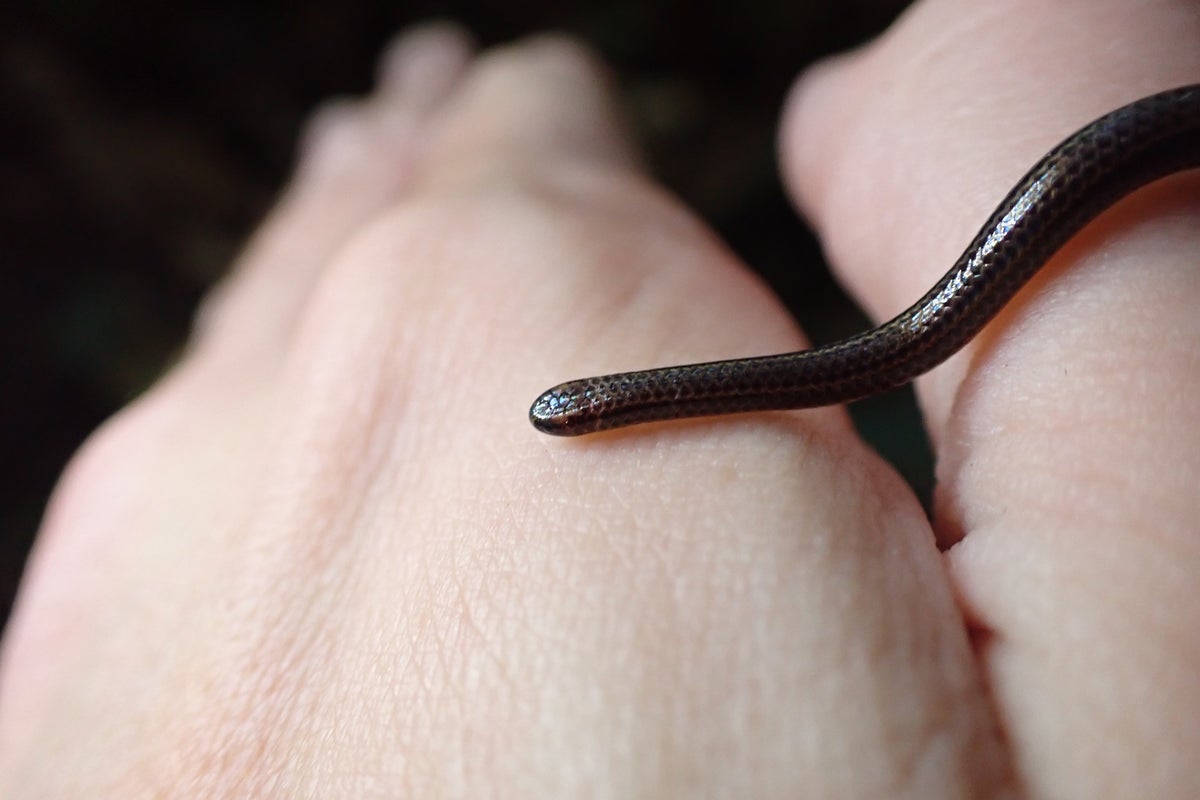
After nearly two decades, the world’s tiniest snake has been rediscovered, bringing hope and excitement to the scientific community. The Barbados threadsnake, a species that had long been considered lost to science, was last seen in 2006. It was included on a list of 4,800 plant, animal, and fungi species deemed "lost to science." This tiny reptile, which measures up to four inches when fully grown, is blind, burrows in the ground, and feeds on termites and ants. It also lays a single, slender egg.
Due to its small size and elusive nature, the Barbados threadsnake has only been observed a handful of times since 1889. Scientists once feared it had become extinct, but this fear was dispelled by Connor Blades, a project officer with the Ministry of Environment in Barbados. In March of this year, Blades made the remarkable discovery while searching a small forest on the eastern Caribbean island.
"After a year of searching, you begin to get a little pessimistic," Blades said. The snake is so tiny that it can fit comfortably on a coin, making it difficult to spot with the naked eye. Blades placed the reptile in a small glass jar, along with soil, substrate, and leaf litter, before taking it to a lab for further examination.
"It was a struggle," Blades admitted, adding that he recorded a video of the snake and eventually confirmed its identity through a still image. "I tried to keep a level head."
The Barbados threadsnake, which features pale yellow dorsal lines running along its body and eyes positioned on the sides of its head, is often mistaken for the Brahminy blind snake, also known as the flower pot snake. However, the Brahminy blind snake is slightly longer and lacks the distinctive dorsal lines.
The Re:wild conservation group, which is working closely with the local environment ministry, recently announced the rediscovery of the Barbados threadsnake. Justin Springer, a Caribbean program officer for Re:wild, who collaborated with Blades on the find, emphasized the significance of the discovery.
"Rediscovering one of our endemics on many levels is significant," Springer said. "It reminds us that we still have something important left that plays an important role in our ecosystem."
Blades added that the snake is very cryptic. "You can do a survey for a number of hours, and even if they are there, you may actually not see them."
The first person to identify the Barbados threadsnake as a distinct species was S. Blair Hedges, a professor at Temple University and director of its center for biology. In 2008, Hedges' discovery was published in a scientific journal, with the snake named Tetracheilostoma carlae, in honor of his wife.
"I spent days searching for them," Hedges recalled. "Based on my observations and the hundreds of rocks, objects that I turned over looking for this thing without success, I do think it is a rare species."
At the time, in June 2006, there were only three other specimens known: two at a London museum and a third at a museum collection in California that was incorrectly identified as being from Antigua instead of Barbados, according to Hedges.
Hedges noted that he didn’t realize he had collected a new species until he conducted a genetic analysis. "The aha moment was in the laboratory," he said, highlighting that the discovery established the Barbados threadsnake as the world's smallest-known snake.
Scientists hope that the rediscovery of the Barbados threadsnake will serve as a catalyst for the protection of wildlife habitats. Its survival could inspire greater efforts to preserve the unique ecosystems of Barbados and beyond. The rediscovery not only highlights the importance of conservation but also underscores the value of continued exploration and research in understanding the natural world.

Post a Comment for "Smallest Snake Found Again After 20-Year Hiatus"
Post a Comment