Small NASA-NOAA Fleet to Revolutionize Solar Studies and Space Weather Forecasting
A New Era of Space Weather Monitoring
This month, a trio of spacecraft will launch to study the Sun's influence on space weather events, providing critical insights that could lead to advanced warnings and a deeper understanding of our star. These missions are part of a broader effort to enhance space weather forecasting and protect both astronauts and technology in space and on Earth.
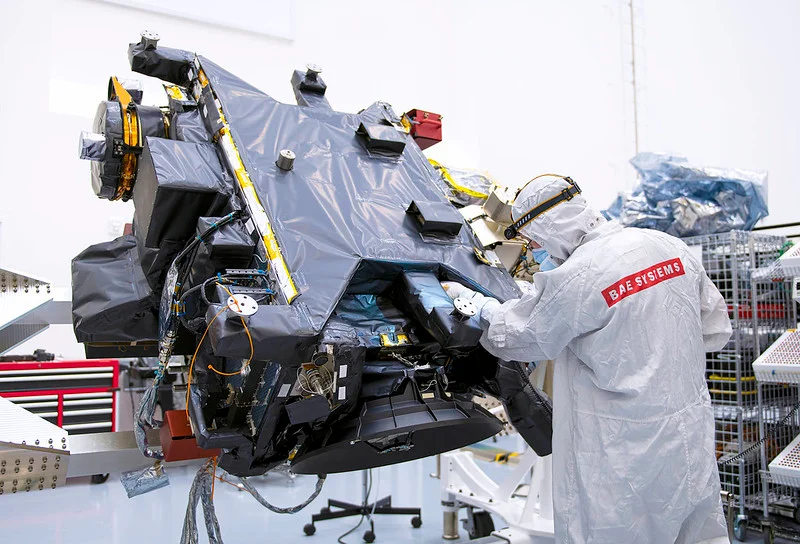
Nicola Fox, associate administrator for NASA’s Science Mission Directorate, highlighted the importance of the Interstellar Mapping and Acceleration Probe (IMAP) in addressing long-standing questions about the Sun's impact on the solar system. Positioned 1 million miles from Earth at Lagrange point 1, IMAP will use 10 instruments to measure the heliosphere’s outer boundary every 15 seconds. This data will help scientists better understand how the Sun interacts with its surroundings.
IMAP will not be alone in its mission. NOAA’s new Space Weather Follow On (SWFO) spacecraft, the agency’s first dedicated space weather satellite, will join it in orbit. Additionally, NASA’s Carruthers Geocorona Observatory will also be launched, traveling to the same distance to study Earth’s exosphere. This region plays a crucial role in protecting Earth from space weather effects. The observatory is named after Dr. George Carruthers, who developed the instrument used on the Apollo 16 mission to capture the first images of the geocorona, a glow caused by neutral hydrogen in Earth’s exosphere.
Together, these three spacecraft will provide early warnings for upcoming Artemis II and III missions to the Moon, which aim to send astronauts into deep space. The ability to detect harmful radiation storms is essential for ensuring the safety of astronauts and the success of these missions.
"These storms can have devastating short- and long-term consequences for astronauts, spacecraft, and technology onboard," Fox said. "They also pose risks for air travelers, orbiting satellites, power grids, radio communications, and more. Understanding their sources and developing ways to protect against them are top priorities."
Tracking Cosmic Messengers
To study the edge of the heliosphere, scientists rely on energetic neutral atoms, or ENAs, which act as "cosmic messengers." By tracking these particles, researchers can create a comprehensive map of the heliosphere, revealing how factors like the Sun's movement through the galaxy and the magnetic field beyond the heliosphere shape its boundaries.
IMAP's iAlert system will provide real-time data on solar wind, energetic particles, and magnetic fields, which are essential for assessing space weather forecasts near Earth. This information will be vital for predicting and mitigating the effects of space weather on technology and infrastructure.
The launch of this small fleet of spacecraft comes at a pivotal time. Some of NASA's oldest Sun-observing instruments are still in use, while the world becomes increasingly dependent on technology vulnerable to space-weather impacts. Each spacecraft plays a critical role in forming a larger space weather observatory, with newer missions often featuring more advanced instrumentation for sensitive measurements.
NASA and SpaceX are targeting September 23 for the launch of all three spacecraft on a shared mission. This collaboration marks a significant step forward in the ongoing effort to monitor and understand the Sun's influence on space weather, ensuring safer exploration of space and better protection for Earth-based systems.

Post a Comment for "Small NASA-NOAA Fleet to Revolutionize Solar Studies and Space Weather Forecasting"
Post a Comment