Scientists Track Mysterious Creature as a Child ... Then It Vanishes
The Mysterious World of Facetotectans
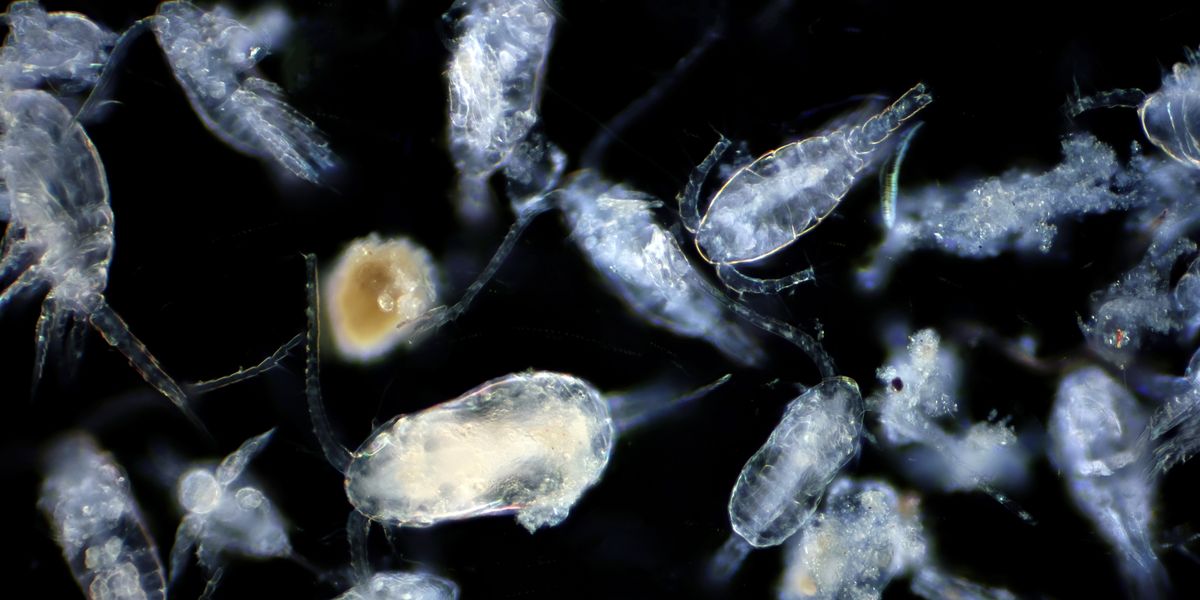
Facetotectans are a fascinating group of microscopic crustacean larvae that have never been observed as adults. Scientists only know about their larval and juvenile stages, and the features of these early phases suggest they might be parasitic. If they are indeed parasites, it's believed that their adult forms have remained hidden because they burrow into their hosts before reaching maturity.
Unlike tadpoles turning into frogs or caterpillars becoming butterflies, facetotectans grow into something no one has yet identified. These creatures, also known as y-larvae, are micro-crustaceans that have only ever been seen in their larval and juvenile stages. During the y-nauplius phase, they drift through the ocean until they shed their carapace and enter the cyprid phase. In this stage, they are thought to find a host to attach themselves to. They then molt again and emerge as slug-like juveniles, called ypsigons. After that, they transform into adults—but what those adults look like remains unknown.
Niklas Dreyer, a researcher from the Natural History Museum of Denmark at the University of Copenhagen and the first author on a new paper studying these creatures, said, “The larvae most certainly have adult stages. The issue is that we haven’t found them yet.”
Dreyer and his team were determined to uncover more about these mysterious organisms. To do so, they raised facetotectan larvae themselves and sequenced their transcriptome—essentially the RNA equivalent of a genome. Their findings revealed that facetotectans are related to parasitic barnacles and share many characteristics with their larvae, suggesting that facetotectans may also be parasites.
“We have successfully reared larvae that bear so much superficial morphological resemblance to the parasitic barnacles,” Dreyer explained, “that they are beyond doubt endoparasites in hosts that are yet to be found.” The team’s study was recently published in the journal Current Biology.
Adult facetotectans have eluded scientists since they were first discovered among plankton at the turn of the 20th century. However, the morphology and behavior of rhizocephalans (parasitic barnacles) are better understood. These are not the barnacles commonly found on boats, docks, or the backs of whales and sea turtles. Species such as Briarosaccus exert a kind of mind control on crabs, hijacking their brains, growing roots through their shells, and injecting their cells into their flesh. They make both males and females think they are pregnant, using them as incubators for their larvae. It's a truly eerie process.
How facetotectans invade their victims is still unknown, but research into how parasitism evolved in barnacles has shown that these mysterious y-larvae are actually distant relatives. However, they belong to their own phylum, which could indicate an example of convergent evolution—where two different species develop similar traits independently.
In addition to genetic similarities with parasitic organisms, certain morphological features support the idea that facetotectans are parasites. When examined closely, the antennae of y-cyprids were found to have hooks, which may help them attach to hosts. Additional hooks on their shoulders lead to glands that could secrete proteins to dissolve the shells of their hosts, similar to how rhizocephalan barnacles and other parasitic crustaceans attach themselves.
While the juveniles could not reach adulthood in the lab, Dreyer and his team believe they are likely endoparasites that live inside their hosts as adults. This would explain why their adult form has never been observed.
“Although the function of these spines remains unknown, their complexity and variation suggest that natural selection plays some role in shaping this phenotypic variation,” the researchers wrote in their study. “It would, therefore, be interesting in the future to examine if this is driven by host morphology or specific invasion mechanisms.”
Facetotectans remain an enigma. They lose their segmented limbs and are devoid of eyes or a gut—though they do retain muscle and nerve cells, which might be enough for them to burrow into a host. If they are indeed parasites, there is still no evidence of what animals they feed on or whether they can zombify their unwitting hosts.

Post a Comment for "Scientists Track Mysterious Creature as a Child ... Then It Vanishes"
Post a Comment