Russia Export Decline Pushing Chinese Automakers to Reassess
The Rise and Challenges of Chinese Automakers in the Russian Market
After the invasion of Ukraine, Russia became a significant market for Chinese automakers. With foreign brands pulling out, Chinese manufacturers quickly filled the gap, making the country a lucrative destination for their vehicles. However, this opportunity may be coming to an end as new policies and economic challenges begin to reshape the landscape.
In late 2024, Moscow introduced a “recycling fee” on imported vehicles, which dramatically increased the cost of passenger cars with one- or two-liter engines by more than $8,000. At the same time, high borrowing costs have made it harder for consumers to purchase cars, leading to a 27% drop in auto sales in the first half of the year. Imports of Chinese cars fell by 62% during the same period, signaling a major shift in the market.
This decline has put pressure on Chinese automakers to look beyond Russia and expand into other overseas markets. They are already facing a price war and overcapacity domestically, so diversifying their export strategies is essential. However, this expansion could also lead to more trade protectionism, as some regions have begun imposing tariffs to curb the influx of Chinese vehicles.
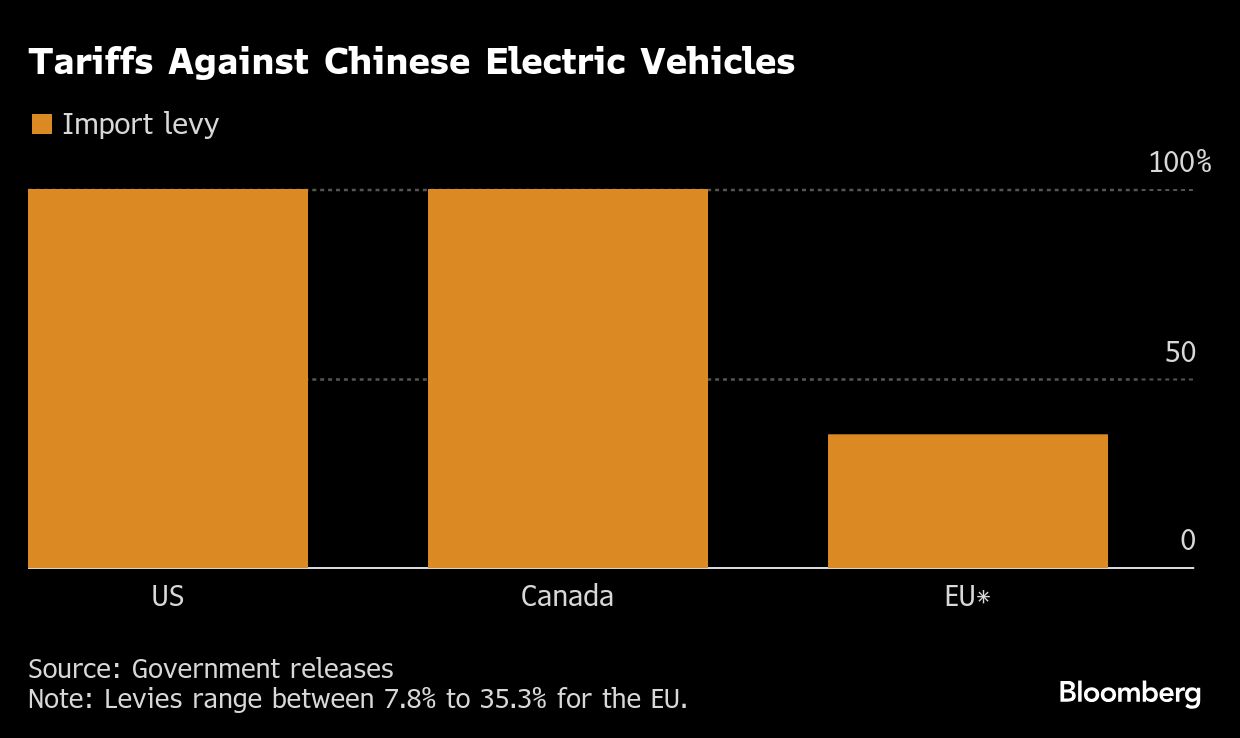
The European Union added an import tariff of up to 35% on Chinese electric vehicles in 2024, citing unfair competition due to government subsidies. In the United States and Canada, the tariff stands at 100%. Mexico, which now receives more Chinese car exports than Russia, is considering raising tariffs on Chinese goods, including autos, to meet demands from U.S. President Donald Trump as the two countries negotiate a trade agreement.
According to Rosalie Chen, a senior analyst at Third Bridge, the market share of Chinese brands in Russia has approached its upper limit of 50% to 60%. She noted that future growth could be limited by local policies and market capacity. Additionally, with the possibility of the Russia-Ukraine war ending, Western automakers may return to the market, further slowing the growth of Chinese sales.
Russia’s demand helped China become the world’s largest car exporter in 2023. Nearly one-fifth of China’s total overseas shipments went to Russia last year, according to customs data. However, the shrinking Russian market is already affecting the top Chinese car brands there.
Geely Automobile Holdings Ltd. saw an 8% contraction in exports during the first eight months of this year, while Great Wall Motor Co.’s exports remained largely flat. Chery Automobile Co., China’s largest auto exporter, experienced an 11% growth in overseas shipments during the same period, though this was down from a 25% increase the previous year.
BYD Co., China’s top car seller, which does not have an official presence in Russia, has more than doubled its overseas sales and is now challenging Chery for the export crown.
Geely executives acknowledged that the declining exports were a minor setback but emphasized their commitment to expanding into new international markets. The company plans to enter Brazil, South Africa, and Italy, and has announced efforts to strengthen its global sales and distribution network.
Paul Gong, head of China autos research at UBS Group AG, pointed out that economic cycles in different countries are beyond the control of any automaker. He referenced 2015, when the Russian ruble fell and signs of economic weakness in China led to currency depreciation in Malaysia, Indonesia, Brazil, and other emerging markets.
Gong emphasized that what automakers can do is seize existing business opportunities. He highlighted the Middle East and Latin America as promising areas for Chinese exporters. If certain regions face limited opportunities, he said, carmakers should actively seek alternatives.
As the Russian market evolves and new challenges arise, Chinese automakers must adapt and explore new markets to sustain their growth. The path forward will require strategic planning, innovation, and a willingness to navigate an increasingly complex global automotive landscape.

Post a Comment for "Russia Export Decline Pushing Chinese Automakers to Reassess"
Post a Comment