People Share Forgotten History Lessons They Never Learned in School
Uncovering Forgotten History: Facts That Shaped the World
History is often taught in a way that simplifies complex events, focusing on major milestones while overlooking the nuanced details. However, some historical facts are so compelling and eye-opening that they challenge our understanding of the past. These stories, often omitted from standard curricula, reveal a more complete picture of human history.
One such fact is the Tulsa Massacre, which occurred in 1921. Many people, including those who have studied history, were unaware of this tragic event until much later in life. The massacre resulted in the destruction of a thriving Black neighborhood and the loss of countless lives, yet it remains underrepresented in educational materials.
Another overlooked topic is the Opium Wars, which had significant consequences for global trade and international relations. In some educational systems, these conflicts are only briefly mentioned, leaving students without a full understanding of their impact on China and the world.
Frederick Douglass, an influential figure in American history, is often mentioned in passing but rarely explored in depth. His contributions to the abolitionist movement and his powerful oratory skills make him one of the most remarkable individuals in U.S. history. Learning about his life and work can provide valuable insight into the struggles for freedom and equality.
The Great Wall of China is another example of a historical structure that is often misunderstood. It was not built all at once but rather evolved over centuries, with different dynasties contributing to its construction. This patchwork of walls reflects the changing political and military needs of ancient China.
In the early 20th century, American Chestnut trees were a dominant species along the East Coast. However, a fungal infection nearly wiped them out, leading to their current endangered status. This ecological tragedy is a reminder of how vulnerable natural ecosystems can be.
In the UK, the Harrying of the North is a lesser-known event that highlights the brutal methods used by William the Conqueror to consolidate power. This period saw entire villages destroyed, yet it is often glossed over in favor of more familiar narratives like the Battle of Hastings.
Japanese WWII war crimes are another area where historical accounts are frequently minimized. Understanding the full scope of these events is essential for a comprehensive view of the war's impact.
The role of Black cowboys in the Old West is another overlooked aspect of American history. Approximately 25% of working cowboys were Black men, yet their contributions are often excluded from mainstream narratives.
Prohibition is commonly portrayed as a humorous failure, but its roots lie in deeper societal issues. In the 19th century, many people turned to alcohol because clean drinking water was scarce. This context reveals the complexity of the issue and the challenges faced by communities at the time.
During both World War I and World War II, Americans of German descent and German immigrants were placed in internment camps. This policy raises important questions about civil liberties and the treatment of minority groups during times of conflict.
Federal highways were sometimes deliberately constructed through affluent Black neighborhoods, leading to displacement and economic hardship. Oklahoma is one example where this policy had lasting effects on local communities.
Women’s rights also include a less-discussed history. Until 1974, women needed a male co-signer to obtain a credit card in their own name. This requirement reflects broader societal attitudes toward gender and financial independence.
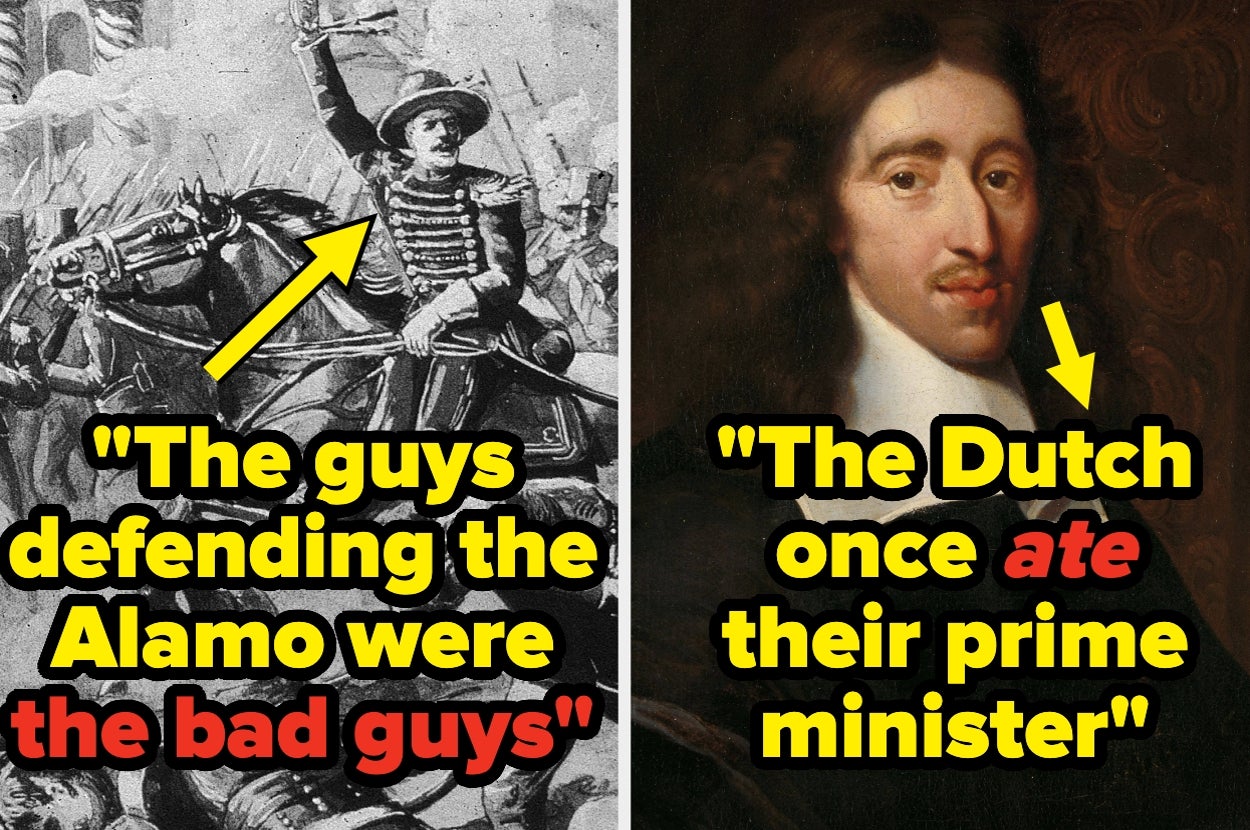
In the Netherlands, a prime minister was lynched by an angry mob and consumed, highlighting the extreme measures taken in times of political unrest. This event underscores the volatile nature of historical power struggles.
The defenders of the Alamo were not heroes in the traditional sense. Their actions were part of a larger conflict that involved complex motivations and outcomes.
Adolf Hitler was influenced by California’s eugenics program, which he believed was too lenient. This connection illustrates how ideas from one region can have far-reaching consequences.
The Ottoman Empire’s systematic killing of over a million Armenians during World War I remains a controversial and underacknowledged event. Political considerations have led to a lack of recognition for this tragedy.
The U.S. Civil War was fundamentally about slavery, yet some regions have worked hard to obscure this truth. The articles of secession from Confederate states clearly state the reasons for secession, making it clear that slavery was the central issue.
The Middle Eastern and North African slave trade was larger and more brutal than the transatlantic trade, yet it receives far less attention. Understanding this history is crucial for a balanced perspective on the global impact of slavery.
Finally, Thomas Jefferson created his own version of the Bible, known as The Life and Morals of Jesus of Nazareth. By cutting and pasting passages from the New Testament, he crafted a personal interpretation of religious texts, revealing his critical approach to religion.
These historical facts offer a richer, more accurate understanding of the past. They remind us that history is not just about dates and events, but also about the people, choices, and consequences that shape our world.

Post a Comment for "People Share Forgotten History Lessons They Never Learned in School"
Post a Comment