Organic Beekeeping Outperforms Conventional Methods in Profitability
The Profitability of Organic Beekeeping
Organic beekeeping has emerged as a viable and potentially more profitable alternative to conventional methods, according to a recent study conducted by researchers at Penn State's College of Agricultural Sciences. The research highlights that adopting organic management practices for honey bee colonies can lead to comparable or even greater profits than traditional approaches. This finding is significant, especially given the challenges faced by beekeepers in maintaining healthy and productive colonies.
The study, published in the Journal of Economic Entomology, found that beekeepers who follow organic standards can achieve profits similar to those using conventional methods. However, it also revealed that over time, organic practices can result in a 50% increase in honey production compared to conventional techniques. This suggests that while initial costs might be higher, long-term benefits could outweigh these expenses.
Margarita López-Uribe, Lorenzo L. Langstroth Early Career Professor in the College of Agricultural Sciences, emphasized the potential of organic beekeeping to improve colony health without the use of synthetic pesticides. She hopes the findings will encourage beekeepers to consider organic practices as a sustainable option for their operations.
One of the key advantages of organic beekeeping is the reduction in pesticide exposure for both bees and beekeepers. Products from organic colonies tend to have lower levels of pesticides, which can be beneficial for consumers and the environment. Additionally, avoiding synthetic miticides helps mitigate the impact of mite-resistant parasitic mites, a major cause of colony losses in recent years.
Despite these benefits, there are several barriers to the widespread adoption of organic beekeeping. López-Uribe noted that many beekeepers are confused about what organic beekeeping actually entails. It is not simply about being chemical-free; rather, it involves a commitment to the well-being of the colony. For example, if Varroa mite levels exceed a certain threshold, beekeepers must take active steps to control them.
A previous study by the same researchers demonstrated that beekeepers can maintain healthy and strong colonies using organic practices. The current study aimed to determine whether these practices could also be economically viable. To do this, the researchers compared three different management systems—conventional, chemical-free, and organic—over a three-year period.
In the chemical-free approach, beekeepers avoided all non-bee-derived products, leading to uncontrolled Varroa mite populations. This method resulted in economic losses. In contrast, both conventional and organic systems generated revenue, with honey and bee production being highest in the organic and conventional systems.
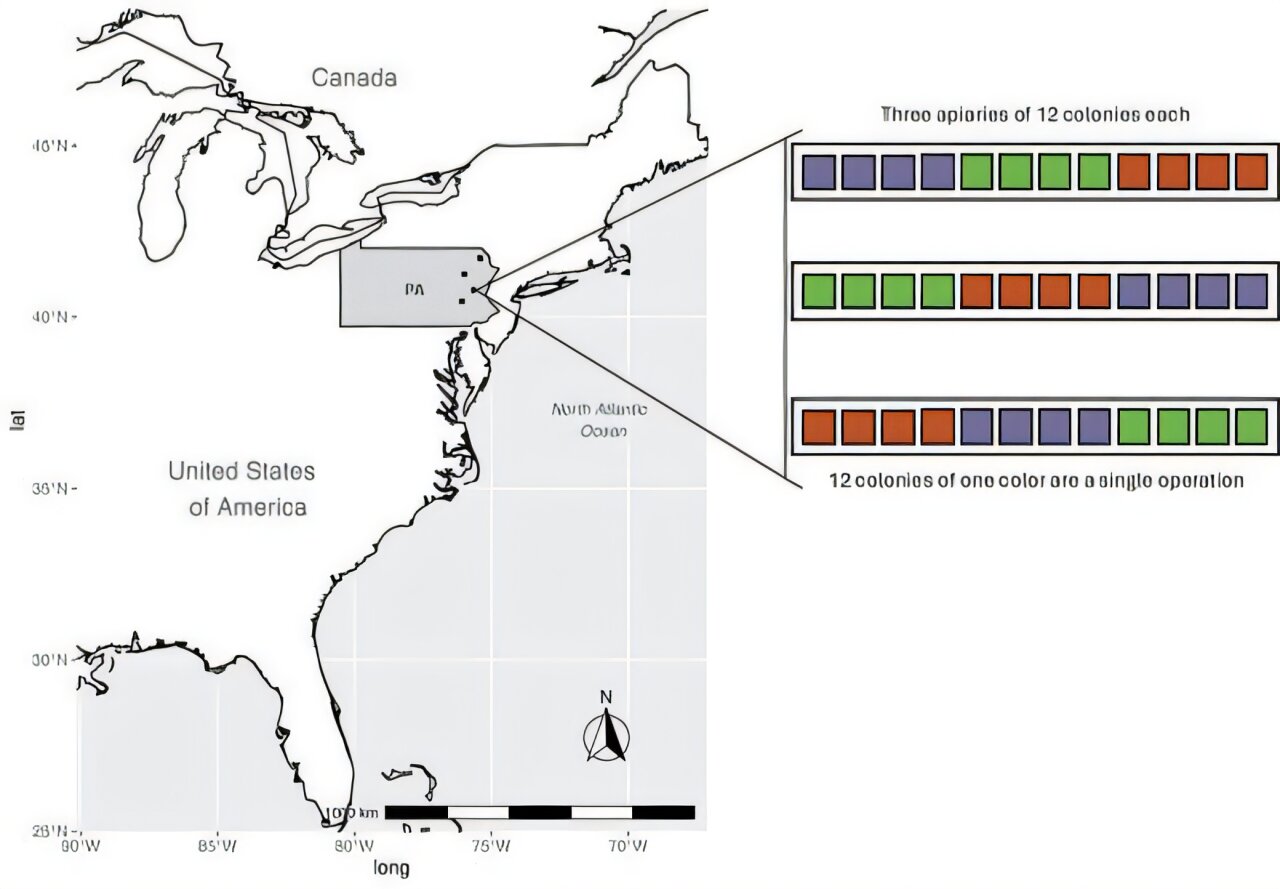
The organic approach allowed for the use of organic acids, essential oils, and integrated pest management strategies, following the National Organic Program's guidelines. The researchers established multiple colonies on certified organic farms across Pennsylvania and monitored them regularly over three years. They tracked revenue, profits, and colony survival across the different systems.
By the third year, honey production was 50% higher in organic operations compared to conventional ones. López-Uribe highlighted the importance of mite control in ensuring the profitability of bee colonies, especially given the record-high colony losses in the U.S. in 2025. The study shows that organic beekeeping can effectively manage harmful pests while maintaining profitability.
The researchers plan to conduct further studies to develop more specific recommendations for small and mid-size beekeeping operations. Timothy Kelsey, professor of agricultural economics at Penn State, and Nash Turley, postdoctoral scholar in the Department of Entomology, were also involved in the research. Their work provides valuable insights into the future of sustainable beekeeping practices.

Post a Comment for "Organic Beekeeping Outperforms Conventional Methods in Profitability"
Post a Comment