NYC Shooter Claims CTE: What Is the Brain Disease Affecting NFL Players?
The Link Between CTE and Tragic Events
Shane Tamura, a 27-year-old man accused of fatally shooting four people in a Manhattan office building before taking his own life, left behind a note that revealed he believed he suffered from a serious brain disease. According to Mayor Eric Adams, Tamura had a grievance with the NFL, believing he had developed chronic traumatic encephalopathy (CTE) due to his involvement in football. Although Tamura played high school football in Los Angeles, he never made it to the NFL, whose headquarters are located in a Midtown skyscraper.
CTE is a progressive brain disease associated with repeated head trauma. It has been linked to a build-up of abnormal proteins that damage brain tissue and cause brain cells to die. While often associated with NFL players, research has yet to determine how CTE starts, what risk factors may increase the likelihood of developing the disease, or why some individuals with repeated head injuries do not show symptoms.
The only definitive way to diagnose CTE is through an autopsy after death. Tamura’s suicide note referenced Terry Long, a former NFL player who died in 2006 by drinking antifreeze and was later diagnosed with CTE. This connection highlights the growing concern around the long-term effects of head injuries in sports.
A Pattern of Tragedies
Over the years, several former NFL players have been diagnosed with CTE, raising questions about the league's responsibility in protecting athletes from head injuries. A 2023 report found that out of 376 former NFL players studied by Boston University’s CTE Center, 345 were diagnosed with the disease. This alarming statistic underscores the need for better prevention and treatment strategies.
Dave Duerson, a former NFL safety, died in 2011 by a self-inflicted gunshot wound. He had requested that his brain be donated for research, and it was later found that he suffered from CTE. Similarly, Junior Seau, a former NFL linebacker, took his own life in 2013 and was later diagnosed with CTE. His family described struggles with sleep and mental health before his death.
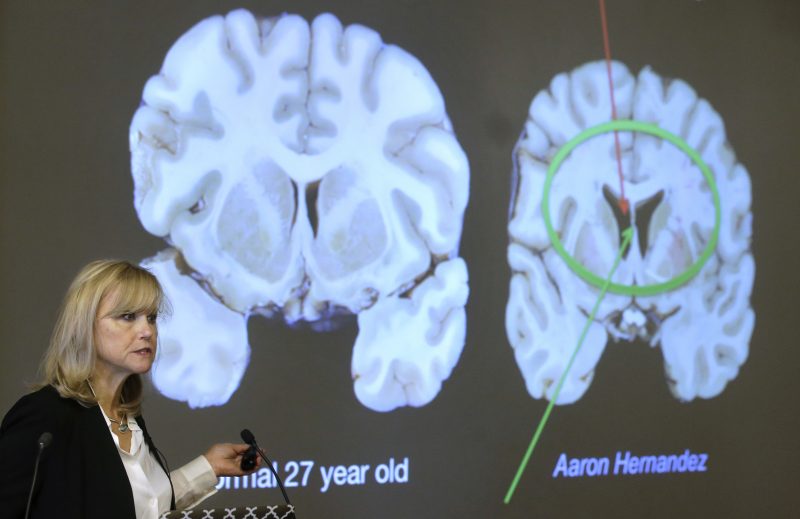
Ken Stabler, a former NFL quarterback, was found to have Stage 3 CTE after his death in 2015. His partner told ESPN that he experienced severe headaches, forgetfulness, and disorientation. Aaron Hernandez, a former NFL player, was found to have Stage 3 CTE at the time of his 2017 suicide. His case highlighted the potential link between CTE and behavioral changes.
Irv Cross, a former NFL player turned CBS anchor, was found to have Stage 4 CTE following his 2021 death. His widow shared that he struggled with depression, mood swings, and memory loss. Phillip Adams, a former NFL player, fatally shot six people in 2021 before taking his own life. An autopsy revealed he had Stage 2 CTE, which is associated with violent mood swings and memory loss.
Demaryius Thomas, a former Pro Bowl wide receiver, was diagnosed with Stage 2 CTE at the time of his 2021 death. Frank Wycheck, a former Tennessee Titan, was found to have Stage 3 CTE after his 2023 death. His family described his condition as causing significant mental and physical challenges.
Ongoing Research and Advocacy
Despite these tragic cases, there is currently no cure for CTE. However, some athletes have pledged to donate their brains to research after their deaths. NASCAR driver Dale Earnhardt, Jr., and U.S. women’s soccer player Brandi Chastain are among those who have committed to supporting CTE research.
The NFL has faced increasing scrutiny over its handling of head injuries and the long-term health of its players. As more cases of CTE come to light, the league faces pressure to implement stronger safety measures and provide better support for affected athletes.
While the exact causes and mechanisms of CTE remain unclear, the stories of those impacted by the disease serve as a powerful reminder of the importance of continued research and advocacy. As the conversation around brain health in sports evolves, the hope is that future generations of athletes will be better protected from the devastating effects of CTE.

Post a Comment for "NYC Shooter Claims CTE: What Is the Brain Disease Affecting NFL Players?"
Post a Comment