Nvidia Tackles 4 of Intel's 5 Major Issues. The Last One Is Tough.
A Strategic Alliance Between Intel and Nvidia
Nvidia and Intel, often seen as both competitors and collaborators, have entered into a significant deal that has caught the attention of investors. The agreement involves an Intel share sale to Nvidia for $5 billion, along with partnerships focused on PC and data center chips. Analysts are interpreting this move as a potential turning point, suggesting that Nvidia might play a crucial role in reviving Intel’s struggling manufacturing operations.
This partnership addresses several challenges for Intel, although it doesn’t tackle the core issue: its lagging manufacturing technology compared to Taiwan Semiconductor Manufacturing Company (TSMC). The first benefit Intel gains from the deal is additional capital. The company has had to delay planned construction projects, reducing capital expenditures by 25% in the first half of 2025. While these cuts are necessary, they hinder Intel's efforts to catch up with TSMC, which remains a formidable competitor.
Intel has received substantial financial support from various sources. So far this year, the U.S. Department of Commerce provided $5.7 billion for shares priced at $20.74. This injection of funds gave investors confidence that the U.S. government is committed to supporting Intel. Soon after, SoftBank added $2 billion at $23 per share, and now Nvidia is contributing $5 billion at $23.28.
In total, Intel is issuing 576 million new shares for $12.7 billion, resulting in a 12% dilution of existing shareholders. However, the deal brings more than just cash—it also provides implicit backing from influential players in the tech industry.
Investor Confidence and Market Reactions
The second advantage Intel gains from this partnership is increased investor confidence. Although these deals were made at a discount to Intel’s previous market price, the stock has still experienced a surge. This reflects a growing belief among investors that Intel is not going away. The U.S. government, Nvidia, and SoftBank are now invested in Intel’s survival, making the stock appear like a compelling investment opportunity.
Additionally, the collaboration with Nvidia brings improvements to Intel’s PC chips. These chips will feature an Intel CPU paired with an Nvidia GPU, leveraging Nvidia’s high-speed connection technology. This integration promises better gaming performance and on-device AI capabilities, which are key selling points in the PC market.
The partnership also strengthens Intel’s position in the data center sector. Historically, Intel dominated server CPUs, but the rise of AI has shifted the landscape. Nvidia’s GPUs have become essential for AI computing, attracting significant investment. Initially, AI servers used two Intel CPUs linked to eight Nvidia GPUs. However, Nvidia’s development of its own CPU based on Arm Holdings’ technology has marginalized Intel in this space.
The Future of Intel and the Data Center
Arm’s senior vice president of infrastructure, Mohamed Awad, predicts that Arm-based data center CPUs could capture 50% of the market by the end of the year, up from 15% in 2024. This shift has largely come at Intel’s expense. By collaborating with Nvidia, Intel’s CPUs could re-enter the AI server market, potentially regaining some of its lost business.
Despite these positive developments, the market value generated from Intel’s stock price jump—over 23%—may be overstated. Jordan Klein, a tech and media sector specialist at Mizuho, advises caution. He believes that while momentum may drive short-term interest in Intel, it does not signal a major growth resurgence. Klein suggests sticking to higher-quality semiconductor stocks such as Nvidia, TSMC, Broadcom, and memory chip makers.
Challenges in the Foundry Business
Intel’s biggest challenge remains its foundry business, a long-term initiative launched four years ago. The goal was to provide advanced chips for global designers, offering an alternative to TSMC. However, this venture has not delivered the expected results. Intel still lacks a major outside customer for its foundry and continues to trail TSMC in manufacturing capabilities.
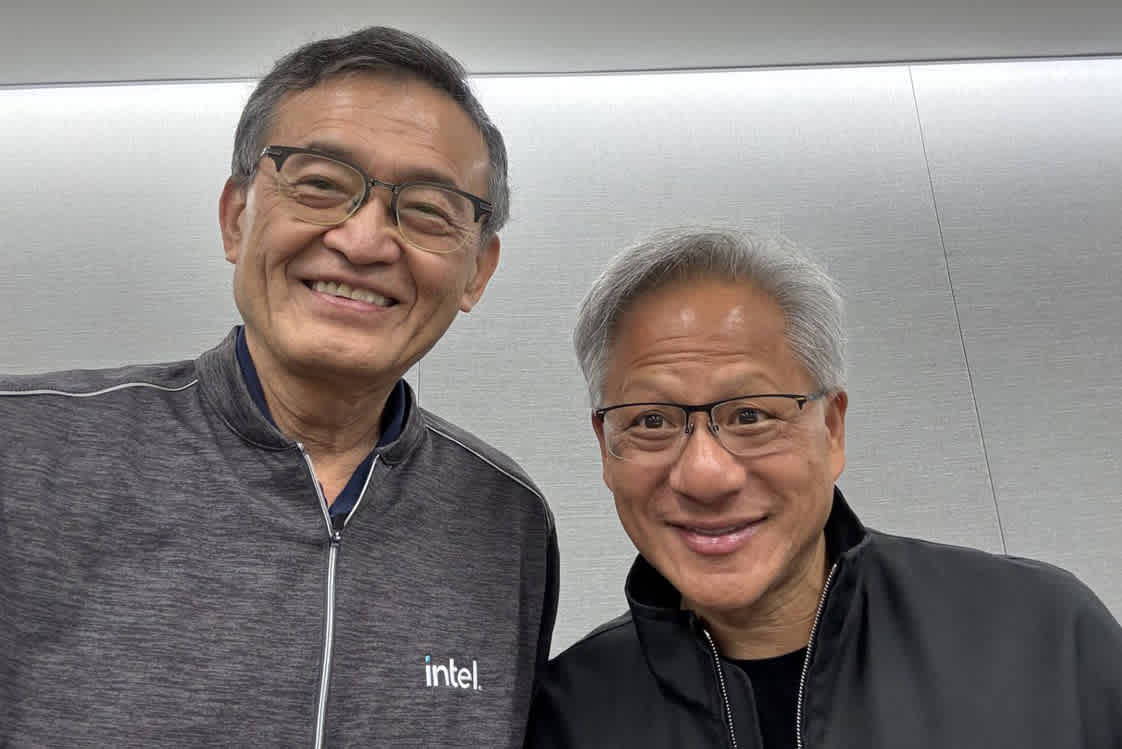
During a recent press conference, Intel CEO Lip-Bu Tan and Nvidia CEO Jensen Huang were asked about the possibility of Intel securing external customers for its foundry. Both executives avoided direct answers. However, Huang praised TSMC’s manufacturing capabilities, calling it “magic.”
While Intel’s executives and shareholders may feel more optimistic about the company’s future, no one is yet calling it magical. The road to recovery remains challenging, and the success of the partnership with Nvidia will be closely watched.

Post a Comment for "Nvidia Tackles 4 of Intel's 5 Major Issues. The Last One Is Tough."
Post a Comment