NC Teaching Vacancies Drop 31% — But This News Might Be Misleading
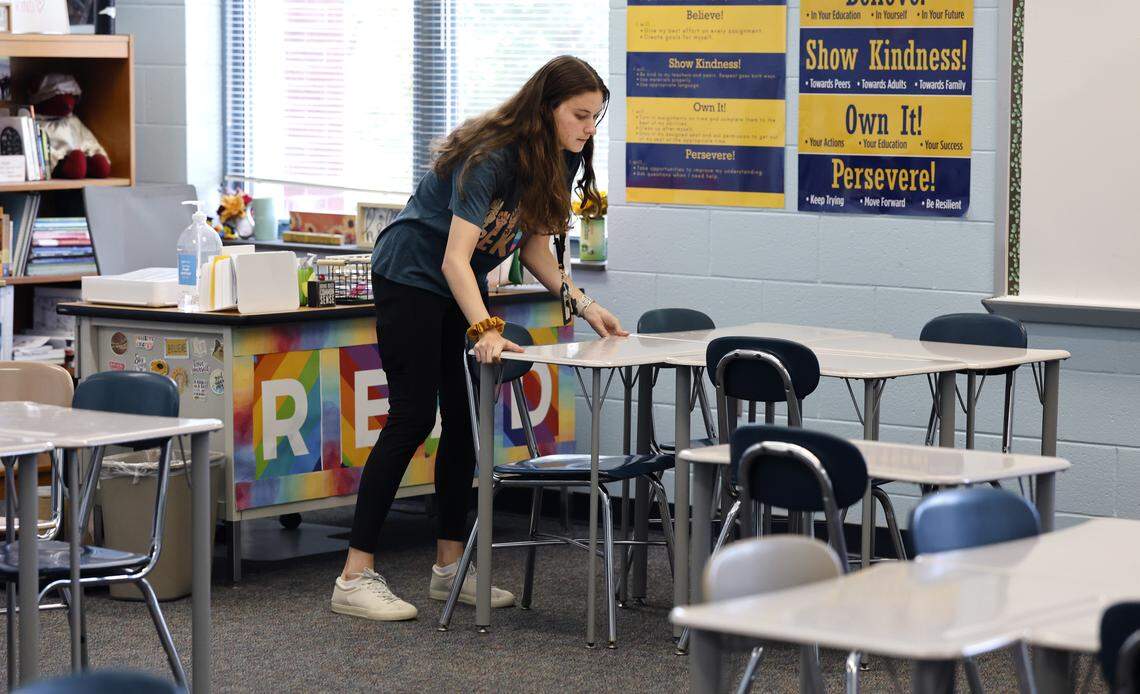
Decline in School Vacancies Across North Carolina
The number of teaching and other school-related positions available in North Carolina has significantly decreased this school year. According to recent data from the N.C. School Superintendents’ Association, the 2025-26 school year began with 2,155 teaching vacancies—31% fewer than the previous year. The state’s 115 school districts reported a total of 6,209 vacancies, which is 26% less than at the start of the prior school year.
Jack Hoke, executive director of the School Superintendents’ Association, explained that the reduction in vacancies is largely due to the end of federal pandemic funding that was previously used to hire additional staff. Many districts are now unable to maintain these positions as the funds have disappeared.
“With fewer overall positions in school districts, and staff that had previously held those support positions now filling positions where there may have otherwise been a vacancy, it makes sense that there would be fewer vacancies statewide,” Hoke said.
Widespread Reduction in Vacancies
The decline in vacancies is not limited to teaching positions alone. All categories of school vacancies have seen reductions:
- Elementary school teaching vacancies dropped by 35%.
- Middle school teaching vacancies fell by 37%.
- High school teaching vacancies decreased by 34%.
- Special-education teaching vacancies saw a 20% drop.
- Bus driver vacancies declined by 7%.
- School counselors, psychologists, and social worker vacancies also decreased by 4%.
Out of the 115 school districts in the state, 71 reported opening the school year with fewer vacancies than the previous year. Despite these improvements, Hoke emphasized the ongoing challenges faced by school districts in attracting and retaining qualified staff.
“These data show the continuing challenge that superintendents and school districts face in recruiting and retaining the teachers and staff necessary to provide the quality education that all North Carolina students deserve,” Hoke stated. “Despite these persistent challenges, there has been a continued decrease in vacancy rates across the state, which is a testament to the hard work of school and district leaders in making education a more attractive and sustainable career path.”
No Immediate Relief for Teachers
Public schools in North Carolina opened the new school year in August amid uncertainty. Many districts have made budget cuts, eliminated positions, and dealt with the absence of federal pandemic aid. Additionally, the lack of a state budget and potential federal education cuts have added to the pressure on schools.
In some areas, such as Winston-Salem/Forsyth County Schools, the district is facing a $46 million budget deficit and has begun laying off teachers and other employees. State lawmakers are expected to return to Raleigh soon, but there is no indication yet whether they will approve new raises for teachers and other school staff.
Changing Trends in Teacher Recruitment
The state has seen a significant drop in teaching vacancies compared to the 2022-23 school year, with less than half the number of vacancies. This change is partly attributed to an increase in non-traditional teachers who did not follow the traditional path of obtaining an education degree.
Hoke highlighted that North Carolina ranks 39th in the nation for beginning teacher pay and 43rd in overall teacher pay, according to the National Education Association. He pointed out that the "teacher pay penalty" remains a major issue, as teachers earn less than professionals in other fields with similar levels of education and experience.
“Inflation and the rising cost of housing further complicate this issue,” Hoke noted. “According to a report released in April of this year, when adjusting for inflation, on average, teachers are making 5% less than they did 10 years ago.”
Despite efforts by school districts to improve conditions, Hoke stressed that education remains under-compensated, under-resourced, and underappreciated. He called for continued support and investment in the profession to ensure that students receive the quality education they deserve.

Post a Comment for "NC Teaching Vacancies Drop 31% — But This News Might Be Misleading"
Post a Comment